In the heart of California’s political arena, a monumental event has unfolded—a resounding protest by women legislators galvanized by a derogatory remark that reverberated through the hallowed halls of the State Capitol. This incident is not merely an isolated affront but a clarion call in the overarching narrative of feminism that demands our attention and, more importantly, our action. While many might dismiss such protests as mere acts of anger or impulsive responses, they are, in fact, manifestation of a deeper grievance that has simmered for far too long, a vehement push against the patriarchy that continually seeks to undermine women’s voices in politics.
This event marks significant progress in shifting perceptions regarding gender equality in political discourse—a shift that needs to be embraced, scrutinized, and celebrated as we delve into the implications, motivations, and potential outcomes of such civil disobedience.
Understanding the Underpinnings of Gendered Disrespect
The initial remarks that ignited this protest were not simply insults; they were emblematic of a pervasive culture steeped in misogyny that treats women in politics as aberrations rather than equals. To grasp the outrage, we must peel back the layers of societal expectations and latent bias that perpetuate such remarks. Women legislators experience a dual burden; they battle against a system that is not designed for them, while simultaneously facing an ongoing barrage of condescension and disrespect that their male counterparts rarely encounter.
This protest encapsulates a fundamental truth: it is not enough to merely occupy space in government. Women must also demand that their voices reverberate with clarity, authority, and unmitigated respect. The troubling reality is that dismissive language directed at women in leadership positions fosters an environment where inequality becomes normalized. The time has arrived for us to confront these entrenched beliefs and interrogate the narratives that allow such misogynistic commentary to flourish unchecked.
Women Uniting Against Gender-Based Insult: A New Era of Courage
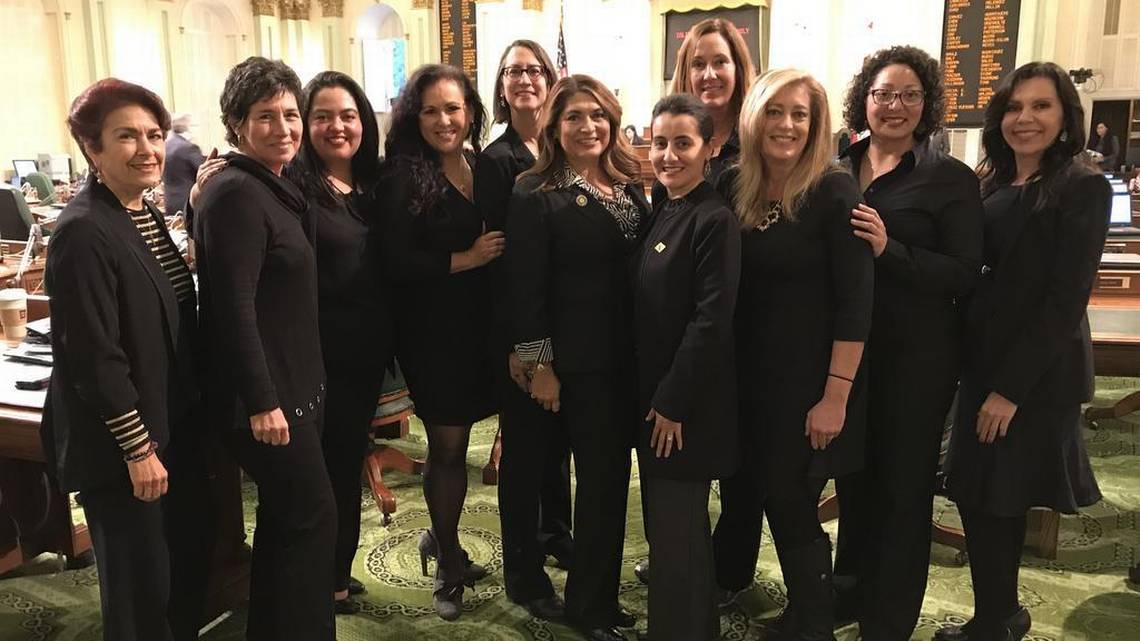
The sight of women clad in black at the Capitol was nothing short of powerful; it was a visual manifesto against the systemic injustices that plague political life. This act of solidarity serves as a compelling reminder of the collective strength embodied by women who refuse to be silent or submissive. With every black-clad figure standing resolutely, they challenged the status quo, asking not just for acknowledgment but for substantive change in the treatment of women across all levels of government.
Moreover, this protest is exemplary of a burgeoning feminist movement that recognizes the importance of visibility. Wearing black—a color often associated with mourning—symbolizes the grief felt over countless instances of harassment and denigration. Yet, it also signifies resilience and refusal to be silenced. It is a declaration that women’s disdain for derogatory comments and sexist environments will no longer be shrouded in whispers but will resonate loudly in every corner of the political landscape.
What these women legislators are doing transcends personal grievances. They are laying the groundwork for future cohorts of female leaders. They are forging pathways whereby young girls can envision a different reality—a political environment free from the oppressive chains of sexism. This is not merely a protest; it is an emblem of hope and resistance, a narrative to be woven into the larger fabric of women’s rights.
The Promise of Collective Power: Shifting the Narrative
As the echelons of power slowly reckon with the societal paradigm shift toward equality, it is clear that collective action among women in positions of authority is pivotal. The protest at the California State Capitol underscores the potential that arises when women unite in their fight against systemic injustices. Their voices, amplified through solidarity, have the prowess to transform discourse at all levels of governance.
Consider this: every action taken, every statement made, and every protest organized sends ripples through a societal fabric that has historically relegated women’s concerns to the periphery. Women’s acts of resistance challenge the ingrained stereotypes that seek to marginalize them, dismantling the very foundations of a patriarchal system that would prefer their silence. This is to acknowledge the larger movement—women’s rights advocates worldwide are rising, emboldened by the very acts of courage seen in this protest. The echoes of such actions ripple far beyond the immediate moment, tying into a global chorus advocating for feminism and equality.
But, of course, this journey is fraught with challenges. The backlash against bullish actions is often vehement, with reactionary forces seeking to delegitimize women’s voices by branding them as overly emotional or irrational. However, history tells us that radical change is often met with opposition. And so, as women lawmakers stand tall in the face of aggression, they embody the battle against antiquated ideologies, pushing against the tide of dismissiveness that typically accompanies feminist discourse.
Charting the Future of Feminism in Politics: An Invitation for Allies
This moment at the California Capitol is an invitation—an open call to all those who champion equity, fairness, and respect. The dialogue around gender relations in politics reflects broader societal attitudes, and as such, allies must elevate women’s voices alongside their own. Men must engage in meaningful conversations, interrogate their own biases, and work towards dismantling the patriarchal structures that govern not only political life but everyday interactions. The burden of combating sexism should not fall squarely on women; it demands an army of citizens committed to justice, equality, and respect for all.
The future of feminism in political spheres is bright, yet contingent on sustained, collective effort. The narratives celebrated during protests serve as a reminder that the road ahead is not only about striving for equal representation but also about fostering environments in which women’s perspectives are valued, celebrated, and integrated into legislative dialogues. It’s about more than just the numbers; it’s about culture, respect, and dignity for those who choose to bear the mantle of leadership.
In conclusion, what we witnessed at the California State Capitol transcends a mere rebuttal to a sexist remark; it represents a burgeoning movement toward reclamation of space and power by women in politics. This protest underscores an opportune moment in the feminist movement, reminding us that unity, visibility, and a relentless pursuit of justice can—and will—reshape our political landscape. So here’s the challenge: let us be curious about the journey ahead, engaging with one another, fostering dialogues, and pushing for systemic change—together. The time is now to redefine politics, ensuring that every voice is not just heard, but celebrated.