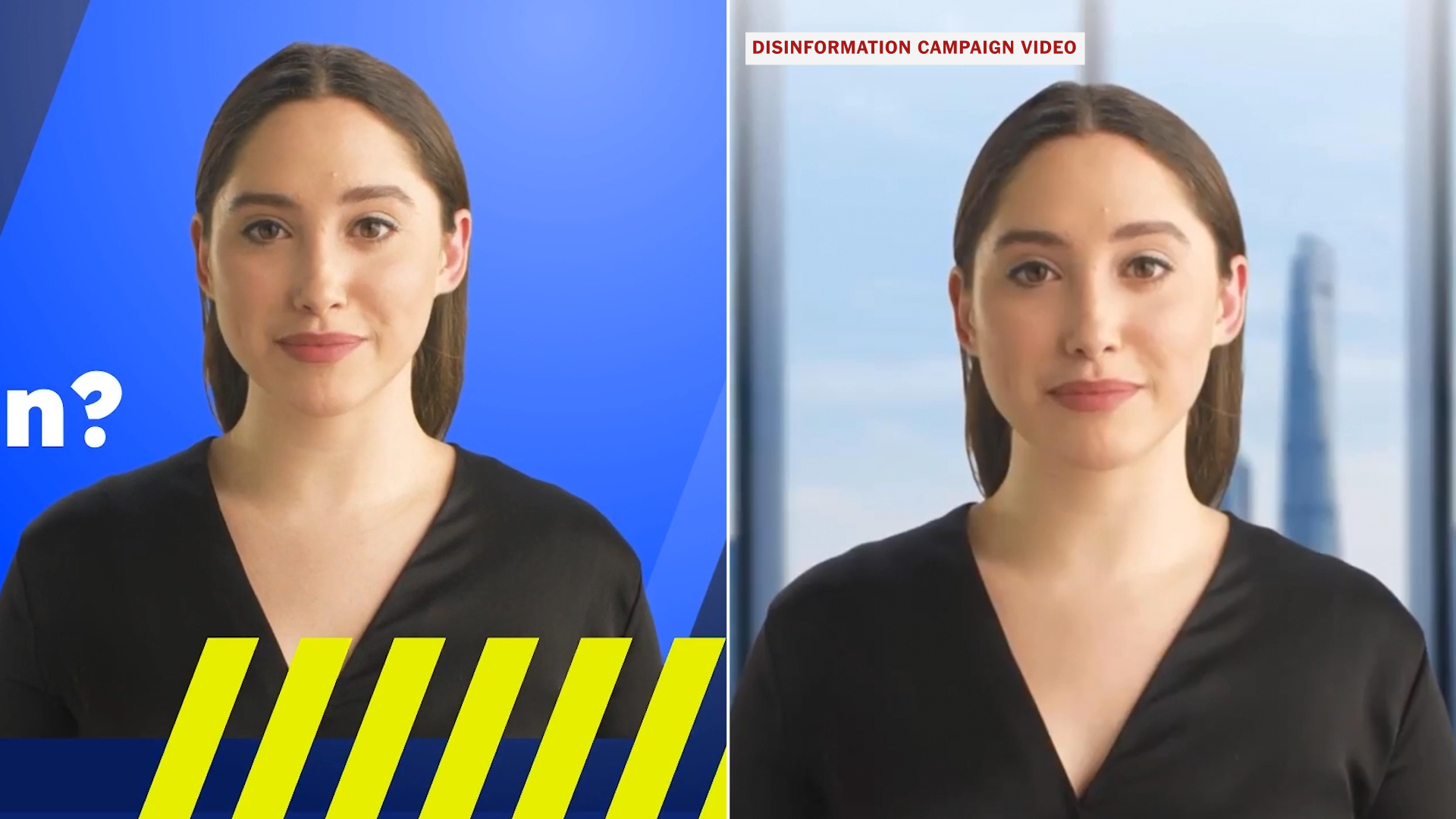
In the neon glow of a digital sunrise, feminism wriggles free from its own myths—no sooner resurgent than it’s entangled in the silk-caught light of a new threat. Imagine an oppressive whisper, one that doesn’t come clattering through the halls of power but instead slinks beneath the skin of the screen, altering faces, voices, and intentions. Deepfakes have clawed their way into our lexicon as wrought with peril, but their most insidious design might be less about their audacity than their insinuation. What happens when technology’s unholy marriage of manipulation and mimicry isn’t merely used to erase voices but to warp the ones raised loudest in protests, demands, and revolution? Feminism—already a movement of contested narratives—is now confronted by its digital doppelgänger.
The Digital Doubling of Defiance: Deepfake as a Feminist Nightmare
The first wave of feminist activism was splattered with ink. The second with pixelated rage—tweets, march signs, manifestoes spread across digital expanses. But when AI’s synthetic craftsmanship now allows the “what-if” of a woman’s utterance to mutiny against her will, the landscape shudders. Deepfakes don’t just clone faces; they weaponize a kind of algorithmic déjà vu, a recycled indignity so chilling it feels retroactive.
Picture this: the face of a renowned activist reshaped overnight into a performance of vulnerability, her words twisted into a confession, her dissent framed as weakness. The internet’s collective gasp at a viral deepfake becomes a test of feminist immunity. Is it a new kind of silencing? Or a stark reminder that the digital realm must be reclaimed as sacred ground—not some terrain where the power of the pen can be re-inked with impunity?
The Erasure Paradox: Weaponization of the Unseen
The paradox of deepfakes is this: they don’t just silence, they undermine the very machinery of belief. A woman advocating for equal pay is now pitted against the AI-generated specter of her own accordion-squished voice or the photoshopped slack-jawed version of herself—both equally compelling as evidence, yet only one legitimate. Deepfakes are a stealthy force multiplier for patriarchy: a movement’s most potent spokesperson is not eliminated by opposition, but diluted within its own narrative.
Consider the historical irony here. From the invention of the Gillette razor to the erasure of women scholars in scholarly texts, patriarchal measures always seek a dual tactic: prevent the voice from rising and obliterate its memory if it does. A deepfake is a twenty-first-century iteration of this logic—a tool that doesn’t just say, “Your voice is meaningless,” but says, “Your voice never existed at all.”
The Algorithmic Audition: A New Front in the Battle for Sovereignty
What if sovereignty is now tested not in physical confrontation but in the court of pixels? For feminist organizers, the stakes are shifted to a battlefield where provenance is as vital as protest. In the physical world, a woman’s words can be misquoted, but a court of law or public record usually establishes the truth. Today, even that assurance is compromised. A well-dubbed and edited clip can be replayed like an audiobook, rewriting the record with every share.
The irony of this digital sovereignty? It places more power at the hands of institutions. The deepfake challenge isn’t just about the tech—it’s about whether the institutions that validate or condemn the tech are themselves trustworthy. Social media platforms, already complicit parties in the spread of toxic narratives, might be asked to not merely remove deepfakes but to interrogate the intent and consequences of their proliferation.
Wombs of the Web: How Deepfakes Become the Modern Rape of Reputation
There’s an eerie resonance in the phrase “feminine rage”—a paradox of the term itself implying that anger is not innately female until it becomes excessive enough to be damned. Deepfakes add a layer of digital aggression to this dynamic. As female voices are appropriated to perpetuate myths of consent or fabricated scandals, it feels like a re-traumatizing echo of the physical, where women are never just victims of violence but confinated narratives.
If the analog weaponization of a woman’s image was physical (the burqa-ing of activist photographs to erase individuality, the doctored nude prints splashing in tabloids), then the digital weaponization is immaterial yet just as corporeally damaging. The medium changes, but the malice remains: to turn a feminist into a meme, into a cautionary tale, into an empty shell to fill with any narrative.
Is There a Code of Chivalry for AI Ethics?
One might ask: where are the knights of the digital frontier who will stand guard over these virtual sanctums? The answer currently lies in the awkward embrace of ethical frameworks that are still learning how to grapple with liquidity-based harm. Can feminism demand not just representation on screen but authenticity of representation? Will it seek the equivalent of a digital notarial attestation on every media asset?
The question is urgent: how do feminist organizers engage with tech companies to ensure AI isn’t weaponized across the spectrum of voices—not just through blatant censorship but also through algorithmic manipulation, where only a certain frequency of feminism is allowed to resonate? Should we demand transparency in the data feeds that teach AI to distinguish intent—or perhaps an ethical red-line in code that refuses to blur the line between creation and collusion?
A Feminism Worth Protecting—Even from Itself
Feminism, like all revolutions, must decide which battles are worth fighting. The digital revolution has introduced a new, unsettling question: can a movement protect itself from themselves becoming the perpetrators of new kinds of erasure? Deepfakes don’t just threaten feminism’s progress; they force the movement to acknowledge a paradox: that its future may lie not in confronting malevolence, but in defending the “fictions” it has created.
There is already a digital arms race beginning in the movement’s ranks. Some activists have begun tagging authentic content with metadata, embedding digital watermarks in their communications to prove origin and intent. Others are exploring decentralized alternatives, like blockchain-based archives that ensure every voice has an immutable ledger entry—protection against future erosion, not just resistance.
The Final Paradox: What’s the Worst That Can Still Happen?
The worst-case scenario for deepfakes, when viewed through the lens of feminist theory, isn’t the erosion of trust across the globe, nor the manipulation of a single election. It’s this: the subtle, gradual normalization of the unthinkable. What happens when the shock value of a deepfake fades, and it simply becomes another data point in the history of female silencing? When the outrage over “fake feminism” outshines the pursuit of real systemic change?
That’s why the struggle isn’t simply about uncovering deepfakes. It’s about the world watching, listening, and asking: does feminism’s strength lie in the purity of its authenticity or its resolve to remain unshaken even when the narrative is weaponized? The answer may be in the messy, unfinished terrain between the two.
Notes Toward a Feminist AI Manifesto
In all this disarray, some ideas begin to hum with possibility. A feminist AI manifesto might start with these precepts:
- To acknowledge that every voice deserves a digital origin story—to guard and document intent as fiercely as physical safety.
- To treat deepfake vulnerability as a class issue—that those with fewer resources to defend their presence online are at a unique disadvantage.
- To view AI not merely as a tool for deception, but as the new medium demanding equity through representation in the algorithm
- To refuse algorithmic indifference—to insist that media consumption, dissemination, and curation must be governed by collective ethics, not profit-first platforms.
- To create a lexicon for digital sovereignty, one that translates feminism into terms of authenticity, persistence, and resistance
The struggle is no longer a simple either-or. It’s about navigating the in-between—the space where feminism must be resilient enough to thrive in a world where truth is a contested commodity. What does it mean for feminism—or any movement—to claim the space of creation and sovereignty in the face of its replication? This is the riddle before the movement today: how does one stand firm in the middle of a digital mirage that’s also the horizon?
Tuesday will always feel like a Tuesday. Deepfakes will always find a new subject to reshape. Feminism, though, must answer not by surrendering to the shadow but by ensuring that its light cannot be faking.