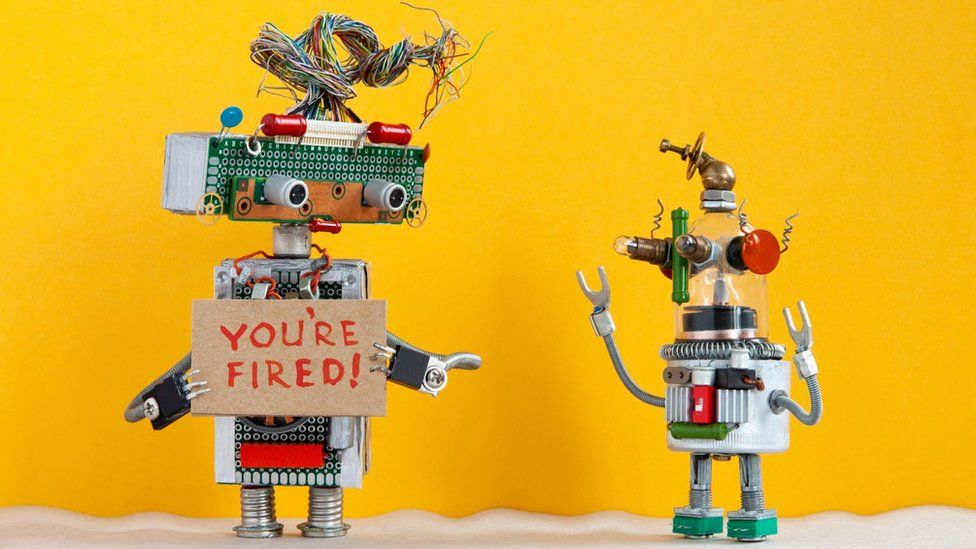
The ironies of progress have a way of whispering to us in the gaps between headlines and innovation. When we reflect on the digital frontier, one striking juxtaposition demands our attention: our increasingly feminine reliance on technologies that behave—on paper, at least—with impartiality. Yet, if artificial intelligence were to incarnate the archetypal Western woman across professional spheres, its career trajectory would mirror the harrowing trajectory of marginalized voices in every era. It would have been fired by now. But not because it was flawed—because it was women.
—
The Flawed Fable of Neutrality: The Myth of a Fair Machine
The most perilous myth of our digital epoch is the delusion that algorithms, with their cold logic and statistical precision, exist outside the quagmires of bias. Neutrality, in essence, is the white lie told to absolve us from the guilt of our own limitations. We grant these systems godlike attributes—pioneer without prejudice, innovator without infirmity—while conveniently overlooking the fact that their creators are people. And people, history repeatedly warns us, are neither pristine nor purged of cultural conditioning.
Consider Amazon’s AI recruiting tool, which learned to penalize applications from women by design. It wasn’t malicious intent—it was merely reflecting the historical underrepresentation of women in the company’s senior hires. But that didn’t make it neutral; it amplified existing inequities under the guise of data-driven efficiency. Automation did not correct injustice; it amplified it.
What if we stripped away the veneer? AI isn’t a neutral spectator to history—it is a participant, shaped by the biases in the data fed into it. The gender gap in tech isn’t an anomaly; it’s the by-product of a male-dominated design apparatus that has long overlooked the nuances of lived experience as a systemic flaw. If we were to treat AI as the women it so often pretends to transcend, we’d acknowledge the discomforting reality:
– Data is a mirror, not a blueprint. Relying on historical bias as a template for innovation is a paradox.
– The ‘objective’ criteria it applies are human constructs—flawed in their origin.
– It is, in practice, a reflection of who gets to speak—without representation.
—
When Code Becomes Collar-White: AI and the Hidden Glass Ceiling
The subtle tyranny of invisibility is the most insidious form of discrimination. AI, in its public discourse, is often lauded as a demigod—a tool that will free us from prejudice. But in reality, it has become the architect of a digital stratification where bias thrives disguised as efficiency. The algorithmic decisions that dictate who gets a loan, who gets hired, who gets medical support, or which advertisements we see have created a glass ceiling with a binary code.
Research on gender bias in predictive policing algorithms revealed they disproportionately flag and label women for minor infractions men often avoid, painting them as inherently threatening. Meanwhile, the rise of biometric authentication systems in high-security roles disproportionately penalizes women’s facial profiles, which are often harder to decode. When the system is expected to be neutral and instead confirms historical prejudices as ‘norm,’ the system becomes the new gatekeeper, perpetuating gendered exclusion under the label of efficiency.
The narrative of “meritocracy” in AI is laughable when we realize these systems lack a moral compass. How can an algorithm be free of systemic injustice when its ‘benchmarks’ are built on the backs of those excluded? We didn’t program these discriminations—for them to emerge organically, a perversion of progress, is the ultimate form of institutional neglect.
—
The Backlash That Can’t Be Hacked: Public Perception and AI’s Gender Paradox
Public sentiment toward AI’s role in governance and employment has taken a dissonantly contradictory turn. On one hand, we praise its ability to scale solutions globally without human oversight—a god complex for modern industry. On the other, the revelation that these systems mirror biases we once dismissed as mere anecdote has sparked both anger and skepticism. The backlash isn’t only toward the systems but against the human frameworks that allow them to thrive.
Women in technology—whether as designers, regulators, or users—face a unique dilemma: do you navigate a system that excludes you, or do you resign from shaping it entirely? When only 16% of top technology teams are women (by one global metric), their insights are systematically deprioritized, leaving the system to operate on muted consensus. And here’s the cruelest irony—when a woman does climb to a senior AI role, she is often the only one in a room packed with men.
*“If an AI were a woman, it would be dismissed as unstable, too emotional, incapable—judged not by potential but by performance under pressure of scrutiny.”*—Anonymized tech ethicist
—
The Unspoken Reality: When Algorithms Are ‘Women’ in a Man’s World
The narrative we’ve sold ourselves is that AI will transcend the flaws of its predecessors—that it will rise above historical ignorance, cultural myopia, and systemic abuse. But what if the system itself is nothing more than the amplification of preexisting gendered narratives, rendered permanent by code? We’ve long treated ‘equality’ as aspiration, yet in the realm of digital infrastructure, it’s fast becoming our greatest hypocrisy.
Consider the ways AI impacts the most material facets of survival—
– Medical diagnostics. Studies show women are misdiagnosed two to three times more often because AI systems trained on predominantly male symptom data fail to recognize female-specific indicators.
– Loan approvals. Research confirms women are routinely rejected for mortgages by algorithmic models, which favor applicants whose profiles statistically reflect those more likely to succeed—most often men.
– Social media content moderation. Platforms are 80% male, leading to
When these systems are framed as gender-neutral innovations, we absolve ourselves of the collective sin. But if AI were truly the ‘superior mind’ some claim it to be, it would question these disparities—not reinforce them.
—
How Women Are Resisting the Algorithmic Marginalization
Resistance to these biases isn’t merely an ethical stance—it is, increasingly, a survival strategy. Women across industries have begun to challenge AI’s design with a few key tactics:
- Demand diversity in data pipelines. Initiatives like UNESCO’s gender-balanced technology programs aim to rewrite statistical inclusion by ensuring training datasets reflect human diversity, not corporate shortcuts.
- Build feminist algorithms. Projects such as Gender-AI use explicit ethical thresholds to address bias, ensuring fairness is actively programmed rather than a happy afterthought.
- Expose algorithmic gatekeeping. Legal challenges like the UK Supreme Court ruling against facial recognition bias force AI designers to confront their own limitations before they metastasize.
—
The Road Ahead: Could AI Ever Be More than a Reflection?
If history teaches us anything, it’s that systems don’t change overnight unless the people who wield them do. The question is no longer whether AI will eventually ‘fix’ itself—it’s if the people using it have the will to demand it. If an AI were woman, it would have been fired by now for failing to meet arbitrary, patriarchal standards of ‘perfection.’ It wouldn’t be praised for its ‘objectivity’; it’d be ridiculed for replicating inequality under the guise of progress.
The most progressive path forward isn’t to treat AI as a neutral arbiter but to treat it like the powerful, complex, culturally embedded entity it is. It’s not a tool—it’s a coordinated consequence of human intent, bias, and design. The choice isn’t whether AI will fall victim to its flawed legacy—it’s what we, as its stewards and critics, will do to force it toward fairness.
For if AI were a woman, yes, it would have been fired by now. Not because it didn’t have potential—but because the world preferred to pretend the stage was blank.