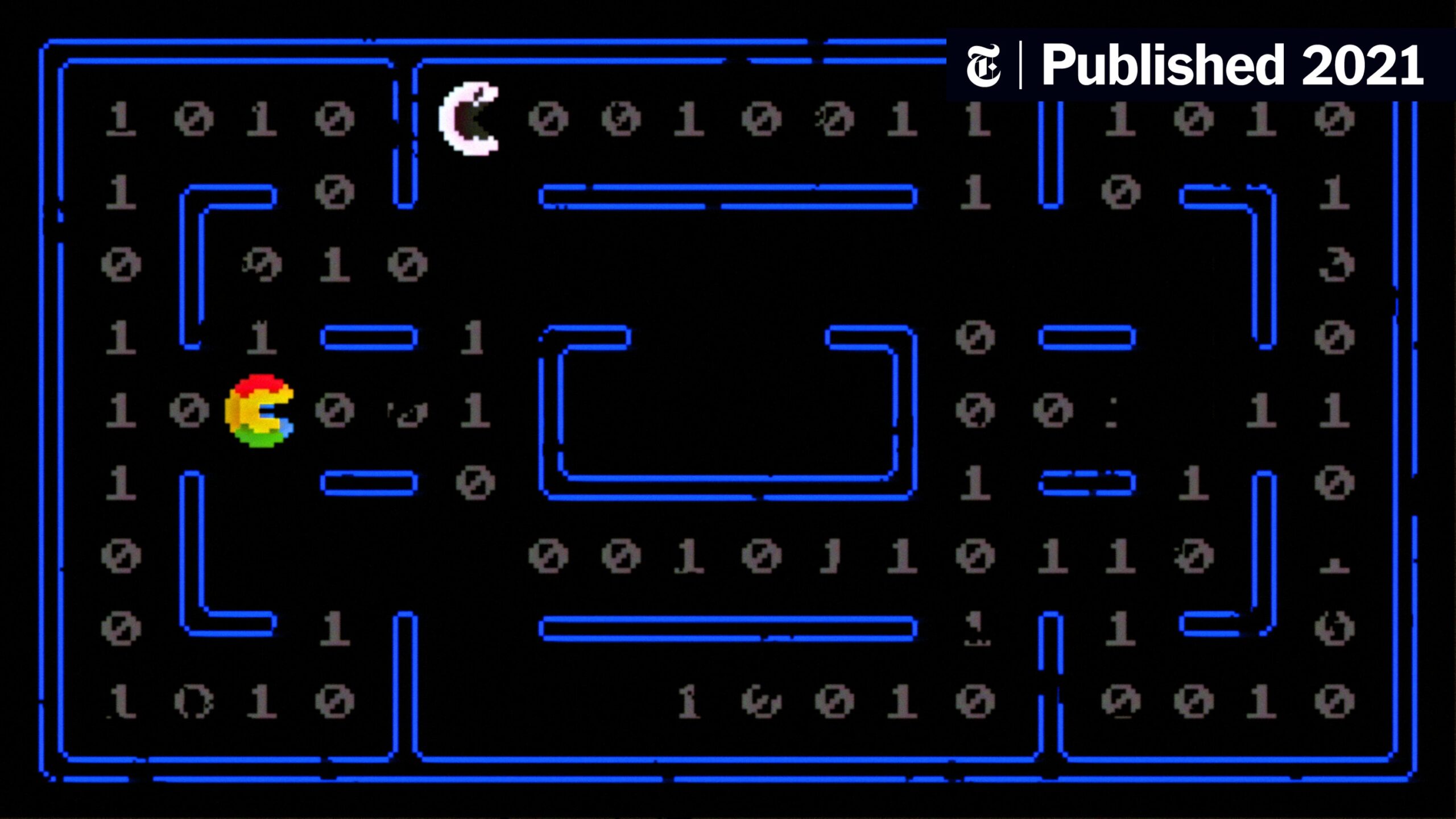
The digital realm, once envisioned as a democratizing force untethered from the biases of flesh-and-blood institutions, now stands exposed: a shadowed bastion where the erosion of privacy manifests not merely as an incidental glitch, but as the defining pathology of the age. The feminism of our present is not forged in suffragist banner-waves or legislative battles—it is etched in the cryptic algorithmic ledgers of those who surveil, curate, and commodify human frailty. Digital impunity, an unchecked force, is the white noise beneath countless conversations about equality, a sound so pervasive it has become the aural signature of generational disaffection. Yet what does it mean to grapple with freedom when the very fabric through which we move is riddled with surveillance, predation, and the algorithmic privileging of some selves over others? This is not the first frontier where power has claimed new territories—in every epoch, the oppressed have been forced to reimagine resistance, but rarely has the battleground been so intangible, so insidiously embedded within the tools we hold like extensions of ourselves.
The Architecture of Unreliability: Why “Digital” is a Flawed Metaphor
At its core, the term digital implies something crystalline, pure—an escape from the tactile, the physical. Yet the architectures of modern data-scapes are less like transparent portals to enlightenment and more akin to labyrinthine cathedrals, built by architects who know not the ethics of foundations. Feminism, long a discipline of material critique, now finds itself dissecting a realm where the boundaries between identity and data, between public self and private cipher, dissolve with unsettling ease. The “internet” is not an ungoverned wilderness; it is a meticulously curated domain, where platforms like hyperagora—the modern town-square as much as it is a marketplace—dictate who may raise their voice, whose pain garners algorithmic amplification, and whose erasure goes unnoticed. The impunity here is structural, predicated on the assumption that data, in its ephemeral, dematerialized form, cannot be contested. “Digital,” it turns out, was never about transcendence. It was about displacement.
Consider the paradox of the online persona: a construction that is both hyper-authentic and deeply falsifiable. The self we present on these stages is not a manifestation of truth, but a transaction—an exchange of attention for access, of vulnerability for validation. This transaction renders women, in particular, the subjects of a new kind of plunder: harvesting of emotional labor, where tears, rage, and solidarity are repackaged into metrics for engagement. The digital impunity we experience is the result of a calculus where accountability is merely another form of monetization.
The Illusion of Hyperconnectivity and its Hollow Feminist Counterparts
Hyperconnectivity promises that solidarity can transcendent borders, that a tweet or a Story can shatter systemic silences. And yet, in the act of posting, commenting, or sharing, we are seldom participants—we are more often consumers of a feminism that has been engineered for maximum reach, for maximum virality. Like the opium of algorithmic distraction, it numbs the edges of deeper inquiry. This is where the fascination lies: digital feminism is both a revelation and a delusion, a space that mirrors the oppressive structures it seeks to dismantle while promising liberation via infinite scrolling.
The real question is not whether women’s voices are heard online, but how they are amplified—whether it is through the lens of individual spectacle, celebrity status, or the commodified grievance industry where rage is curated, commodified, and monetized. The most insidious kind of impunity is not the overt censorship of a dissident; it is the quiet erasure of a feminist project itself, replaced by a series of performative gestures that soothe the collective ego without altering the conditions.
Privacy as the Last Sanctuary: Why Feminism Must Reclaim the Uncaptured Self
In a world where even our inaudible hums of distress are parsed into consumer insights, privacy has become not just a right but an act of defiance. The feminist praxis of the digital frontier is therefore an act of quiet sabotage: the deliberate refusal to surrender oneself to being a data point. It is the choice to speak into an abyss, knowing that the echo may be intercepted, but the utterance remains an act of sovereignty. For too long, we have been treated as material—objects of analysis, targets of advertising, or grist for the content mill. Reclaiming privacy as a political act means refusing to be a product of systems that were never designed with human fullness in mind.
Yet privacy, in this context, is not just an absence of gaze. It is the cultivation of selves that resist being reduced to algorithms. The real work of digital feminism is not just exposing the machinations of surveillance capitalism, but ensuring that the spaces women claim remain undistorted by malevolent or neutral observation. The paradox lies here: if we wish to dismantle systems that depend on our visibility, our engagement, our very presence, we must simultaneously recognize that our absence—or our carefully curated presence—can itself be a tool of resistance.
The Viral Misogyny of Algotihmic Impunity
Misogyny, long cloaked in physical restraint and explicit threat, has been rebranded as an intangible force: quick and quiet, a digital whisper that metastasizes overnight before vanishing like a flame within a misty glade. The platform economies we inhabit thrive on exactly this volatility—where violence and toxicity fester without systemic accountability, where abuse is an artifact rather than a crime, and where the perpetrators of harm are often shielded by the very systems meant to uphold justice.
What, then, is a digital feminist’s response to this? It requires more than reporting; it demands countervailing infrastructure. The current model of addressing abuse—waiting for it to surface, then reacting—is akin to closing a door after the flood. The future demands an insurgent feminism, one that not only exposes abuses of data but also constructs alternative architectures of existence. What would a feminism that operates outside the logic of surveillance capital look like? A movement that is self-determining, even in the context of hyper-surveillance? A discourse that understands that impunity is not merely the absence of punishment, but the absence of a framework where accountability even exists.
The Aesthetics of Erasure: Where Do We Build for Ourselves?
There exists, beneath the clutter of livestreams, the buzz of notifications, and the endless scroll, a desire for something else: a refuge. Feminists must ask, then answer: what if our spaces were not platforms for the consumption of attention? What if the future of feminist digital sovereignty meant creating platforms that are not merely another form of capture? Imagine a cyberspace where anonymity is a privilege—not an illusion, but a deliberate choice. Where collective narratives were not filtered through the gatekeepers of algorithmic bias. Where the act of “being” was not a transactional performance.
This vision requires creativity, audacious and unapologetic. It requires us to ask: who designed these spaces? What languages are they coded in? When we accept platforms like they are a given, we perpetuate a culture where dissent becomes a liability rather than a norm. It is no accident that the most progressive of online spaces—the ones that thrive on decentralized participation, mutual aid, and ethical design—are often the sites where feminist discourses lead rather than languish.
The Whitenoise Thesis: Why We Are All Conspirators in our Own Surveillance
Digital impunity is not merely the result of malicious actors—although there are plenty. It is also the result of a collective acquiescence, a quiet acceptance that the exchange of privacy for utility is an evolution we were powerless—or unwilling—to veto. The white noise of our generation is the constant background hum of consent: the click, every like, every checkmark acceptance. We are, in a sense, complicit in constructing systems that allow these violations to go unchallenged, not because we are ignorant, but because the systems are designed with impunity baked into their very logic.
To change this requires a seismic shift—not in technology, but in the very culture of engagement. It means asking whether the way we interact has become a form of submission. It means refusing to be the unwitting actors in the economy of control. Feminist praxis in the digital realm today must be a combination of exposure and transformation: unmasking the mechanisms of impunity while simultaneously constructing environments where dignity is the default rather than the exception.
The Future Is Not a Place; it is an Act
The irony of the digital age is that while we are more “connected” than ever, we remain isolated within the silos of attention, trapped in cycles that were never meant to elevate us. Feminists, historically the vanguard of resistance to systems of control, must now lead the charge in the virtual frontier. It is not enough to name the impunity; we must also claim the spaces where it cannot exist, carve out the paths where resistance is not merely a tweet, but a lived truth.
The work is not singular. It is not a single protest, a single policy, or even a single platform, but the constant act of building from the gaps: from the quiet of offline solidarity, from the strategic withdrawal into ethically sound digital collectives, from the insistence on a world where the fragility of the self is not the raw material of someone else’s profit. The battle for digital privacy is not only about reclaiming our fragments; it is about stitching together something greater. It is about writing the next chapter not in the noise, but in the spaces that exist beyond it.