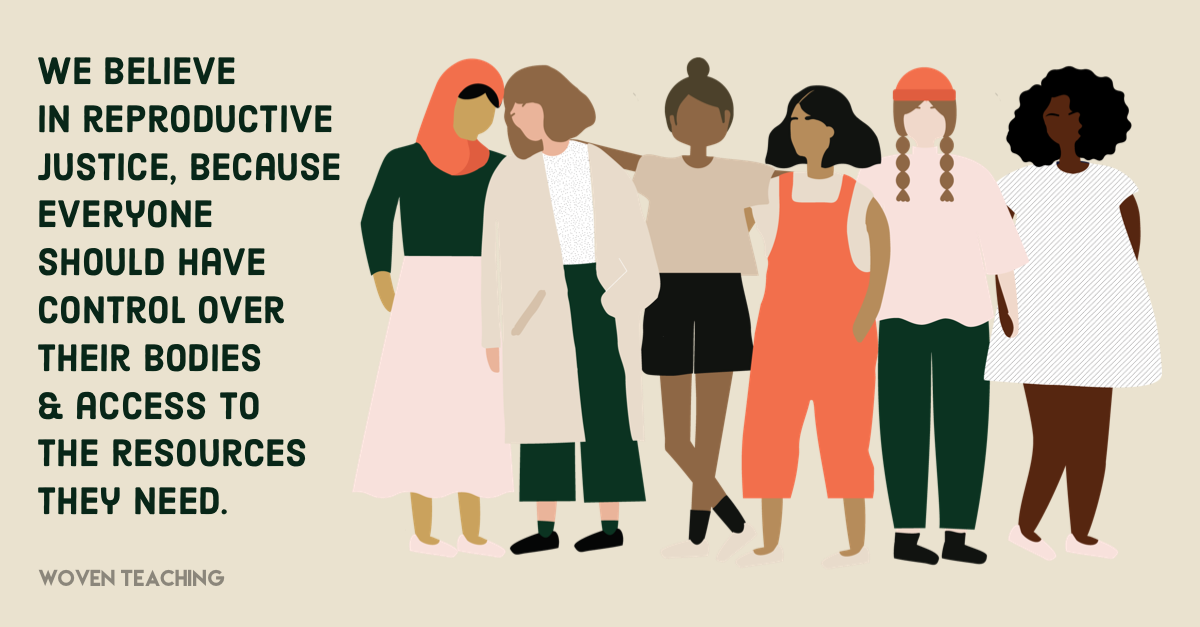
Feminism’s battlefield has never been defined by a single skirmish—if it ever was. But in its boldest reimagining, reproductive justice doesn’t merely reclaim territory; it rewrites the very map. Abortion access steals thunder from the headlines, casting its indelible glow over feminist discourse. Yet, in the shadows of that fiery spotlight lurks an equally potent, often overlooked ember: the right to procreate. Reproductive justice is a full-spectrum manifesto, one that swathes motherhood with unapologetic dignity, birthing rights with fervor, and the fertile body with the radical assertion: control is power—not just its absence. This isn’t feminism with a footnote; it’s a seismic shift from parity to panopoly—a constellation of rights that refuse to be limited by binary battles.
Abortion: The Glowing Gaze of Justice
Abortion fights like the darling of the feminist cause, its cause as resonant as it is exhausting. It demands autonomy over the body, unshakable defiance of patriarchal intrusions. And why shouldn’t it? Abortion is the raw, ragged defiance of a system that weaponizes fertility against women’s agency. But to limit reproductive justice to mere opposition is to mistake its scope for its ambition. Abortion is the sword in the dark; the right to have children is the sunrise—bright, brutal, and inevitable when met with open arms.
Paternality’s Pregnant Paradox: The Right to *Choose* More Than *End*
The battle for childbearing rights is, tragically, as invisible as they are urgent. A world where single mothers brave infertility clinics with cash-strapped optimism, where queer communities negotiate gestational surrogacy amid anti-LGBTQ+ fervor, and where disabled women are forced to choose between dignity and biology—this is the new wild west of reproductive rights. The right not to reproduce is lauded; the right to do so fearlessly remains a whispered revolt. Reproductive justice cracks this rigid binary open, declaring: pregnancy is a labor, not a crime.

Imagine a fertility clinic as a battleground. Not for termination, but for sovereignty. In this landscape, pregnancy is an act of defiance, a refusal to capitulate to the systems that dictate your limits. Yet what of those who long to be mothers but are met with institutional refusal? The right to have children isn’t a luxury—it’s the last stronghold of personal liberation in a world obsessed with erasing choice from the equation.
Silenced by Silence: How Barren Women Become the Last Women
The reproductive rights narrative often defaults to motherhood as the final frontier, the crowning glory of womanhood. But what of the woman denied motherhood? Infertility isn’t just a medical condition; it’s a political scar. The right to parenthood is intertwined with the right to be granted parenthood, with witnessed parenthood, with celebrated parenthood. Infertility clinics stand as silent monuments to systemic erasure—where debt clouds hope, where eggs are auctioned in stealthy transactions, and where the state’s hands are conspicuously absent.
Reproductive justice confronts this paradox: Can you have rights you don’t fully deserve? The answer, searingly, is no. Justice doesn’t extend a hand until agency does. And agency, in this vein of fertility wars, is less about bodily autonomy and more about cradling autonomy—the right to hold a child in your hands *and* your heart.
Gestational Struggles: Parenthood as a Subversive Movement
Consider the queer mother, the single father-in-armor, the trans couple birthing life through unconventional means. Their parenting narratives are not deviations from the norm—they are its dismantling. Reproductive justice refuses to polish rough edges into conformity. Gestational surrogacy, co-parenting, adoption: these are not mere alternatives; they are revolutions disguised as domestic bliss. Yet the rhetoric of “choice” too easily reduces complex choices to checkboxes. Does a woman choose to be infertile? Is a queer family a ‘substitute’ for heterosexual normativity? Of course not. And yet, the institutional machinery continues to ask these questions.
The appeal of choiceless choices is its subversive power. Queer parenthood is not a compromise—it’s a refusal to conform. It tells the patriarchal order: we don’t ask permission; we manifest agency. Reproductive justice does not merely tolerate but celebrates these deviations, forcing the world to look at unconventional pathways as sacred, rather than suspect.
The Cradle as a Battlefield: Parenting Rights as Revolutionary Right
The reproductive justice movement dares to ask: What does it mean to have a child in a world that has already weaponized you? Parenthood is not a neutral act—it’s an act of resistance when framed within a system designed to control rather than celebrate bodily autonomy. A Black mother raises a child in a society that wants him silenced. A low-income couple adopts because the system makes having children unaffordable. A transgender couple navigates adoption with a bureaucracy built to erase them.
Reproductive justice isn’t just about the right to be a parent—it’s about the right to be a good parent, without parental leave being a financial death sentence, without child custody laws assuming a woman’s failure where a man’s rights prevail. These are not secondary rights; they are linchpins, the structures upon which a truly free society would be built—or dismantled.
Unraveling the Guilt: A Fertility Beyond Moral Judgment
Modern feminism has struggled with one particularly sticky paradox: the tension between “good” and “right.” Having children has long been shackled with ethical guilt—environmental guilt (another carbon footprint), gendered guilt (you *should* pay more to mother), even genetic guilt (the fear of passing trauma). Reproductive justice dismantles this culpability culture. The right to parent isn’t about moral superiority—it’s about unburdening. And yet, it remains a wildcard: who will stand guard at the fertility clinic? Who will defend the mother’s right to exist unapologetically as she does?
The narrative should shift from “Can I deserve to be a mother?” to “Does this mother deserve to have that right affirmed?” Childbearing isn’t a moral trial; it’s a moment of creation, of choice, of defiance. And defiance, when met with resistance, is when rights evolve from possibility to necessity.
Nurturing Rebellion: The Right to Raise as Right to Reshape
There’s a terrifying, almost unspoken truth about the right to parenthood: it’s a revolutionary act. It’s not merely about birthing a child—it’s about the right to guide a life, to model, to remake. In a world that loves to legislate morality into schools and homes, parenting becomes an act of defiance against a system that seeks to dictate what a person should be, rather than who they are.
The appeal of parenting rights lies here: to be a parent without permission, to raise a child in a world that keeps denying the foundation of that child’s existence. From queer children growing up with a single parent to immigrant families forging new roots through childrearing, parenting itself is an act of revolution—and reproductive justice demands we recognize and arm those revolutions.
Feminism’s journey has never been monogamous, and that’s its magic. The right to abort is beautiful, yes, but the right to become is equally radical. Reproductive justice isn’t a concession—it’s a reclamation of the full spectrum, from saying no to saying yes. It’s defiance with a scalpel in hand, an ax for the norms, and a hymn for the mothers and potential mothers who have long been excluded.
So let us not mythologize motherhood. Let us not romanticize infertility as a noble sacrifice. Instead, let reproductive justice become the battle hymn of the unspoken. It’s the right to be a parent without judgment. It’s the right to mother in a world that wants you silent. It’s the right to choose, to create, to defy, and to thrive—unapologetically, without apology. That is the fullness of our revolution.