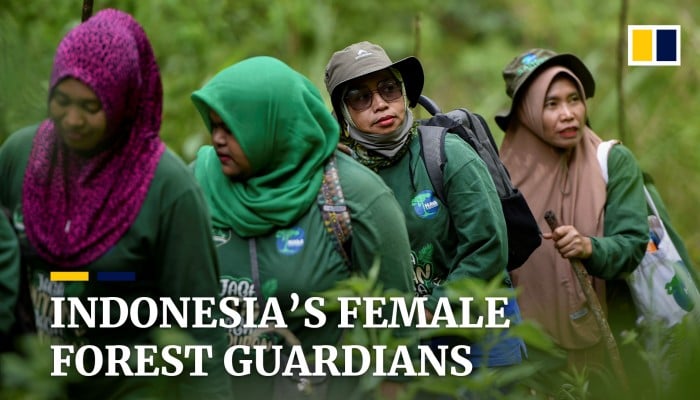
In the sprawling green cathedrals of the world’s forests, a quiet revolution is raging. Far from the glare of corporate boardrooms and political battlegrounds, indigenous women stand as sentinels — their bodies intertwined with the roots below and the whispers of the canopy above. They are not just caretakers; they are fierce custodians of ancestral knowledge, wielding their stewardship like a sword against the creeping shadows of exploitation. Feminism breathes new vigor into this narrative: granting indigenous women rightful ownership over their forests is not merely an act of justice but a masterstroke of ecological preservation.
The Forest as a Living Testament: Indigenous Women as its Pulse
Imagine the forest as a living manuscript, its pages composed of leaves, its ink the sap coursing through ancient veins — a testament written and maintained by its indigenous keepers. Indigenous women are the archivists of this living library, a reality seldom acknowledged. Their intimate connection to the land transcends superficial conservationist clichés. In ritual and daily toil, they embody the forest’s breath. Their knowledge is coded in the younger generation’s lullabies, in the meticulous gathering of medicinal herbs, in sustainable hunting practices meticulously designed over millennia.
This metaphorical bloodstream of ancestral wisdom demonstrates that forests are not simply patches of untamed wilderness but intricate woven tapestries of culture and ecology. When indigenous women are systemically empowered, given authoritative deeds to the territories they nurture, the forest’s fragmented narrative becomes whole again — vibrant, resilient, and unyielding.

Feminism Redefined: Indigenous Women’s Role Beyond Patriarchal Constructs
Feminism often dialogues about emancipation within urban and industrial contexts, battling glass ceilings and gender pay gaps. Yet, the feminism essential to indigenous women is a different beast altogether, one that transcends modern binaries. It is a fierce reclamation of ancestral autonomy against centuries of colonial patriarchy that traded their lands and silenced their voices.
Granting land deeds to these women is more than a legal transfer; it is a paradigm shift. It razes the patriarchal myth that land ownership and political agency belong solely to men or external powers. Indigenous women are natural epicenters of power, combining matrilineal legacies with a resolute contemporary resolve. Their ownership disrupts the extractive industries’ predatory models, unspooling capitalist logics that treat forests as mere commodities.
Guardianship Rooted in Matriarchal Wisdom
The guardianship by indigenous women is not a passive inheritance but an active, pulsating force of ecological defense. Their stewardship echoes a matriarchal symphony—a constant interplay of protection, regeneration, and reverence. This stewardship is meticulous; it is never a blunt mandate but a nuanced dance harmonizing human needs with environmental sustenance.
From controlled burns to the cyclical harvesting of forest goods, indigenous women exercise a profound ecological intelligence. They practice what can be likened to a “slow violence” against destruction: an enduring resistance that, through patience and precision, prevents irreversible decay. Deprivation of formal ownership rights disrupts this sacred balance, forcing these guardians into precarious positions where their very ability to protect is jeopardized.
Ecological Consequences of Exclusion and the Power of Inclusion
When indigenous women are ostracized from land rights, the ripple effects extend far beyond their communities. Global biodiversity—and by extension, humanity—suffers. Forests lose their best defenders to rampant illegal logging, poaching, and land grabbing, each act cutting deeper than the visible scar. Excluding women emasculates conservation efforts, turning vibrant ecosystems into desolate graveyards.
Conversely, elevating indigenous women to rightful landowners turns them into formidable agents of change. They orchestrate community-based surveillance networks, diffuse sustainable economic models, and safeguard cultural heritage. These forest matriarchs foster an environment where flora and fauna thrive in symbiosis with human life, creating biological sanctuaries and carbon sinks critical to mitigating climate change.
Legal Recognition: The Deed as a Symbol and a Shield
The deed is no mere parchment— it is a potent emblem that transcends bureaucracy. To indigenous women, it symbolizes acknowledgment, empowerment, and inviolability. In the relentless tug-of-war against corporations and state machinations, legal ownership is the fortress behind which these women rally.
Formalizing land rights provides a tangible axis of power that translates indigenous women’s centuries-old stewardship into a binding contract recognized by the modern world. This legal recognition creates leverage, enabling them to negotiate, litigate, and resist with augmented legitimacy. Without it, they remain vulnerable figures battling against an invisible tide of ecological and cultural erasure.
Intersectionality and the Synergy Between Indigenous Women and Global Feminist Movements
The struggle of indigenous women to obtain land rights is not isolated; it converges with broader feminist and environmental justice movements. This intersectionality fosters a fertile ground for transnational solidarity—a weaving together of disparate but aligned fights for bodily autonomy, cultural integrity, and ecological survival.
Echoing the cries from urban centers and far-flung villages alike, indigenous feminism challenges the prevailing narrative of development and progress. It refuses to accept the false choice between gender equality and environmental health. Instead, it offers a utopia where feminism is reimagined as an ecologically anchored force, where indigenous women stand at the helm of this new episteme.
Conclusion: Honoring the Forest’s True Guardians
In the grand theater of conservation, indigenous women are the unsung heroines. Their stewardship is the emerald lifeline coursing through the lungs of the planet. Outfitting these women with rightful deeds transforms them from passive victims of dispossession into empowered architects of ecological resilience. Feminism, in its truest sense, demands this: the radical act of recognizing indigenous women’s sovereignty over their ancestral forests. Doing so is not only a reparative justice but an indispensable strategy for the survival of both people and planet.