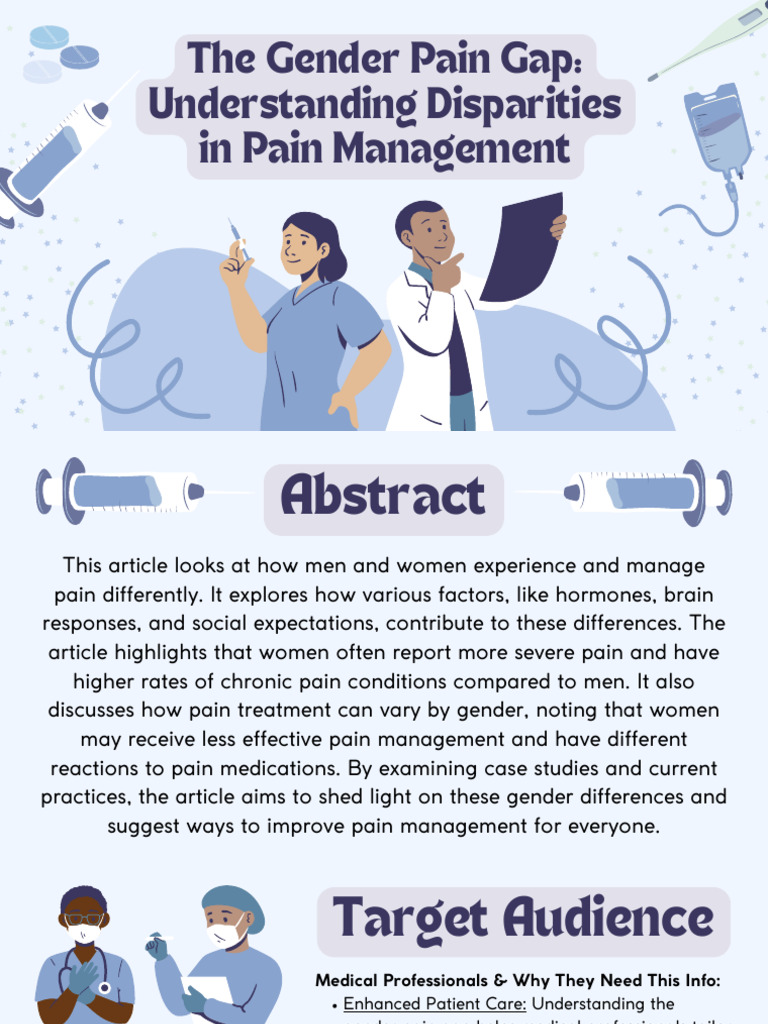
Ever wondered why, in the sanitized chaos of the emergency room, women’s cries of pain often seem quieter to the medical staff? Is it a mysterious conundrum or a glaring systemic failure masked in white coats? The “Gender Pain Gap” is not just a clinical curiosity—it’s a riveting exposé of how society, medicine, and implicit biases converge, sometimes to the detriment of women’s health. Let’s unpack this unsettling phenomenon with unflinching scrutiny.
The Anatomy of Dismissal: What is the Gender Pain Gap?
The term “Gender Pain Gap” refers to the documented disparity in how pain is assessed and treated across sexes, predominantly affecting women. In emergency rooms worldwide, women’s pain complaints are more likely to be underestimated, misdiagnosed, or outright dismissed compared to men’s. This isn’t merely anecdotal or speculative. It’s a science-backed, frustratingly persistent trend where biological sex meets social prejudice, yielding dangerous consequences. The gap reveals a chasm—not between genders—but between experience and acknowledgment.
Why Are Women’s Pain Expressions Overlooked?
Peel back the layers, and a toxic cocktail of assumptions, stereotypes, and historical biases emerges. Women, often stereotyped as “emotional” or “exaggerating,” are subjected to a cultural script that trivializes their suffering. Healthcare providers, operating under implicit biases, sometimes perceive women’s pain reports as less credible. This isn’t a simple matter of negligence; it’s a systemic cognitive hazard. When a woman describes stabbing chest pain or relentless migraines, the default mode shifts toward psychological explanations—stress, anxiety, or hysteria whispers a shadow of the past. The result: genuine symptoms morph into “women’s problems” without alarm bells ringing.
Biological Complexity: Is Women’s Pain Different?
Biologically, pain is a mercurial, multifaceted experience intertwined with neurological and hormonal nuances. Women’s pain pathways are influenced by hormonal cycles and genetic variabilities that can amplify pain sensitivity or alter perceptions. Yet, medical research paradoxically underrepresents women, most clinical trials historically favoring male subjects. This gap begets diagnostic blind spots. Conditions like fibromyalgia, endometriosis, or autoimmune diseases predominantly afflicting women are notoriously difficult to detect and often relegated to the margins of medical understanding. The complexity is ignored, not because it’s unfounded, but because recognition demands nuanced, sex-specific knowledge—a demand unmet by many ER protocols.
The Dangerous Consequences of Ignoring Women’s Pain
What happens when pain is sidelined? Diagnosis delays, ineffective treatments, and worsening health trajectories follow. Women endure longer suffering, navigating a treacherous maze of skepticism that exacerbates psychological distress and physical harm. The discomfort of under-treated pain is compounded by an existential frustration: the feeling of invisibility within the very system meant to heal. In acute scenarios like heart attacks—where women’s symptoms often diverge from textbook presentations—the stakes are deadly. Misinterpretation in ERs can cost precious time and lives. Ignoring women’s pain isn’t just a momentary failure—it’s a tragic, recurring saga.
Feminism and Pain: Challenging the Status Quo
The feminist movement has long contested the marginalization of women’s experiences, and pain is no exception. Calling out the gender pain gap is a radical act of reclaiming bodily autonomy and demanding medical equity. Feminism presses questions about healthcare structures: Whose narratives are believed? Who designs clinical studies? Whose pain counts? It interrogates the patriarchal underpinnings embedded deep in medical practice. By amplifying women’s voices and pushing for gender-sensitive training and research, feminism seeks to dismantle the invisibility cloaking women’s pain—a cultural indictment as much as a medical imperative.
Innovations and Solutions: Bridging the Gap
Fixing the gender pain gap necessitates more than good intentions; it demands systemic change. Emerging solutions include comprehensive bias training for ER personnel, ensuring medical professionals recognize and counteract their own prejudices. Patient-centered care models emphasize listening—not just hearing—women’s pain narratives. Advances in biomedical research advocate for inclusive studies accounting for sex and gender differences. Moreover, integrating pain specialists and adopting standardized pain assessment tools sensitive to gender variations can revolutionize treatment outcomes. The path forward is labyrinthine but navigable with commitment and consciousness.
Rethinking Pain Narratives: Culture, Language, and Power
At its core, the gender pain gap is a narrative crisis—a clash between lived reality and societal scripts. Language shapes perception; words like “hysterical” or “dramatic” trivialize and delegitimize. Cultural expectations pressure women to endure silently or mask pain to avoid stigma. Medical institutions are microcosms of these pervasive ideologies. To rewrite the story, it’s imperative to foster an environment that validates pain’s authenticity regardless of gender, dismantling hierarchies of suffering. This is more than clinical reform—it’s an invitation to rethink power, empathy, and respect in healthcare.
Conclusion: Moving Beyond the Gender Pain Gap
So, why are women’s pain complaints so frequently ignored in the bustling theater of emergency rooms? Because longstanding myths, scientific oversight, and systemic biases converge to silence them. Yet, the challenge posed by the gender pain gap isn’t insurmountable. It demands a relentless questioning of entrenched norms, a reawakening to biological and cultural complexities, and a fierce commitment to gender equity in healthcare. The stakes couldn’t be higher—not just for women’s health but for the integrity of the medical profession itself. Recognizing and addressing this gulf isn’t optional; it is the moral imperative of modern medicine.