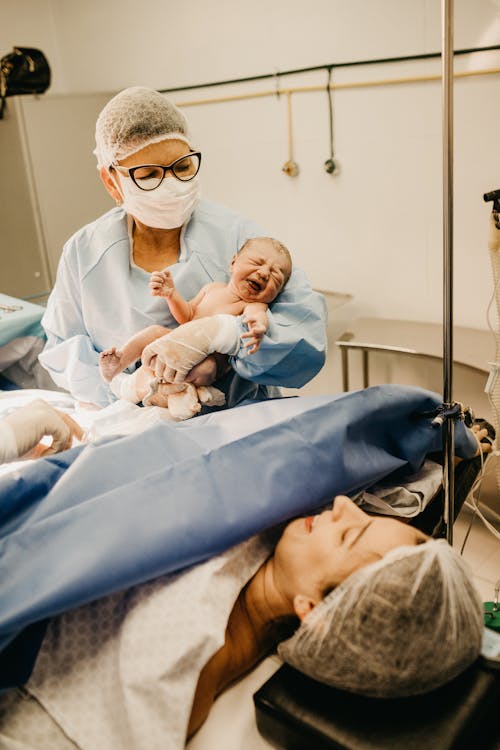
The image of a midwife—hands steady, eyes knowing, body poised between the raw pulse of life and the cold precision of medical intervention—is a quiet rebellion in a world that has long equated birth with control. It is not the scalpel that fascinates us, though it gleams under fluorescent lights, but the hands that refuse to wield it. This is the paradox of modern maternity: a system that has pathologized the most natural of human experiences, where the midwife exists as both relic and revolutionary, her presence a flicker of defiance against the institutional machinery that would reduce birth to a procedure.
The Illusion of Choice in a System Built for Compliance
We are told, in the glossy brochures of obstetric care, that women have choices. Epidural or natural? Hospital or birth center? But these are not choices at all—they are concessions. The midwife, in her refusal to default to the scalpel, exposes the lie. She does not offer a menu of options; she offers a return to the body’s own wisdom, a radical act in an era where autonomy is measured in millimeters of medical consent. The system does not want midwives. It wants compliance. It wants bodies that can be scheduled, monitored, and, if necessary, cut open. The midwife, with her patience and her trust in the unmeasurable, is an inconvenience—a reminder that birth is not a defect to be managed, but a process to be honored.
The Midwife as the Last Bastion of Embodied Knowledge
In the age of data and algorithms, where even our emotions are quantified, the midwife stands as a living archive of embodied knowledge. She does not rely on fetal monitors to tell her when a baby is in distress; she listens to the mother’s breath, the tension in her shoulders, the way her voice cracks when she speaks of fear. This is not mysticism. It is a different kind of science—one that does not reduce the human to a series of graphs and numbers, but sees the whole. The fascination with midwifery is not just about the desire for a gentler birth; it is a longing for a world where expertise is not synonymous with detachment. Where care is not a transaction, but a covenant.
The medical establishment, in its relentless pursuit of efficiency, has erased this kind of knowing. Midwives are the last keepers of a language that speaks in whispers and sighs, not beeps and blips. Their hands, calloused from years of catching life, are a rebuke to the sterile gloves of the surgeon. They are the proof that some things cannot be standardized—that the body, in all its messy, unpredictable glory, resists the cold embrace of the system.
The Surgical Gaze: When Birth Becomes a Procedure
Consider the language of modern obstetrics: “delivery,” as if a baby were a package to be handed over. “Failure to progress,” as if a woman’s body were a machine that had malfunctioned. The surgical gaze does not see a mother and child; it sees a case, a chart, a potential complication. The midwife, by contrast, sees a woman in the fullness of her power—a force that cannot be sectioned, only supported.
This is not to say that medical intervention has no place. But when cesareans outnumber vaginal births in some hospitals, when inductions are scheduled like dental appointments, the line between necessity and convenience blurs into obscenity. The midwife is the one who asks, before the knife is raised: *Is this truly urgent, or is this just easier?* Her presence forces the question. And in a system that profits from the commodification of birth, that question is dangerous.
The Feminist Undercurrent of Midwifery
Feminism, at its core, is about reclaiming agency—the right to decide what happens to our bodies, without apology or permission. Midwifery is feminism in action. It is the insistence that a woman’s body is not a problem to be solved, but a process to be trusted. The surgical model of birth, with its paternalistic undercurrents, is a microcosm of patriarchal control: the expert knows best; the patient must comply. The midwife, in her partnership with the birthing woman, dismantles that hierarchy. She does not deliver babies. She witnesses them.
This is why the rise of midwifery is not just a trend—it is a quiet insurrection. It is women, tired of being treated as vessels for medical experimentation, turning back to the wisdom of their foremothers. It is a rejection of the idea that birth is a medical event, rather than a human one. And it is a demand for a system that sees women not as patients, but as people.
The Aesthetic of Resistance: Why Midwives Captivate Us
There is something undeniably compelling about the image of a midwife. Perhaps it is the contrast: the softness of her hands against the hardness of the medical tools that surround her. The way she moves through a room not as an authority figure, but as a guide. The fact that she does not wield power over, but power with. In a world that has taught women to fear their own bodies, the midwife is a figure of radical trust. She does not fear the unknown; she meets it with open arms.
This is why her presence haunts us. She is the embodiment of a world we have lost—the world where birth was not a crisis, but a celebration. Where women were not patients, but sovereign. The fascination with midwifery is not just about the desire for a gentler birth; it is a longing for a world where expertise is not synonymous with detachment, where care is not a transaction, but a covenant. The midwife is not just a caregiver. She is a reminder of what it means to be fully human.
The Future: Can the System Tolerate the Midwife?
The question is not whether midwifery will survive, but whether the system will allow it to thrive. Already, we see the backlash: hospitals that co-opt the language of midwifery while stripping it of its essence, insurance companies that refuse to cover home births, medical boards that scrutinize midwives more harshly than they do surgeons. The system does not want midwives. It wants midwives that can be controlled, that can be assimilated. But the midwife, by her very nature, resists assimilation. She is the thorn in the side of institutionalized birth—the one who reminds us that not everything can be standardized, not everything can be scheduled, not everything can be cut open.
The future of birth is not in the hands of the surgeon, but in the hands of the woman—and the midwife who stands beside her. The system may resist. It may try to contain her. But the midwife is not a relic. She is the future. And the future, no matter how much the system tries to shape it, will always belong to those who refuse to be cut.