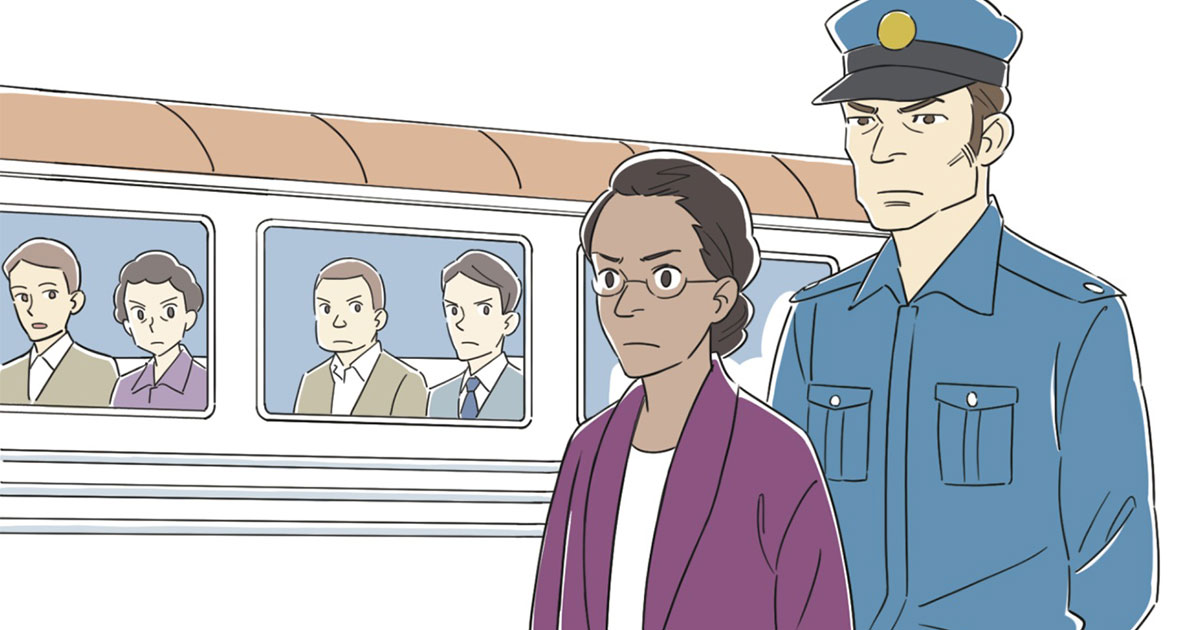
In a world where silence has long been the currency of oppression, the act of fighting back is nothing short of revolutionary. Feminism is not a monolith—it is a multifaceted movement, a chorus of voices demanding justice, autonomy, and the unapologetic reclamation of power. The woman who fought back is not just a figure of defiance; she is a mirror reflecting the myriad struggles, triumphs, and complexities of feminist resistance across time and space. This is not a tale of a single heroine, but an ode to the countless women who have shattered the illusion of compliance, each in their own way, each with their own weapon—whether it be a pen, a protest sign, or sheer unyielding will.
The Unseen Battles: Everyday Feminism in the Shadows
Feminism is not confined to the grand stages of history or the viral moments of social media. It thrives in the quiet, unglamorous spaces where women navigate a world that constantly seeks to diminish them. The woman who fought back might be the cashier who refused to accept a lower wage for the same work, the student who spoke up when her professor dismissed her ideas as “too emotional,” or the mother who left an abusive partner despite the societal stigma. These are the unsung warriors of feminism—those who fight not for headlines, but for dignity in the face of daily microaggressions and systemic erasure.
Consider the woman who, in a boardroom dominated by men, asserts her expertise with unwavering confidence, only to be labeled “bossy” or “difficult.” Her fight is not a spectacle; it is a quiet rebellion against the patriarchal script that demands women be demure, agreeable, and invisible. The feminism of the unseen is not about performative allyship or virtue-signaling; it is about survival, about carving out space in a world that would rather see women silenced. It is the feminism of the single mother working two jobs to afford her child’s education, the woman who reports workplace harassment despite the fear of retaliation, the girl who cuts her hair short in defiance of beauty standards that chain her to a narrow ideal of femininity.
The Pen as a Weapon: Feminist Literature and the Power of Words
Words have always been a formidable arsenal in the feminist arsenal. The woman who fought back may have wielded a pen instead of a sword, but her impact is no less profound. Feminist literature is a battlefield where ideas clash, where narratives are rewritten, and where the very foundations of oppression are interrogated. From the fiery manifestos of early suffragettes to the introspective essays of contemporary writers, feminist texts have dismantled myths, exposed injustices, and given voice to the voiceless.
Think of the woman who wrote under a pseudonym to escape persecution, only to become a literary icon whose words would echo through generations. Or the poet whose verses laid bare the pain of gendered violence, forcing readers to confront the brutality they had been conditioned to ignore. Feminist literature is not just a genre; it is a revolution in ink and paper, a way to challenge the dominant narratives that have long painted women as passive, weak, or inferior. It is the feminism of the woman who scribbles her manifesto in the margins of a notebook, the academic who deconstructs patriarchal theories in her research, the blogger who exposes the hypocrisy of a culture that worships female bodies while policing them.
In a digital age, this fight has expanded into the realm of social media, where threads become manifestos and tweets are the new pamphlets. The woman who fought back may now be the one who crafts a viral thread dismantling rape culture, or the influencer who uses her platform to amplify marginalized voices. The medium may change, but the mission remains the same: to disrupt, to educate, and to empower.
The Streets as a Stage: Protest, Performance, and Public Defiance
There is a raw, electric energy in the act of taking feminism to the streets—a place where the personal becomes political, and where silence is no longer an option. The woman who fought back may have marched in the suffragette parades of the early 20th century, or stood in the front lines of a Black Lives Matter protest today. She may have chained herself to the gates of a government building, or organized a flash mob to reclaim public spaces from the male gaze. Protest is not just about raising a voice; it is about occupying space, about refusing to be invisible, about making the world take notice.
The feminist protest is a performance, a carefully choreographed act of defiance that challenges the status quo. It is the woman who stands topless in a public square to protest body shaming, or the group of women who project the names of femicide victims onto the walls of a cathedral. It is the teenager who spray-paints feminist slogans on a subway wall, or the collective that stages a “die-in” to highlight the epidemic of gender-based violence. These acts are not mere spectacles; they are interventions, disruptions that force society to confront the realities it would rather ignore.
Protest is also a space of solidarity, where women from different backgrounds, races, and classes come together to demand justice. It is the feminism of the indigenous woman fighting for land rights, the disabled woman advocating for accessible healthcare, the queer woman demanding recognition in a heteronormative world. The streets are where these women find their power—not in isolation, but in the collective roar of a movement that refuses to be silenced.
The Body as a Battleground: Feminism and Physical Resistance
The female body has always been a contested territory, a site of both oppression and resistance. The woman who fought back may have done so with her body—through hunger strikes, through self-defense classes, through the refusal to conform to beauty standards that seek to control her. She is the anorexic who reclaims her body from the tyranny of thinness, the survivor who testifies against her abuser in court, the athlete who defies the notion that women are “too weak” to compete. Her fight is not just ideological; it is visceral, a rebellion against the physical constraints imposed upon her by a patriarchal society.
Consider the woman who trains in martial arts not just for self-defense, but as a metaphorical rejection of the idea that she must be passive. Or the one who undergoes gender-affirming surgery, not as a concession to societal expectations, but as an act of self-determination. The body is not just a vessel for feminist resistance; it is the very medium through which women assert their autonomy. It is the feminism of the woman who refuses to shave her legs, who tattoos her skin with words that reclaim her power, who dances in public spaces without apology.
This is also the feminism of the woman who survives. The survivor of sexual assault who speaks out despite the backlash, the woman who leaves an abusive relationship and rebuilds her life, the girl who resists the pressure to marry young and instead pursues her education. Her body is her battleground, and her survival is her victory. In a world that seeks to police female bodies, the act of existing unapologetically is itself a form of resistance.
The Future is Feminist: Intersectionality and the Next Wave of Resistance
Feminism is not a static ideology; it is a living, evolving force that must adapt to the complexities of the modern world. The woman who fought back today may be fighting for climate justice, for LGBTQ+ rights, for economic equality, or for the decriminalization of sex work. She understands that feminism cannot exist in a vacuum—it must intersect with other struggles, amplifying voices that have been historically marginalized. Intersectional feminism is not a trend; it is a necessity, a recognition that no woman’s liberation can be achieved in isolation from the liberation of others.
The next wave of feminist resistance is not just about smashing the glass ceiling; it is about dismantling the entire structure that keeps marginalized women trapped. It is the feminism of the woman of color who fights against both sexism and racism, the disabled woman who advocates for accessibility in feminist spaces, the trans woman who demands recognition in a movement that has long excluded her. This is a feminism that refuses to center whiteness, that challenges ableism, that embraces queer and non-binary identities. It is a feminism that is not just inclusive, but transformative.
The woman who fought back in the past laid the groundwork for this future. Her struggles were not in vain; her resistance paved the way for a new generation of feminists who are unafraid to ask difficult questions, to challenge their own privileges, and to demand more. The future of feminism is not a utopia; it is a work in progress, a constant negotiation between idealism and reality. But it is a future worth fighting for—one where no woman is left behind, where every voice is heard, and where the act of fighting back is no longer radical, but inevitable.