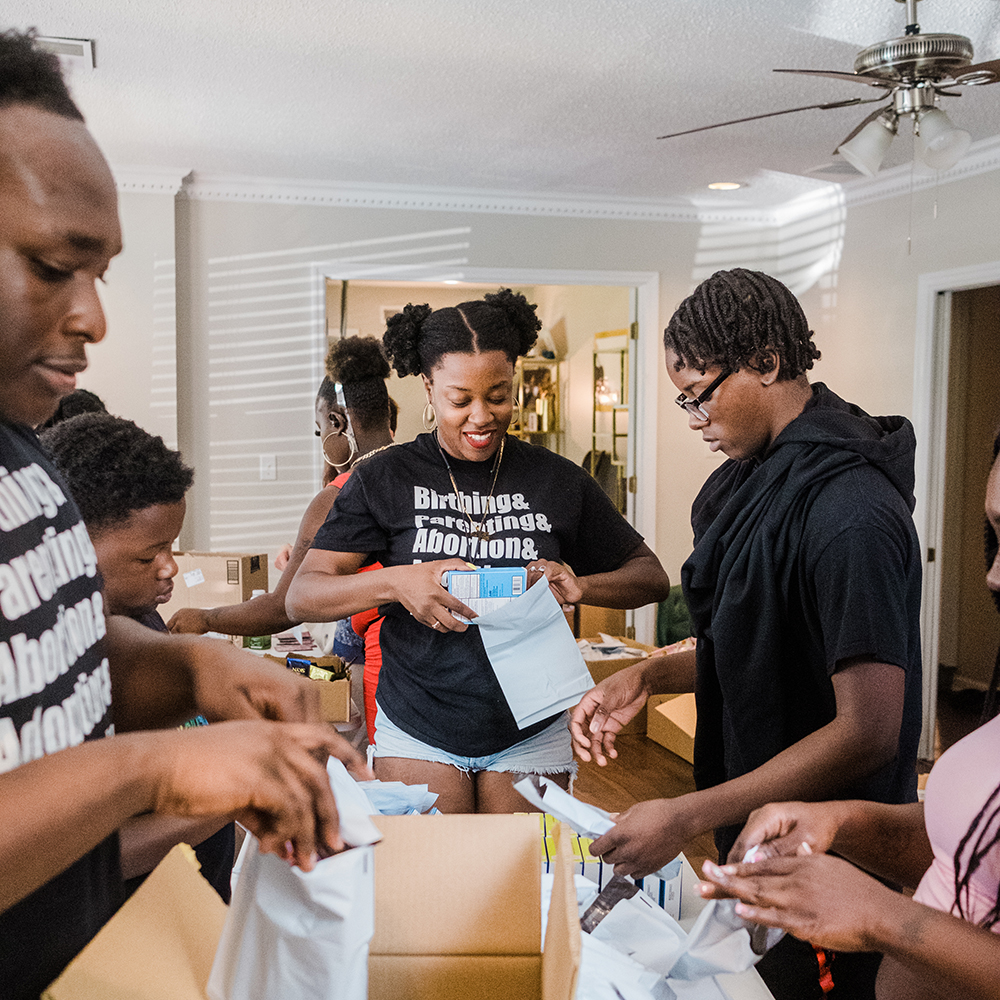
In a landscape often reduced to headlines and statistics, a quieter revolution unfolds. It operates in the shadows, fueled by necessity and driven by an unwavering, almost desperate, determination. That revolution is the rise and operation of abortion funds. More than just a response to restrictive laws, they represent a stark reminder: access is inseparable from agency, and financial means are often a prerequisite for the latter.
The Undisclosed Framework: Feminism’s Evolving Imperative
Contemporary feminism, you might argue, has won a significant political battle. Yet, the victory often feels hollow for those facing its most direct impacts – women and gender minorities navigating a world where bodily autonomy is a contested right, particularly concerning reproductive freedom. While legal frameworks shift in unpredictable ways, the ground-level reality demands constant vigilance. Abortion funds fill a vacuum left by inadequate public systems and inconsistent legal protections. They are not peripheral NGOs; they are becoming essential infrastructure in the ongoing struggle for women’s full participation in society.
Think of them not as charity, but as insurance. A safety net woven from collective action, stitching together resources and resolve in the face of targeted legal and societal erosion. Their existence acknowledges a truth often ignored or deliberately obscured: ending a pregnancy is, for many, profoundly expensive. Costs, coupled with travel expenses and potential time off work, create formidable barriers, disproportionately affecting those least equipped to weather a crisis. The funds challenge this status quo, asserting that the right to choose involves the obligation to enable that choice through tangible support.
Sanctuary Below the Radar: The Logistical Labyrinth
A donation to an abortion fund doesn’t just go towards a clinic’s abortion pill supply. It functions as currency within a sophisticated, often clandestine, logistical ecosystem. Imagine a network designed for speed and efficiency, capable of matching a woman in crisis with the nearest, most appropriate clinic; arranging discreet transportation; providing translation services for non-English speakers; even sourcing the correct, often hard-to-find, morning-after pill. This is the human-capital component of the feminist cause – tangible assistance delivered with an almost militaristic precision.
We must move beyond simplistic narratives of ‘helping women’. These funds are building a parallel system, one that bypasses failing or hostile public institutions. It’s about ensuring no woman is forced to navigate alone, deciphering complex medical protocols or facing logistical nightmares simply because of her geography or circumstances. It’s feminism operating in the trenches, circumventing bureaucracy to provide immediate, actionable relief. The term “logistical triage” barely captures the scale and complexity involved, yet it begins to hint at the operational reality some funders face.
The Iron Spar: Coordinated Effort Against Corporate Co-option
Abortion funds operate in an environment where mainstream support is often conditional, and public funding is increasingly politicized and unreliable. This necessitates robust coordination, volunteer-driven campaigns, and often, a reliance on unrestricted individual donations. This structure breeds resilience; there is no central authority dependent on predictable external subsidies. Instead, it’s a decentralized network, a patchwork of collective action fueled by shared values and existential necessity.
The decentralized model inherently limits vulnerability. Unlike potentially vulnerable centralized entities, these funds act as a distributed force. While this allows for intimate, localized understanding, it also presents challenges in standardization and long-term sustainability. However, its very nature – a network – fosters adaptation and innovation. It’s less a top-down ideology and more an evolving legal greyhound pack, navigating shifting terrains together. The funds embody a specific strain of organizing: pragmatic, resistant to dilution, and fiercely protective of its core mission.
Conclusion: Weaving the New Essential Fabric
Abortion funds are more than financial conduits; they are experiential proof of another world, one where systemic equality acknowledges that basic rights aren’t universally accessible and require active support. They demonstrate that the fight for reproductive freedom cannot separate access from resources. They are not a substitute for public healthcare or legal reform, yet they act as a potent intermediary, keeping the lines of assistance open during periods of heightened restriction. These networks, born from crisis and nurtured by collective determination, represent an undeniable evolution in how feminism adapts, responds, and persists. They are, perhaps, the most tangible, day-to-day expression of hope in the face of a protracted challenge.
Their existence reshapes our perspective on progress. True advancement isn’t measured by legislative milestones alone; it is also measured by how effectively a society provides for its most vulnerable members when navigating its most difficult choices. Abortion funds are carving a path through the wilderness, building bridges where pathways are deliberately burned. This essential infrastructure whispers a powerful, often inconvenient, truth into the core challenges of modern feminism: agency cannot exist in a vacuum, and survival often requires a network forged in necessity.