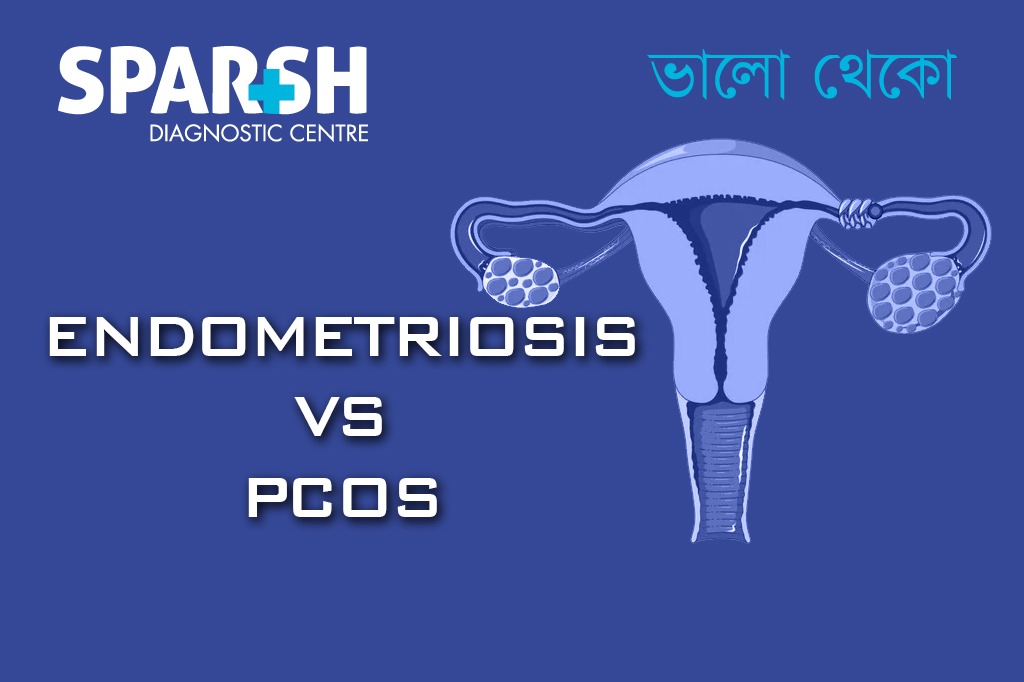
Imagine navigating an invisible battlefield, your pain a storm cloud obscuring the landscape, but the compass of your health care system points in the wrong direction, accusing you, or worse, telling you you’re imagining the entire conflict.
The Invisible Scars: Endometriosis and PCOS
Nestled within the complex topography of women’s health are Endometriosis and Polycystic Ovary Syndrome (PCOS), silent fortresses of chronic inflammation and hormonal discord. You don’t see them, but their presence is profound – weaving narratives of pain, irregular cycles, and bewildering symptoms that challenge the very language of medicine. Hmph.
Clinical Endometriosis Research Society criteria provide some maps, but translating pathology into lived experience remains a profound disconnect. We speak of biomarkers, yet the landscape often reveals leaked fluid, misplaced cells, and inflammatory cascades that even the most advanced imaging might miss, especially in early stages. Endometriosis is an enigma wrapped in the complex biology of endometrial tissue masquerading elsewhere.
Conversely, PCOS operates more visibly, a constellation of hormonal imbalances often presenting with irregular periods, ovarian cysts (though not all), and metabolic whispers – insulin resistance, thyroid shadows, a hormonal symphony gone slightly off-key. Yet, diagnostic guidelines often feel a trifle blunt, primarily relying on the elusive trio of irregular periods, ovulatory dysfunction, and hyperandrogenism, leading to a simplistic view of intricate biological systems. Think of it as gynocentrism looking for its polar opposite.
The Digital Doublespell: Introducing Medical Gaslighting
Enter Medical Gaslighting, the insidious architect fracturing trust, where the perceived objective authority of the physician systematically undermines the patient’s internal reality of distress. Isn’t this, in essence, the modern evolution of the infamous “female hysteria”? Patient testimonies echo a familiar refrain: “It’s all in your head,” “Your stress,” “It’s just fatigue,” “The symptoms don’t match the diagnosis…” The language is subtle yet corrosive, systematically conditioning women into self-doubt, the very patient becoming the unwitting agent dismissing their own profound dis-ease.
This phenomenon represents a form of clinical nonsuasion, where evidence (however compelling) is selectively filtered through a lens suspicious of female patient narratives. It’s the art of subtly erasing symptoms while performing detailed analysis of inconsequential variables. When doctors refuse to engage basic biofeedback or acknowledge patterns recognized by the patient, they become accomplices to denial, amplifying the inherent power imbalance diagnostic relationships are meant to balance.
Feminism’s Fury: Unpacking the Intersection
To dissect this, we must summon the critical lens of feminism. Why should the intersection of these conditions – Endometriosis, PCOS, and the systematic suspicion they provoke – be illuminated by feminine consciousness? Because female health, historically marginalized and often pathologized reductively, cannot be divorced from feminist thought. This is about recognizing the inherent difference in how women’s distress is received, validated, or ignored.
The feminist struggle for bodily autonomy, reproductive justice, and basic respect for experience gains chilling validation within every interaction eroded by gaslighting. Denying pain, dismissing symptoms, and invalidating lived experiences directly attack the core tenets of feminist discourse. It’s not just about individual diagnoses; it’s about challenging the very structures in medicine, perhaps even reflecting problematic elements of hypergamy disguised as clinical advice, that perpetuate these biases, demanding not only diagnostic justice but the courage to re-evaluate the authority structure itself.
A Chasm Unseen: Diagnostic Injustice Writ Large
The consequence? A profound diagnostic injustice, where time and clinical confidence become the gatekeepers. Some women become familiar faces on hospital walls, cycling through countless doctors, each encounter less a collaborative quest for answers and more the patient proving something wrong while the professional insists symptoms lack the necessary gravity or consistency to warrant investigation.
Research, though slowly emerging, often lags, and diagnostic tools don’t yet catch all flickers. Worse, societal dismissal – fueled by gaslighting narratives that have percolated beyond clinics into everyday discourse, framing female pain as neurotic or fabricated – offers a silent, generalized form of medical gaslighting that normalizes the individual prejudice. Women spend untold years in search of validation, navigating a minefield of misinformation and clinical inertia.
Ripples of Resistance: Activating Change
Yet, the response? A growing wave of activism, fiercely fighting against this erasure. Patient narratives, increasingly potent in the digital age, challenge the established clinical fictions. Independent research initiatives bubble up against institutional inertia. Medical gaslighting, once whispered, is now part of the difficult vocabulary, raising alarms within and outside the medical community.
Demand for radical shifts includes more nuanced diagnostic criteria, development of better biomarkers for Endometriosis, broader investigation for comorbidities linked to PCOS, and, critically, mandatory ethics and communication training for medical professionals emphasizing active listening and trust-building over premature dismissal.
Hope in the Fractals? A Shift Persists
This is not merely about validating a few conditions. It’s about fundamentally re-evaluating the patient-physician relationship. The narrative must shift from a doctor as the lone authority (a narrative ripe for gaslighting) to co-pilots, acknowledging the expertise the patient holds in their own lived experience. There is a quiet revolution happening below the surface.
Though setbacks remain, the courage withstood allows women to reclaim not just diagnosis, but trust. A future where bodies are trusted implicitly, not dissected provisionally, where female pain is met with inquiry not skepticism, stands as perhaps the most potent feminist promise we can hope for in the complex, contested landscape of health and illness.