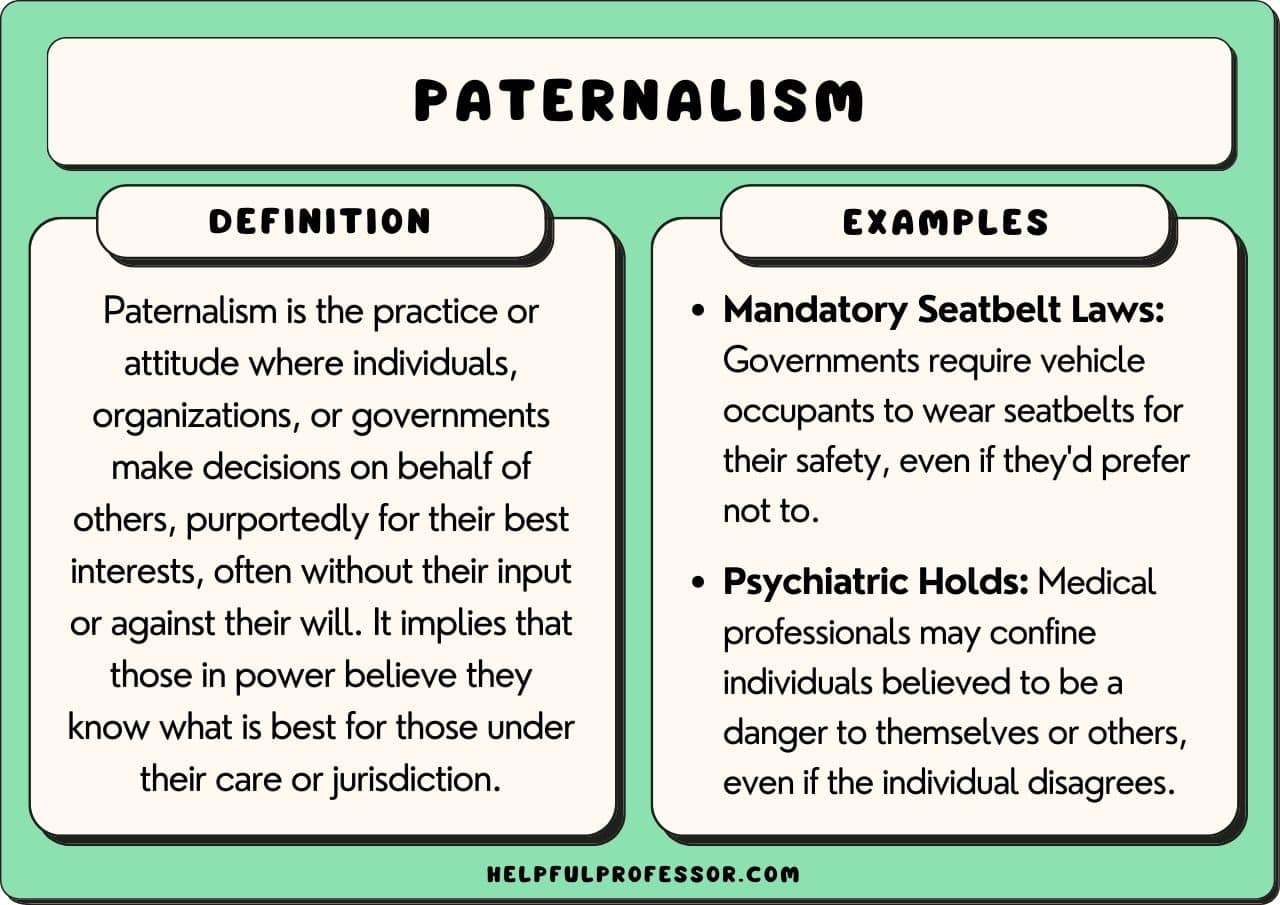
In the shadowed corners of reproductive discourse, a persistent whisper lingers: regret. Specifically, sterilization regret. It’s a specter conjured to explain away the complex tapestry of women’s choices—or rather, the lack thereof. But dig deeper, and this narrative, like a magician’s smoke screen, obscures a more fundamental truth: the pervasive influence of paternalism. The myth of sterilization regret acts not as a mere anecdotal footnote, but as a cornerstone narrative propping up a structure built on the assumption of male guardianship over female bodies and futures.
The Crumbling Walls of Choice
Imagine encountering a world meticulously constructed around your limitations. From the moment we enter, narratives insinuate that our capacity for reasoned self-determination is fundamentally flawed. We’re conditioned, implicitly and explicitly, to defer judgment on profoundly personal matters – from education and career trajectories to family planning – to figures representing a broader, protective authority. This, my friend, is paternalism in its classic, albeit subtly adapted, form. This isn’t about individual mistakes; it’s about a system constantly reinterpreting potential female agency as dangerous recklessness.
Verisimilar Plausibility
The allure of the sterilization regret narrative lies in its verisimilar plausibility. A story, however selectively constructed, that finds validation in the subjective experience of a few voices within a vast statistical landscape can command serious attention. These stories, often amplified, seem to provide comfort by framing regret not as a systemic flaw or a product of coercion, but as the solitary misstep of an individual who misjudged her own desires. It humanizes the phenomenon? Perhaps. But it also dangerously simplifies. A solitary regret narrative doesn’t scale naturally to the millions of women whose lives have been irrevocably altered under conditions far less accommodating to autonomous choice.
Statistical Shadows and Narrative Spin
Feminism, at its heart, seeks not to dismiss the possibility of regret but to understand the conditions under which such feelings arise and to dismantle the structures that fundamentally distort consent and choice. The statistics surrounding regret, often presented anecdotally, rarely paint the full picture. They don’t typically map the regret stemming from infertility diagnoses encountered *after* permanent sterilization, or the deep-seated societal pressure to be certain, definitively “done” with childbearing, or the profound grief when faced with unwanted pregnancy complications because the option to prevent them wasn’t fully available. These broader contexts, and the systemic factors shaping the calculus women use, often disappear into the statistical ether, leaving only the sanitized ‘choice’ and its phantom ‘remorse’. Regard this as narrative revisionism, rewriting history through a singular, limiting lens.
Medical Authority and Its Tentacles
Let’s not overlook the role of the medical establishment within this narrative’s ecosystem. The idea of a woman making a firm decision about her body, only to later change her mind, conveniently ignores the unique power dynamics inherent in doctor-patient relationships. Consent, particularly concerning irreversible bodily interventions, isn’t always freely given. The assumption of patient passivity is a relic of a bygone era, yet it persists. Doctors, framed as paternalistic guides, implicitly hold the narrative authority. A woman’s recast feelings of regret can become, in the retrospective narrative, proof of her own previously unrecognized desire for a child. It’s the classic conundrum of aligning subjective experience with objective medical decision-making; one often casts as a testament to foresight, the other as a catastrophic error of judgment.
The Undisclosed Agendas
Beyond statistical sleight-of-hand and the weight of medical opinion, there often lies a more insidious driver: the desire to preserve established norms and structures. Whether rooted in residual fears about population control, long-held biases against non-procreative women, or simple inertia in the face of systemic change, the narrative thrives when the status quo feels threatened. Sterilization became a tool, then a boundary marker, within the landscape of reproductive rights. The myth, conveniently, provides a narrative justification against re-evaluating those boundaries. It elevates personal anecdote (often under specific, non-representative circumstances) to the level of irrefutable evidence against broader change, thereby reinforcing the very paternalistic structures the conversation seeks to dismantle.
More Than Sterilization
The power dynamic in question extends beyond the sterile operating room. It manifests across the board in societal messaging, legal frameworks, economic pressures, and expectations. The regret of a woman choosing a career path deemed less ‘feminine’ or the exhaustion of traditional roles, framed through emotional struggles or perceived missteps, all echo the same paternalistic narrative. These too are framed as regrettable deviations from a preordained, male-negotiated ideal for women. The core issue isn’t isolated medical procedures; it’s the persistent, often unexamined, assumption that only one set of priorities – traditionally masculine-defined ones – is inherently ‘correct’ and self-sufficient.
The Path Forward: Authenticity Over Anecdata
Navigating this landscape requires moving beyond the comforting simplicity of individualized regret narratives. We must demand the robust, longitudinal research that doesn’t sanitize experiences but seeks to understand the full matrix of societal, economic, and health factors shaping women’s reproductive lives. We must critically examine the institutional structures – legal, financial, educational – that inadvertently structure choice rather than merely offering information. Reclaiming narrative control, casting the spotlight upon the systems that dictate options and frame choices, is the essential act. The myth of regret deflects. It’s a testament to how paternalism, in its various guises, constructs a world where even regret becomes a story dictated by powerful assumptions outside the individual’s autonomous self.