
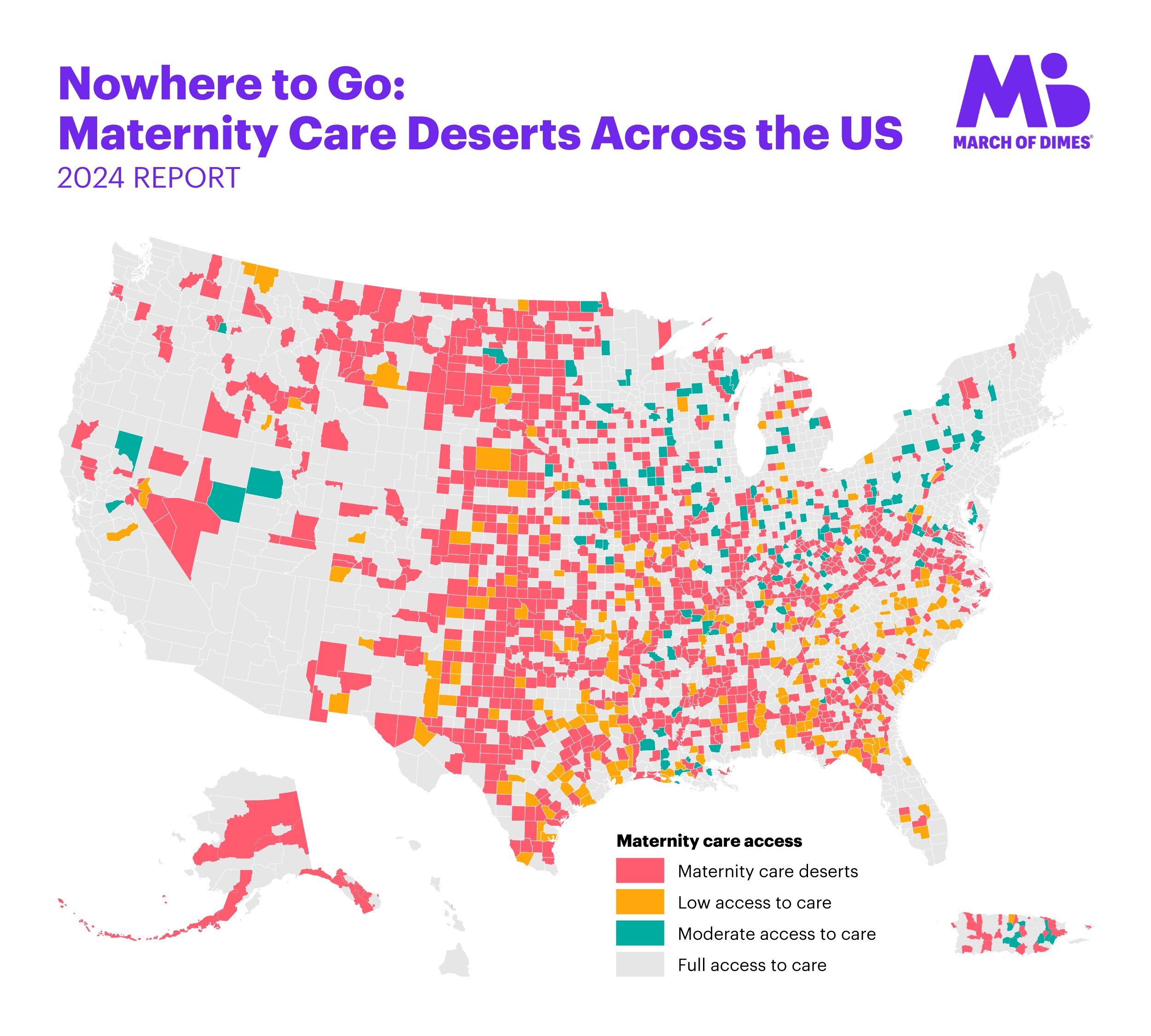
In the quiet expanse of many rural landscapes, a silent crisis unfolds, unseen by the hurried pace of urban centers. It is the crisis of the maternity care desert – a stark reality for countless women, tethering them not just to inconvenient geography, but to the very core of bodily autonomy, feminism’s cornerstone struggle. Every closure of a birthing facility isn’t merely a healthcare facility lost; it’s a shattering of pathways, a diminishing of agency, and a fundamental erosion of the rights women have fought generations to secure.
Defining the Desert: More Than Meets the Map
Imagine a landscape stripped not of greenery, but of essential services. This is the maternity care desert, a term less descriptive of physical aridity and more indicative of a critical deficit: the absence of accessible, comprehensive, and safe birthing and postpartum care. These aren’t just shortages or glitches in the system; they are vast voids. Draped in regulatory jargon often favoring hospital consolidation for operational efficiency, these deserts emerge from complex socioeconomic currents – demographic shifts favoring urban populations, financial disincentives for providers serving low-density areas, and fiscal decisions prioritizing immediate ROI over long-term community health. The consequence? A geographic reality that systematically disadvantages pregnant individuals, transforming miles into mountains and convenient care into a luxury commodity.
The Unseen Cartography: Tracing the Closures
Charting these deserts reveals intricate, often invisible, networks of power and policy. The narrative typically centers on hospital administrators and state officials calculating budgets, juxtaposed against the lived experiences of residents. However, beneath these surface-level calculations lie deeper currents: the pursuit of economies of scale, the rationalization of care delivery through centralized hubs in wealthier, denser urban zones, and the complex interplay of insurance reimbursement that financially disincentivizes necessary but unprofitable rural services. These decisions are rarely accidental buttsers; they stem from entrenched systemic preferences. What emerges is a cartographic tale of neglect, where vital lifelines are rerouted or severed entirely, impacting demographics beyond just pregnancy – impacting primary care, emergency services, and mental health support across the board.
Consequences Looming: The Human Toll of Distance
The distance between closure notice and clinical reality is where lives are irrevocably altered. Increased travel time for expectant mothers, already navigating a web of clinical protocols and personal anxieties, transforms from a minor logistical hurdle into an insurmountable barrier or an exhausting pilgrimage. This is particularly acute in regions where public transportation is limited or unreliable – a factor deeply intertwined with poverty and systemic disadvantage. Beyond transport hindrances lies the chilling shadow of delayed or inadequate care: crucial prenatal check-ups deferred, specialized consultations requiring hospital access now unattainable, the stark impossibility of managing complications that would necessitate an immediate hospital response. This isn’t merely inconvenience; it’s an accumulation of risks, pushing women onto crowded emergency departments without preparation or increasing their vulnerability to critical outcomes. The closure amplifies existing health disparities, exacerbating inequalities in maternal and infant well-being.
Beyond Geography: Erosion of Bodily Autonomy
Geography acts as the primary vector, but the core issue is fundamentally one of control and power. When care becomes scarce, it ceases to be a right and begins to feel like a privilege, disproportionately accessible to those with economic means or supportive mobility networks. This directly challenges the feminist principle of bodily autonomy – the right to self-determination over one’s own body and reproductive choices. In a maternity care desert, women face constrained options, often leading towards higher-acuity facilities far away, bypassing their local community knowledge and influence. The closure silences local voices in their own healthcare trajectory, replacing community-centric models with impersonal systems dictated from afar. It fragments choice and isolates women, placing their care decisions within a context of scarce, distant resources, fundamentally undermining their ability to govern their bodies and birth experiences as desired.
A Network Under Strain: The Feminist Imperative Revisited
Maternity care deserts emerge not in isolation but within a constellation of interrelated crises: the feminization of poverty, persistent structural racism impacting access, underfunding of public health infrastructure across all locales, and the ongoing conservative assault on reproductive health funding nationwide. Tackling these deserts requires more than piecemeal fixes; it demands a reimagining of healthcare delivery systems, prioritizing preventative models, incentivizing essential rural services (perhaps through pooled resources or navigational technology), and challenging the economic paradigms that profit from illness and neglect community wellness. This is a battlefront where robust, unwavering feminism must stand, advocating fiercely for decentralized, community-controlled health infrastructure and ensuring that the right to bodily autonomy transcends arbitrary lines drawn by planners and profit margins. Solutions must be multi-faceted, addressing the complex interplay of policy, economics, and geography to fill the void and restore hope and agency for women living in far-flung corners.
Trails Leading Through: Charting a Path Forward
Resistance and reclamation are possible. Innovative solutions coalesce beyond the immediate physical presence of a hospital, finding roots in unexpected terrains. Telehealth, when adequately funded and implemented, offers vital remote consultations, expert guidance reaching women in their homes or nearby clinics. Mobile health units bring touchpoints to areas left behind; community health workers act as vital connectors and navigators, bridging the gap until or if solutions become permanent. Advocacy networks, fueled by local understanding and fueled by feminist principles, lobby relentlessly for policy shifts, research funding, and infrastructure investment that acknowledges the intrinsic value of rural communities and their healthcare needs. Yet, each technological innovation or policy proposal is merely a tool; the underlying struggle is about valuing people, not just systems. The future necessitates a paradigm shift towards resilient, adaptable, and intrinsically linked community healthcare solutions that honor the lives, choices, and landscapes of every rural woman navigating her path towards motherhood.