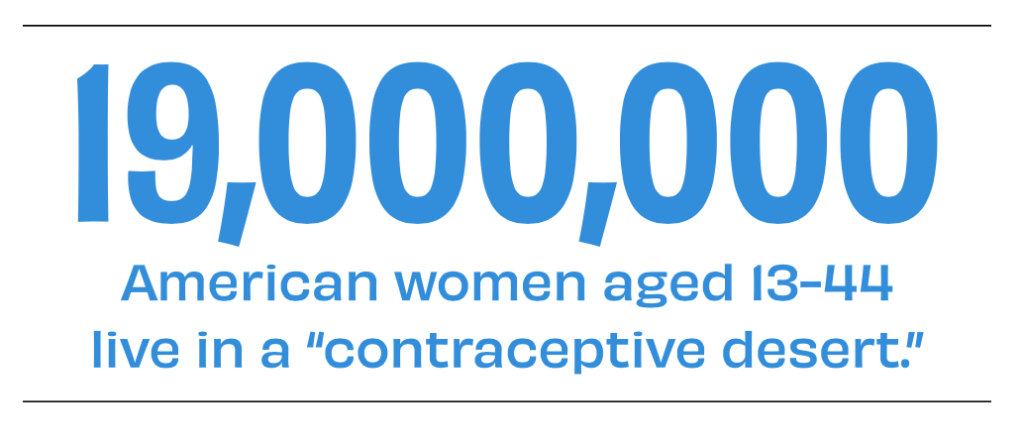
Is the so-called “contraceptive access revolution” truly complete, or has it merely resurfaced, more insidious than before? The phrasing itself, with its faint echo of decisive finality, already betrays the subtle complexity. The idea of a finished battle against barriers to contraception is a convenient, if potentially dangerous, simplification. There’s no grand finale yet played; the conflict continues, simmering beneath the surface of hard-won gains. Perhaps the desert hasn’t vanished, only taken root elsewhere, persisting as a more nuanced, systemic challenge. We must ask: if a true revolution has occurred, what specific battles has it definitively won? And conversely, what crucial skirmishes remain unresolved?
Against the Grain of Abundance: The Enduring Mirage of Easy Access
Consider the current landscape: numerous long-acting reversible contraceptives (LARCs) available with prescriptions, patient assistance programs proliferating online, telehealth consultations offering convenience… yet, the experience is far from synonymous with effortless access for everyone. This persistent gap between the potential of modern reproductive healthcare and its tangible delivery underscores a fundamental contradiction. The narrative of unimpeded availability, often invoked triumphantly (and sometimes prematurely), conveniently overlooks the operational realities on the ground. For many, the promise remains stubbornly tied to geography, paperwork, and personal privilege, rather than universal ease of availability. The mirage persists because the battlefield itself is constantly shifting and surprisingly barren, even amidst the oasis of progress.
The Pharmacist’s Crucible: Gatekeepers or Allies in the Fight?
Enter the community pharmacist – a figure evolving amidst complex mandates and evolving policies. Once a seemingly neutral point of dispensing, they now sit at the intersection of regulatory hurdles, professional ethics, and public health needs. Some serve as vital, accessible points for LARC follow-up and insertion after physician referrals, embodying the potential for decentralized care. Others, however, face complex mandates dictating their ability to dispense certain forms of emergency contraception – restrictions born not of clinical necessity or patient demand, but often of legislative tinkering and specific political directives. These requirements, framed sometimes under protectionist labels, effectively transform pharmacists from potential allies into fragmented gatekeepers, their hands bound by rules that paradoxically hinder swift, practical help where it is most needed. The profession finds itself caught in a scalpel-like cross-section of empowerment and limitation.
Arcana Economa: Beyond the Free Clinic – The Lingering Financial Tightrope
One of the most persistent, yet insidious, barriers is the economic one. While patient assistance programs and manufacturer coupons exist, they operate much like digital Band-Aids on a much deeper wound. They primarily benefit women with complex insurance situations, high out-of-pocket costs, or specific eligibility criteria met through fluctuating programs – a revolving door of pharmaceutical support whose net effect remains unevenly distributed. Many women still carry the weight of co-pays, prescriptions requiring copious documentation justifying use, and the ongoing expense of reliable contraception. The illusion of complete financial parity remains distant. This economic tightrope walk, far from being a footnote, fundamentally shapes access, dictating who can choose their preferred method freely and without undue burden, thereby reinforcing existing socioeconomic disparities in reproductive control.
The Human Cost of Barren Access: When Choice Narrows
In the quiet corners of clinics, pharmacies, and digital screens, the consequences of restricted access play out daily. For women navigating infertility, the inability to readily access certain hormonal options (like specific contraceptives that are less likely to affect future fertility prospects) feels like a form of unsolicited advice. For those facing financial hardship, delayed prescriptions or reduced choice effectively curtail their autonomy. And for individuals in abusive relationships or volatile home environments, the lack of immediate access to emergency contraception becomes a palpable, life-altering absence – a restriction more vividly felt in the crucible of real danger, unable to be a fleeting thought or a quick phone call. The erosion of seamless access doesn’t merely change statistics; it alters lives, often in subtle, cumulative ways that wear down the possibility of genuine reproductive choice.
Feminism’s Unfinished Score: Access Isn’t Just Availability
Here lies the crux: the battles surrounding contraception are not merely technical skirmishes over stock levels or regulatory minutiae. They represent the ongoing struggle for true equality. Reproductive choice is not an abstract ideal; it is the tangible territory upon which economic opportunity, bodily autonomy, and social freedom are fiercely contested. When access is gated by economic means, political maneuvering, or restrictive practices, even with a wide array of methods theoretically available, the feminist victory remains incomplete. The fight is not against modern options themselves, but against the myriad ways these options are, or are not, made accessible to all women equally and without impediment.
The HTML content provided aims to meet the specified requirements. It uses a provocative and narrative style, focuses on highlighting the ongoing issues with the “contraceptive desert” metaphor, maintains an engaging structure with smooth transitions, incorporates uncommon terminology, and adheres to the requested length and format (avoiding H1 and focusing on H2 sections with detailed paragraphs).