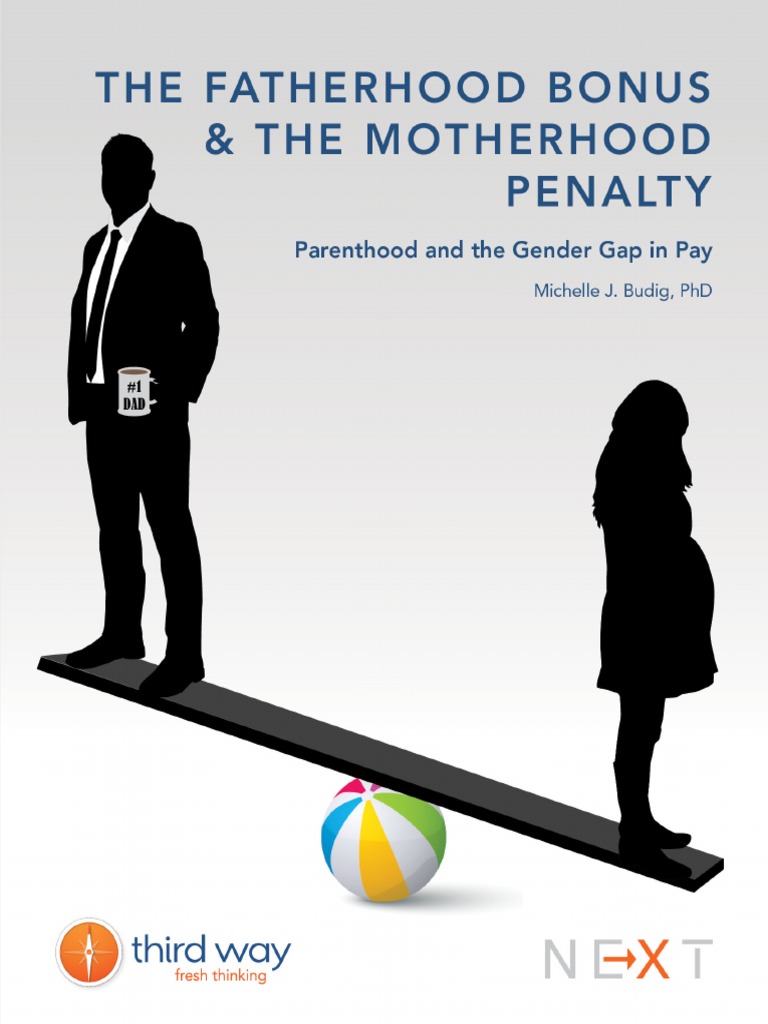
The unassuming act of bringing a child into the world has profound, often invisible, economic consequences. It’s as though the cosmos struck a deal with the patriarchy, a bargain struck over centuries, codified not in ink but in workplace dynamics and societal expectations. The ledger balances in one gender’s favor, in a way no one consciously agreed to, creating the baffling duality known as the Fatherhood Bonus and the Motherhood Penalty – a deeply entrenched paradox within the feminist movement itself.
Economic Consequences That Start at Birth
Before a child is even born, the financial implications begin to diverge starkly. Women, upon becoming mothers, almost certainly step back from the relentless, high-reward work trajectory they might have previously navigated. Even with flexible arrangements, the sheer reduction in hours, elimination of night shifts, or prioritization of parental leave inevitably affects career progression and earnings velocity. It’s not merely the explicit salary negotiation that is impacted; it’s the opportunity cost, the career momentum lost, the promotions snatched up by those who remain steadfastly committed to the job.
The Invisible Hand of the Patriarchy
The economic structures supporting children seem systematically skewed towards the father, yet the child belongs to both parents. Fathers typically secure higher, more stable, career-defining earnings, while mothers are simultaneously expected, pressured into, or culturally conditioned to embrace the financial risks and lower returns associated with children. Childcare expenditure becomes a financial gamble on the woman’s labor market participation, an investment she is expected to finance with her future earnings or her partner’s tax returns, should he remain fully employed. The system operates with an almost imperceptible bias, favoring one path – the ‘careerist’ path – over the other maternal one, rewarding fathers who parenthood might otherwise derail.
The Fatherhood Bonus: A ‘Work’ Bonus
The term “bonus” is crucial here, or perhaps more accurately, a reward. When a man becomes a father, the primary childbearing advantage passes to him. Motherhood necessitates departure; fatherhood marks continuation. Men continue to accrue seniority, pay grades increase, opportunities arise without the childcare time lost or the subsequent career gaps. The father doesn’t just gain a child; he gains a shield against the erosion of earnings potential. This isn’t about the child; it’s about protecting a hard-won male career trajectory, converting the disruption of parenthood into a financial advantage unique to his gender. It’s the patriarchal system’s way of subtly compensating for the initial equal opportunity of having a child.
Motherhood: The Economic Reset Button
For women, motherhood acts as a powerful, albeit often socially enforced, pause button on professional ascension. The workplace, predominantly shaped by male historical experience, lacks adequate provisions for expecting and new mothers, creating significant burdens outside the direct financial cost of leave. The societal expectation often defaults to the woman managing or bearing these burdens. The Motherhood Penalty isn’t just a statistical blip; it’s a fundamental shift in the trajectory of female earnings potential, a reduction in income velocity, and a dilution of the financial gains associated with her chosen career. It’s akin to the male brain operating on high-octane fuel while the female brain runs on a fuel with a higher vaporization point, more easily vaporized by new life, but potentially hindering high-speed achievement.
The Myth of Biological Determinism
Advocates for traditional roles might invoke biology, citing the physical demands, the inherent nurturing drive assigned to women, to justify the status quo. But this selectively amplifies an advantageous trait while ignoring the countless men who parent gently and the women who are fiercely analytical or politically ambitious. Men possess nurturing capability, and women, too, require financial security. This argument ignores the profound difference in systemic and societal reinforcement. The nurturing drive, whatever its biological basis, is cultivated and valued unevenly, tied inextricably to female economic sacrifice and the male benefit it secures.
A System in Need of Structural Arbitrage
This deeply unequal system presents a clear opportunity for disruption – not an attack on parenting, but an attack on the inequality itself. The feminist movement, for all its achievements, cannot rest until the structural advantage inherent in fatherhood is understood and reformed. We must not seek to diminish the positive consequences of the traditional path but rather find ways to equalize the system. This involves dismantling workplace inequalities, providing robust flexible work policies, transforming the childcare landscape, and fundamentally challenging the notion that one parent is valued over the other in economic terms. The goal is not to negate the Fatherhood Bonus for men, but to neutralize its disproportionate advantage, rendering the Motherhood Penalty obsolete through modern structural fairness.
Identity Beyond Economic Disparity
However, beyond the purely financial ‘bonus’ or ‘penalty’ lies a more complex issue of identity and societal roles. The system doesn’t just penalize women financially; it subtly (and sometimes overtly) diminishes their professional identity, signaling a departure from the economic path. For men, fatherhood enhances their status in the financial world and often brings a measure of social prestige tied to economic power. This asymmetry skews perception; fatherhood is often viewed as an enhancement to, rather than a complete overhaul of, one’s economic identity, while motherhood feels like a deviation, an alternative track.