The familiar image of the middle class shrinking conjures images of emptying attics, bulging credit cards, and the slow erosion of financial buffers. But consider a different angle: that the most visible, perhaps the *defining*, form of precarious labor today is work increasingly performed, predominantly by women, outside the formal structures of stable, middle-class employment. It’s a shift intrinsically tied to feminist aspirations, yet its effects feel profoundly destabilizing. This piece explores this dawning reality, less as a political weapon and more as a deeply felt, everyday phenomenon – the feminization of precarious work, and what it portends for feminism itself and the future of the American middle class.
The End of the Old Contract: Labor, Gender, and the American Dream
The post-war era promised a settled future, one where work would afford security, benefits, and stable income growth for a growing American middle class. This narrative was predicated on clear, albeit rigid, gender roles. Men were the primary breadwinners, operating within corporate structures or trades, while women managed the home and family, their economic contributions often unwaged. The feminist movements of the late 1 “en femme travail” – work done in the name of women – challenging these structures, demanding parity in pay, power, and opportunity. Yet, the transition isn’t neatly drawn between the old ways and a utopian new normal. Feminism disrupted the established economic order, and the backlash isn’t just social; it’s economic. The very labor force that was newly empowered through feminist gains is increasingly bearing the brunt of neoliberal economic restructuring, which systematically dismantled the jobs and benefits that defined the middle class. The liberation of women from domestic spheres was simultaneously opening the door for them to enter a labor market already primed for instability.
Rewriting the Rules: Precarious Work as ‘En Femme Travail’
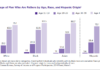
What precisely is this precarious work? It’s a spectrum, ranging from unstable part-time shifts in retail or hospitality to the gig economy – rideshare driving, food delivery, rideshare driving – lacking benefits, job security, and clear advancement paths. It’s the work of the temp agency, the contract-to-hire position, the project-based freelance contract. A defining characteristic is its liquidity; jobs dissolve, hours fluctuate, pay can be unpredictable. Enter women. Across multiple sectors, women disproportionately populate the ranks of this precarious workforce. Why? Partly, the push for parity leaves women seeking careers outside traditional clerical or service roles, but landing in the same precarious environments. Partly, the nature of service work itself is shifting towards models emphasizing flexibility over stability, often to the detriment of full-time, year-round employment. And crucially, many women are drawn into this sphere not through professional choice alone, but through an overwhelming necessity. The decline of middle-class employment – unionized manufacturing, secure public sector jobs – offers women a foothold, albeit an unstable one, into the workforce, pushing them into roles previously considered women’s work but now without the mitigating security of domestic responsibilities. The feminization of low-wage service work isn’t merely about choice; it’s about the narrowing options available when traditional male-dominated stable sectors shrink.
Cracks in the Foundation: How Precarious Labor Impedes Middle-Class Formation
The shrinking middle class is often measured by income levels, educational attainment, and debt burdens. But the type of work being performed also shapes class structure. The stability provided by secure, well-compensated, benefits-rich employment – the kind of job that fueled the American Dream – is under assault. As manufacturing declined and service and knowledge work expanded, the latter often failed to replicate the benefits package and pathway to wealth accumulation of the former. Now, precarious work fragments purchasing power; irregular hours, unpredictable income, and lack of paid leave hamstring the ability to save, invest, or plan financially for the long term. Women, who increasingly form the majority of the workforce in many sectors, are carrying the dual burden of precarious income and often residual domestic responsibilities. This makes upward mobility incredibly difficult, if not impossible, for dual-income households relying on unsteady paychecks. The dream of the middle-class family with one stable income supporting the other or allowing for flexibility is being replaced by a reality where both partners navigate shifting sands. We build our lives on sand.
The Double Bind: Caregiving, Precarity, and the Gendered Tightrope
Perhaps the most potent paradox lies at the intersection of caregiving and economic precarity. Women are the primary planners, providers (often precariously), nurturers, and organizers of care, whether at home or coordinating complex logistics in elder care. Feminism fought against the notion that this care work is unimportant or unpaid, yet in the economic landscape post-privatization, care work has largely become precarious as well. Think of underpaid home care workers, overwhelmed school employees, or the rising incidence of taking time out of the workforce to raise children or care for aging relatives – a step towards gender equality in recognizing care’s value, but a leap towards economic hardship when that recognized value translates to insecure, low-paid labor. This perpetuates the old myth that women’s commitment to society comes at the cost of financial stability, but now it’s embedded squarely in the emerging economic structure. The drive for equality in recognizing care necessitates far greater investment, security, and respect from the state and market – not its destabilization.
The Long Shadow: Feminism, Labor’s Future, and the Precarious Paradox
Feminism occupies a unique space in this narrative. It catalyzed a necessary transformation of the workforce, yet the labor market it inhabited was ill-prepared for the millions of newly active women. The result isn’t a coincidence; the proliferation of precarious work is a direct consequence of economic forces that also led to the middle class’s erosion. The feminist project has inadvertently fueled a labor force expansion into the cracks and fissures of a restructuring economy. The movement hasn’t created the conditions of vulnerability; it has awakened many women to the new shape of work, work that promises freedom only to expose them to new forms of disposability. There must be a reckoning: a feminist labor theory that maps these shifts must concurrently advocate for the *different* kind of security that precarious work denies – unionization on new terms, mandated benefits, higher minimum wages, stronger social safety nets. To ignore this is to fundamentally misread the future. The liberation of women’s labor has not erased its essential connection to the nation’s economic vulnerability.
A Future Layered With Uncertainty: Navigating the Precarious Waters
We find ourselves standing at a crossroads. The feminization of precarious work, an observable reality emerging from economic and ideological shifts, speaks volumes about the current trajectory of gender equality and middle-class life. It suggests a future where stability is elusive, where even the act of participating fully in the workforce can threaten financial solvency. As we move forward, the success of feminism may well hinge on its ability to confront a new, complex landscape. The fight for paid leave, for healthcare access, for living wages, for better childcare, for collective bargaining rights reimagined – these are not ancillary issues; they are the necessary conditions for making equality sustainable. The shrinking middle class and the rise of precarious work are not just economic trends; they are profound cultural and political shifts affecting millions, deeply seeded in gender relations reconfigured by feminist energy. This is not a story about choice alone. It is a story about the fundamental relationship between work, gender, and financial security in America, and it demands a narrative shift – from description to prescription, from observation to intervention, from feminization to dignification.