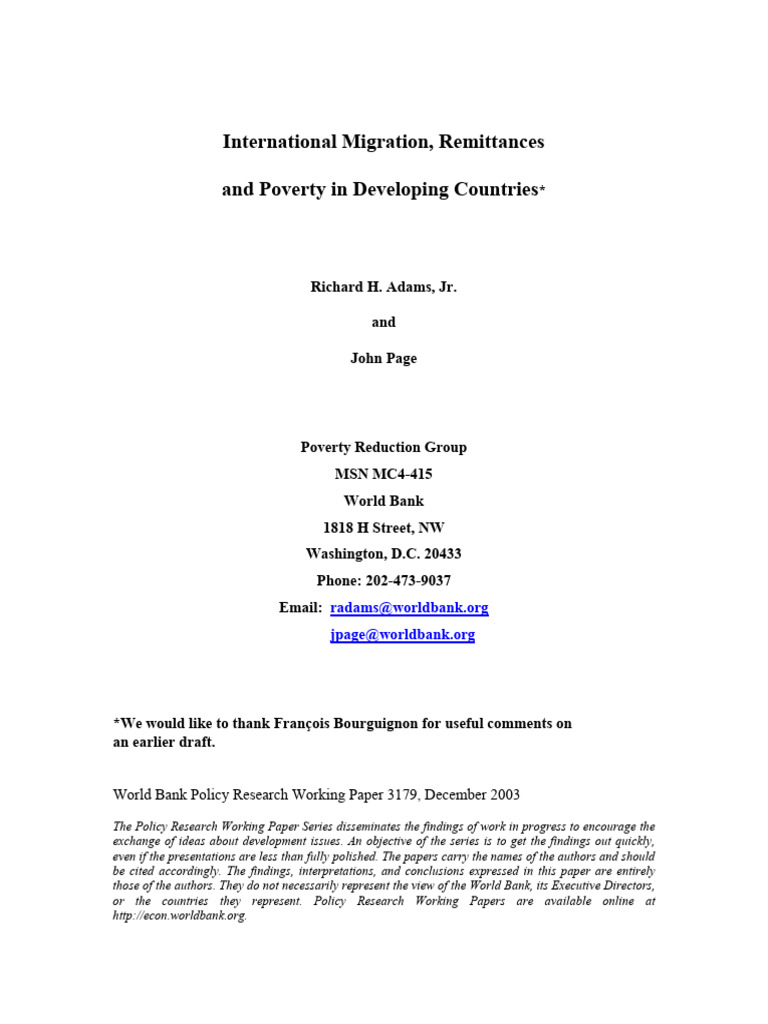
The figures speak of movement, immense, an oceanic current carrying millions from one shore to another. Migration. It is the defining story of our times, a relentless, albeit uneven, flow shaping economies, cultures, and intimate geographies. Yet, amidst this broad narrative, the specific contours of women’s financial existence often remain obscured, rendered invisible not just by distance, but by the frameworks that measure the journey. We are tasked with examining Feminism: How Migration and Remittances Shape Women’s Financial (In)Dependence, a lens that demands we pierce the veil of silence surrounding female financial agency and vulnerability in transit and across borders. The discourse must be provocative, questioning the accepted wisdoms, challenging the status quo, forcing a confrontation with the profound ways capital flows, gender dynamics, and state policies intersect to mold women’s relationship with money.
The Gendered Nature of Migration Flows
The streams of migration rarely mirror the abstract ideal of equality. They are profoundly shaped by the enduring, though often contested, hierarchy of gender. Women migrate, undoubtedly, but their pathways, motivations, and experiences often diverge starkly from those of their male counterparts. We must dissect these divergences to grasp their financial significance. Economic necessity frequently compels women, particularly from impoverished rural areas lacking diverse economic opportunities or land tenure systems that might allow women to support themselves or their families unilaterally. A daughter may seek factory work in an industrial city, a wife may follow a husband across continents for domestic labor, or a young woman may migrate independently to send remittances back, navigating alien landscapes often alone.
However, migration for women is not solely an economic calculus. It is intricately woven with the quest for education, escape from violence or restrictive home environments – whether rooted in patriarchal control, marital strife, or familial abuse – healthcare access, and the pursuit of self-definition away from traditional constraints. These pathways, essential to comprehend, carry distinct financial implications. Are they migrations driven by survival, where the destination economy is secondary to escaping a certain financial death knell (debt, lack of opportunity)? Or are they movements towards economic opportunity, towards integration and the expectation of direct remittance contribution? Or a complex matrix of both? Feminism compels us to ask: How do these motivations shape the financial dependencies or independences emerging within the transnational landscape, particularly concerning marital prospects post-return? The very act of leaving can be an assertion of financial independence, reconfiguring power dynamics upon return. This is not merely about movement; it is about navigating capital, risk, and opportunity in a gendered world.
The Gendered Dynamics of Remittances: A Lifeline or A Continuing Subordination?
Migration generates remittances, the financial lifelines that underpin countless households, a tangible flow of capital often measured in billions. And again, the flow of remittances is deeply gendered. Who controls access to international bank accounts? Who possesses the digital literacy to navigate platforms like Western Union or MoneyGram, or mobile money services prevalent in many sending countries? Who becomes the de facto household manager and thus the gatekeeper of inflowing funds? The answer, overwhelmingly, has traditionally been men, even when migrating from deeply patriarchal societies. Yet, the landscape of remittances is evolving, albeit slowly.
For women left behind, remittances can be transformative, crucial resources injected into families that struggle with wage scarcity and pervasive poverty. They can be lifelines, cushioning household budgets, funding education, facilitating small entrepreneurship, or even smoothing consumption patterns. From this perspective, remittances can appear as an essential tool, allowing women, even if not holding formal positions, to exert a degree of economic control within the domestic sphere. It can foster a subtle, yet significant, shift towards gendered capital flows, a partial reconfiguration of household finances.
Yet, the narrative becomes complex, even contradictory. Does receiving remittances empower women or maintain them within their dependent roles? The answer is not absolute, nor simple. Remittances often flow into purchasing patterns that reinforce existing domestic gender roles – buying goods for the family, including food for the husband and children, while women’s access to remit-derived capital for their own ventures or consumption remains restricted. Financial dependency can be reframed; dependency now leans towards the family unit, enabled by the sending relative. Critically, remittances can also fuel expectations and gender norms. In some spheres, they might encourage women to assume greater household responsibilities or manage the influx, potentially offering a pathway towards managing household finances and contributing indirectly to the family economy. It is a path where agency can sometimes be mistaken for dependency. Feminism calls for a fine-grained analysis, dissecting the transaction costs, exchange rate inefficiencies – which disproportionately impact the purchasing power of remittances – and the lack of transparency in the financial system, all factors that shape whether remittances truly enhance women’s financial capability or become absorbed into traditional power structures.
Migration and Remittances as Catalysts for Entrepreneurship? New Forms of Financial Archipelagoes
The arrival of remittances doesn’t exist in a vacuum. It catalyzes or modifies economic behaviors. For women in receiving households, remittances can act as the seed capital, unlocking possibilities for small-scale entrepreneurship that might otherwise remain inaccessible. Starting a home-based business, buying a sewing machine, investing in livestock – these are potential pathways towards generating family income, often mediated through the woman managing household finances and remittances. This represents a specific form of financial dependency: dependency on the original migrant for capital initiation. Yet, this dependency can evolve into a form of collective economic action, a reconfigured network of exchange based on gender norms.
Furthermore, the sheer volume of remittances flowing into specific communities creates entire economies, fostering local business hubs and service providers catering to migrant families and communities. This is the burgeoning phenomenon of “Financial Archipelagoes” – dispersed nodes of financial activity springing up around migration corridors. Women are not always the central figures in these archipelagoes, but they play a crucial role. They manage household finances, they might be the artisans selling goods produced with remit capital, or the entrepreneurs offering financial services tailored to migrant networks. Yet, these opportunities often remain peripheral to the formal financial system. Access to sophisticated tools for saving, investing, or expanding remains limited by literacy, infrastructure, and trust in institutions. This fragmented financial landscape can insulate women from the full spectrum of economic possibilities, keeping financial decision-making power often concentrated at the household or familial level.
The Interplay: Migration, Remittances, Gender Norms – An Unruly Trio
How can one talk of migration and remittances without delving into the bedrock of social structures: gender norms? These norms are not passive decorations on society’s walls; they are active agents shaping every aspect of financial behaviour and opportunity. Patriarchal structures undeniably influence migration – dictating when and how women leave – and remittances – governing who controls the money.
Transnational feminism provides a crucial framework. It demands analysis beyond narrow, Eurocentric perspectives, centering the experiences of women in the Global South, the intersections of race, class, sexuality, and nationality. In this framework, migration and remittances do not simply inject cash; they intersect with the state, with capitalism, and with embedded gender systems. These intersections produce differential effects. Remittances, intended as support, can sometimes reinforce existing hierarchies, limiting women’s long-term financial autonomy. Alternatively, migration itself, the very act of leaving and the remittance dependency, can be a powerful form of economic assertion, challenging traditional dependencies and opening slights cracks in rigid social structures.
Moreover, the sending country’s economic landscape cannot be ignored. Migrant women are often dispatched not to meet general economic needs but to fill specific, frequently low-status, gendered gaps. Their work – domestic service, food processing, garment assembly – is the invisible engine propelling remittances back to a homeland needing capital injection. This creates a paradox: remittances benefit the receiving country but are generated by specific, often marginalized, labor streams. The financial independence gained by women in receiving countries is circumscribed by this transnational credit provided by the low-paid workforce of women migrants. The state plays its part too: regulatory frameworks, visa policies, access to education for children of undocumented migrants – all inscribe gender norms on the migratory process and its financial outcomes. The complex dance between individual women, their families, the capital they transmit, and the societal structures enabling or constraining this flow shapes the elusive picture of women’s financial (in)dependence.
The Imperative: Redefining Financial Futures Through Systemic Change
The conversation concludes not with neat closures but with a demand for uncomfortable confrontations. The current trajectory, with its male-centric migration narratives and often ineffective financial inclusion strategies, risks trapping women in cycles of dependency, be it familial, economic, or national. Feminism, here, is not pessimism; it is a clarion call for redefining the terrain itself.
True agency, genuine financial independence, requires more than just access to remittances. It demands financial education targeted at diverse populations, including illiterate women or those with limited formal schooling. It necessitates the expansion of pathways for female employment and entrepreneurship both in sending and receiving locations, decoupling migration from female subservience. Crucially, it requires challenging the structural obstacles – lack of land rights for women, discriminatory access to credit, insecure property registration systems – that fundamentally shape women’s relationship with capital. Systemic change, not mere adjustment, aims to dismantle the frameworks that tether women financially while navigating the complex currents of migration and remittance return.
The remittance flows represent a powerful, undeniable force. If harnessed through feminist-aware policy and programmatic interventions, they could become catalysts for profound transformation, allowing women to not merely manage familial funds but to participate meaningfully in the economic architecture shaping their own futures. The choice before us is stark: continue treading the perilous path where migration, remittances, and gender norms conspire to circumscribe female financial possibility, or forge new routes towards a future where financial (in)dependence is a spectrum charted by freedom, not constraint.