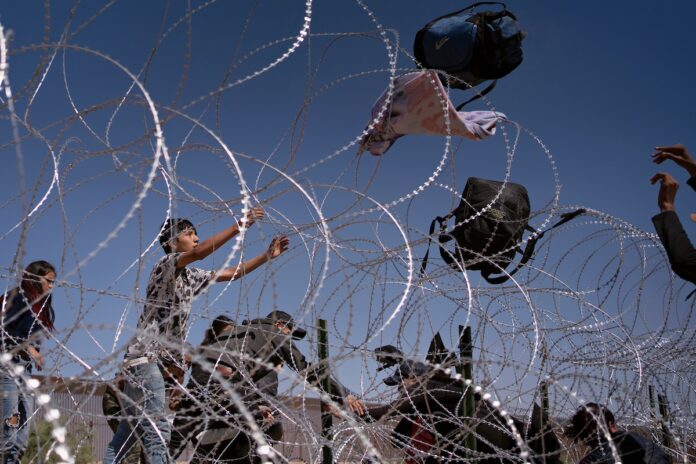
In the labyrinthine corridors of migration and border politics, where policies clash with humanity, there lies a disturbing narrative—one that systematically dehumanizes migrant women under the veneer of legality and security. Feminism, especially when wielded as an intersectional tool, exposes the sinister layers that obscure the lived realities of these women. It peels back the rhetoric to reveal how border policies do not merely regulate movement; they fracture identities, suppress voices, and perpetuate an orchestrated invisibility. This exposé ventures beyond the headlines to unravel the intertwined threads of gender, race, and socio-political marginalization that fashion the dehumanization of migrant women at the border.
The Intersectionality of Oppression: Gender, Race, and Migration
Intersectionality is not a buzzword but a critical feminist framework that untangles the braided strands of marginalization. Migrant women stand at the convergence of multiple axes of oppression—gendered violence, racialized prejudice, and xenophobic nationalism. Border policies rarely acknowledge these overlapping vulnerabilities. Instead, they compound them. Women fleeing persecution, violence, and destitution are often filtered through a monolithic bureaucratic gaze that erases the specificity of their suffering. The intersectional analysis reveals how policies disproportionately penalize migrant women, particularly those from racialized communities. This demographic is cast as the “other” in hypervisible and yet invisibilized ways—victims and suspects simultaneously.
Dehumanization through Deterrence and Enforcement
At the heart of border control is deterrence, a principle that places the migrant body at the frontline of a political battlefield. Feminist critique exposes how deterrent tactics—ranging from family separations to indefinite detention—reduce migrant women to expendable objects. These strategies obliterate the subjects behind the policy statistics. Detained in overcrowded, unsanitary conditions, women frequently endure neglect, inadequate healthcare, and gender-based violence, establishing a systematic pattern of abuse. The deployment of militarized borders transforms these human beings into corporeal pawns subjected to state-sanctioned cruelty under the guise of national security.
The Silencing of Migrant Women’s Narratives
Governments sanitize border crossings by silencing the testimonies of migrant women, effectively muting their stories in the public discourse. Feminism’s insistence on centering marginalized voices is a radical act against this phenomenon. The narratives of trauma, resilience, and survival are frequently dismissed or co-opted by dehumanizing policy frameworks that frame women as passive or fraudulent claimants. This epistemic violence—where knowledge about their experiences is systematically suppressed or distorted—precludes genuine understanding and humane intervention. Without access to platforms of expression, migrant women remain trapped within a vicious cycle of invisibility.
Legal Frameworks as Instruments of Gendered Control
The legal apparatus governing borders often masquerades as impartial or humanitarian but operates as an instrument to control migrant women’s bodies and autonomy. From restrictive asylum laws to the controversial application of Title 42 expulsions, these frameworks embed patriarchal and racial biases, legitimizing exclusionary practices. Feminist scrutiny reveals how legal definitions of “credible fear” or “human trafficking” frequently disregard the nuanced circumstances of women’s migration. The law’s selective interpretation institutionalizes gendered double standards, casting women either as endangered dependents or security threats, never as complex agents navigating precarity. Such juridical logics sustain structural violence that transcends mere legislation.
Health, Violence, and Reproductive Justice at the Border
Migrant women’s health, a battleground rarely prioritized in border discourse, is a vital front in feminist critiques. The intersection of inadequate medical care, exposure to violence, and reproductive rights abuse illustrates the depths of dehumanization. Detention centers often lack sufficient gender-sensitive healthcare services, exacerbating vulnerabilities to sexually transmitted infections, mental health disorders, and pregnancy complications. Reproductive coercion, including forced sterilizations and denied access to abortion services, has emerged as a haunting reality for many. These violations do not occur in isolation but are threaded into a broader tapestry of systemic gendered violence designed to control and marginalize.
Resistance and Feminist Solidarity Beyond the Border Walls
Despite the pervasive dehumanization, migrant women and feminist advocates forge powerful modes of resistance. This resistance is multifaceted: legal challenges, community organizing, storytelling, and transnational alliances. Feminist solidarity transcends geographic and political boundaries, fostering networks that amplify migrant women’s voices and demand accountability from state actors. These acts of defiance illuminate the agency and resilience often obscured by dominant narratives. They reclaim humanity from the machinery of oppression and reconstruct a vision of migration grounded in dignity, justice, and inclusivity.
Reimagining Border Policies Through a Feminist Lens
Ultimately, a radical reimagining of border policies is imperative—one that centers the lived experiences of migrant women through an intersectional feminist framework. This requires dismantling securitized discourses and replacing them with human-rights-centered approaches that honor gender diversity and social justice. Policy reforms must integrate trauma-informed care, transparent accountability mechanisms, and meaningful participation of migrant women in decision-making. Rejection of dehumanization is not merely ethical but foundational for sustainable migration governance. Feminism demands a future where borders protect rather than persecute, where women are recognized as whole persons, not collateral in geopolitical stratagems.