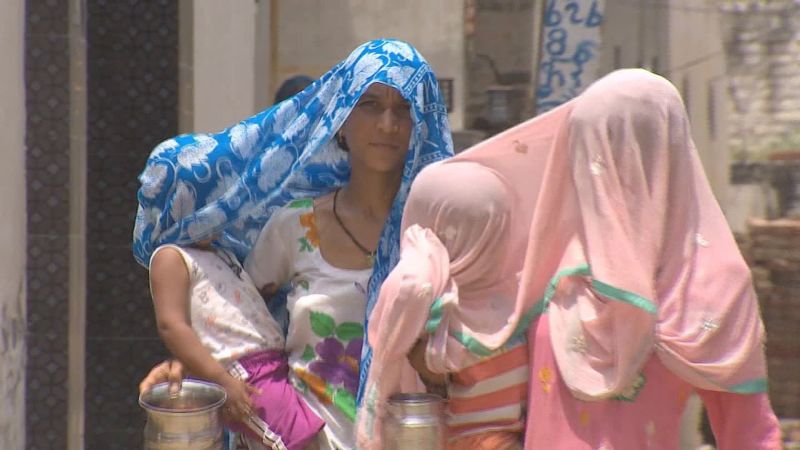
Urban landscapes often masquerade as bastions of equality—spaces where caste supposedly dissolves into irrelevance, and women stride freely, unencumbered by ancestral shackles. The very phrase “casteless urban spaces” evokes a utopian vision: city streets humming with opportunity, promising liberation from centuries-old social hierarchies. Yet beneath the veneer of glass towers and cosmopolitan promise lies a vexing contradiction, exposing the complex web of intersecting oppressions. Nowhere is this dichotomy more glaring than in the lived realities of Dalit women, who navigate a fraught terrain of housing discrimination, social invisibility, and gendered marginalization. What captivates us in this juxtaposition is not just the stark disparity, but the relentless persistence of caste’s shadow within spaces that claim to transcend it.
The Illusion of Castelessness in Urban Feminism
The city is often celebrated as an egalitarian canvas, where identities blur and new social contracts emerge. Feminist discourses frequently herald urban spaces as realms of emancipation—places where women can rewrite their narratives, unbound by the rigid strictures of rural caste hierarchies. This belief is seductive. It implies that geographic relocation alone can dismantle the social architecture of exclusion. Yet the illusion of castelessness is precisely that: an illusion. While caste markers might recede from overt public display, they morph into subtler, more insidious forms.
Feminism in urban contexts tends to emphasize gender equality and economic autonomy, sometimes at the expense of acknowledging caste’s omnipresence. This selective blindness perpetuates a sanitized version of women’s struggles, one that overlooks how caste discrimination is intricately woven into gendered oppression. The fascination with the city as a liberating space can inadvertently eclipse the harsh realities faced by Dalit women, whose intersectional identities render them vulnerable to a double bind of abuse—both as women and as members of the historically oppressed caste.
Dalit Women’s Housing Discrimination: A Blunt Reality
Housing is a fundamental prerequisite for agency, security, and community. Yet for Dalit women, particularly in metropolitan centers heralded as progressive, securing a dignified place to live remains an uphill battle marked by systemic discrimination. It begins with the eviction of invisible, informal settlements and extends to landlords’ prejudiced refusals to rent, driven by deep-rooted biases that see Dalits as undesirable or threatening.
The mechanisms of exclusion are decentralized yet pervasive. Dalit women encounter rejection not only through overt refusal but through the pervasive “informal screening” process—subtle but effective tactics where landlords exploit social networks to screen out Dalit applicants. This form of gatekeeping neatly circumvents anti-discrimination laws, rendering legal recourse complex and often futile.
Moreover, Dalit women often bear the brunt of economic precarity, largely due to systemic exclusion from quality education and well-paying jobs. The intersection of socioeconomic marginalization and caste stigma constricts their housing options, forcing many into overcrowded, segregated localities with substandard amenities. This spatial marginalization perpetuates cycles of poverty and social invisibility, cutting against feminist ideals of empowerment and autonomy.
Intersecting Identities: The Double Bind of Caste and Gender
To speak of Dalit women merely as victims of housing discrimination is to flatten the richness of their lived experiences and to ignore their resilience. Their struggle resides at the nexus of caste and gender discrimination—a double bind that feminists must urgently grapple with. This intersectionality reveals how caste operates within gendered paradigms to compound disenfranchisement.
Within patriarchal frameworks, Dalit women often face violence on multiple fronts—from their own caste groups and from dominant caste societies. Discrimination in housing is an extension of this violence; it is both symbolic and material, restricting mobility and agency. The lack of safe, stable housing increases vulnerability to gender-based violence and restricts access to vital services such as healthcare and education.
Feminist discourses that elide caste nuances inadvertently reinforce the invisibility of Dalit women’s specific struggles. Without critical engagement with their intersecting identities, the feminist movement risks becoming a partial narrative—one that champions the voices of privileged urban women while marginalizing those caught in caste oppression’s crosshairs.
The Fetishization of Urban Liberation and Its Limits
There is a profound cultural fascination with the city as a site of transformed identities and boundless possibilities. This fascination often borders on fetishization: the city becomes a totem of progress that promises emancipation from tradition’s anchor. Yet this fantasy obscures the structural continuities that tether caste oppression to new landscapes.
Dalit women’s marginalization unravels the myth of urban neutrality. Their experiences compel a rejection of urban exceptionalism, pushing us to recognize that city spaces are not inherently progressive or neutral. They are fractured terrains, where power dynamics are reconfigured but not erased.
This realization is both unsettling and necessary. It challenges us to question who benefits from narratives of urban feminism and whose realities are sidelined. The fetishization of urban spaces blinds us to the persistence of casteist practices and the urgent need to reimagine feminist frameworks that accommodate the realities of all women, particularly those on society’s margins.
Paths Toward Inclusive Feminism and Housing Justice
Recognizing the intersections of caste and gender is the cornerstone of forging an inclusive feminist praxis. Housing justice for Dalit women must transcend tokenistic inclusion and engage in structural transformation. Anti-discrimination laws require robust enforcement mechanisms, paired with grassroots mobilization to challenge entrenched social norms.
Urban planning and housing policies need to address spatial segregation and provide affordable, safe housing alternatives targeted explicitly at marginalized communities. Feminist coalitions must amplify Dalit women’s voices, ensuring that their narratives inform policy and activism, dissolving the silos that segregate caste and gender discourses.
Ultimately, the vision is not only of casteless urban spaces but of equitable cities where the lived experiences of Dalit women are acknowledged, validated, and protected. Feminism that does not confront caste’s enduring legacy fails women by perpetuating the very exclusions it purports to dismantle.