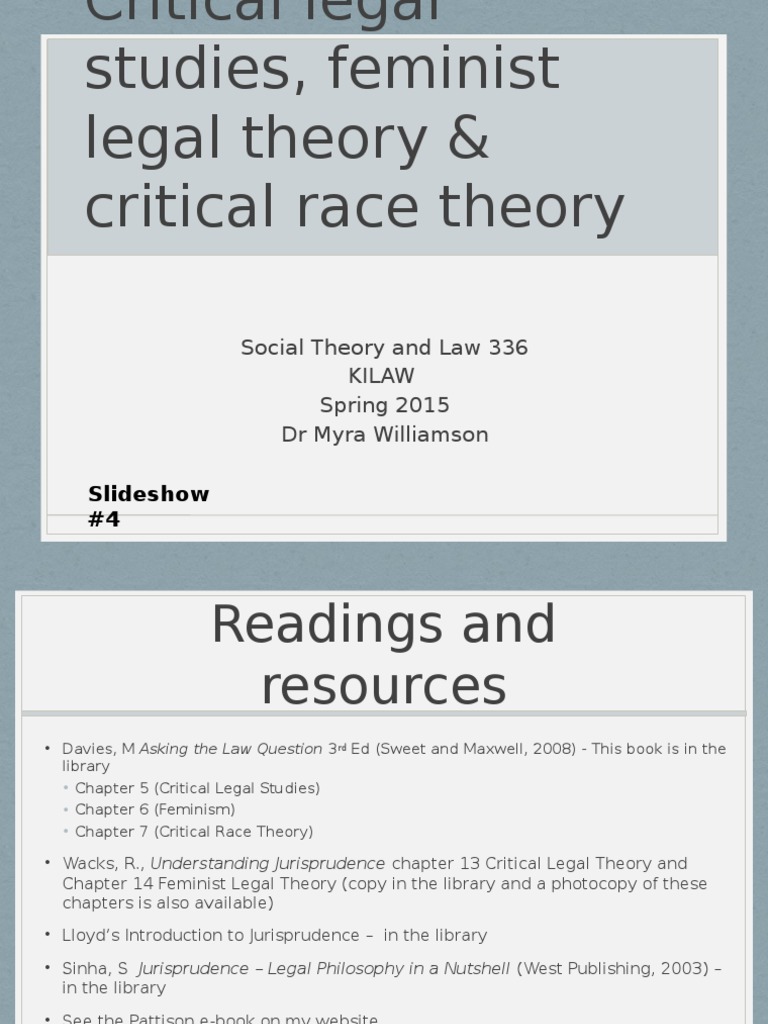
Feminism, in its relentless pursuit of justice and equality, has morphed and splintered into myriad strands—each dissecting society’s layered oppressions through unique lenses. Among these, Critical Race Feminism emerges as a formidable challenger to the orthodoxies of formal equality law, unmasking the subtle, systemic exclusions that lurk beneath ostensibly neutral legal frameworks. This discourse is not merely academic; it is a piercing critique of how law, society, and power collide to shape lived realities, particularly for those at the intersection of race and gender. Readers can anticipate an incisive journey through the foundational tenets of feminism, the limitations of formal equality, and the transformative potential embedded within Critical Race Feminism.
The Platitude of Formal Equality: An Illusion of Justice
Formal equality law is often hailed as the paragon of fairness—one rule applies to all, blind to race, gender, or class. Yet, this so-called impartiality is its most glaring flaw. The law’s insistence on sameness fails spectacularly to acknowledge the mosaic of lived experiences that define social reality. The promise of equality “on paper” crumbles when law confronts entrenched social hierarchies. Formal equality, in its majestic impartiality, refuses to engage with historical context; it is a monochrome brushstroke on a canvas bursting with color.
Consider how laws against discrimination are framed. They often demand proof that one’s treatment was explicitly worse than another’s under identical circumstances, ignoring how socio-economic background, racial stereotyping, and gendered expectations systematically relegate marginalized groups to unequal starting lines. This myopic focus renders the law impotent to tackle structural inequalities, instead spotlighting individual grievances that the legal framework can conveniently dismiss or minimize.
Critical Race Feminism: Synergizing Race and Gender in Feminist Discourse
Amid the sterile confines of formal equality, Critical Race Feminism offers a revolt—a radical recalibration of feminist thought that refuses to parse race and gender as separate, isolated categories. This intersectional approach, pioneered by visionary scholars, reveals how legal doctrines often mask institutional racism and sexism, compounding the oppressions faced by women of color. It frames discrimination not as isolated episodes but as a chronic, pervasive condition woven into societal structures.
Critical Race Feminism compels readers to reevaluate feminist victories through a more nuanced lens. Unlike mainstream feminism, which sometimes centers the experiences of white, middle-class women, this paradigm insists that liberation cannot be myopic. It demands narratives that illuminate the concurrency of race, gender, class, and other axes of identity. Far from being a niche perspective, Critical Race Feminism expands the horizons of legal critique and feminist activism alike, pushing for reforms that take the totality of discrimination into account.
Interrogating the Law: The Limits of Colorblindness and Gender Neutrality
The law’s aspiration toward colorblindness and gender neutrality is a double-edged sword. On the surface, these doctrines advertise fairness; underneath, they efface the specificities that produce inequality. Critical Race Feminists argue that such legal precepts are not merely naïve but actively complicit in perpetuating systemic injustice. By insisting that race and gender be irrelevant, the law ignores how these very categories structure social power and resource distribution.
This section dissects seminal court rulings and legal texts to expose how purported neutrality often translates into invisibility for marginalized claimants. It also explores how gender-neutral policies can fail to recognize the disproportionate burdens borne by women of color, including those embedded in workplace discrimination, healthcare, and criminal justice. The critique extends to the idea that “equal opportunity” can be achieved without addressing the deeply rooted disparities that produce unequal conditions in the first place.
The Empowerment Narrative: From Resistance to Transformative Praxis
Critical Race Feminism does more than diagnose; it catalyzes. Empowerment within this framework transcends the legalistic triumphs of formal equality and cultivates a vision for transformative change. It challenges activists and legal scholars alike to devise remedies that acknowledge intersectional harms and design systemic interventions.
Readers will encounter discussions on grassroots movements, legal advocacy, and policy reforms that embody the principles of Critical Race Feminism—efforts that prioritize the voices and experiences of women of color, demand reparative justice, and seek to dismantle institutional barriers rather than merely accommodate them. This section contemplates the role of coalition-building and the strategic blending of cultural change with legal innovation, highlighting how emancipatory justice is both a goal and a continuous struggle.
Critiques and Controversies: Navigating Tensions Within Feminist Thought
No intellectual terrain is free from contestation, and Critical Race Feminism is no exception. This section delves into internal debates that emerge within feminist circles, illuminating diverging views regarding the best pathways to equality. Some argue that emphasis on identity fragments collective feminist goals; others defend the necessity of recognizing intersectionality to avoid reproducing exclusionary practices.
The interrogation includes critiques from postmodern feminists, reformist legal theorists, and anti-essentialists, testing the limits of Critical Race Feminism’s assertions. This dynamic discourse enriches the understanding of feminism as a multilayered movement, resistant to monolithic readings and always evolving. Readers will gain insight into how these scholarly debates influence activism and policy, underscoring that the journey toward justice is as contested as it is urgent.
Conclusion: Envisioning a Feminist Jurisprudence Beyond Formal Equality
The doctrinaire reliance on formal equality law is untenable in the face of the complex matrix of race, gender, and power that shapes women’s realities. Critical Race Feminism ruptures the polished veneer of impartial law, revealing the uneven terrain beneath. It demands a reimagining of feminist jurisprudence—one that is dynamic, intersectional, and unapologetically political.
For readers ready to confront uncomfortable truths and embrace an expansive, radical feminism, this discourse offers both a challenge and a beacon. The future of feminist legal theory lies in its ability to embrace complexity, reject reductionism, and foster a justice rooted in the full spectrum of human experience.