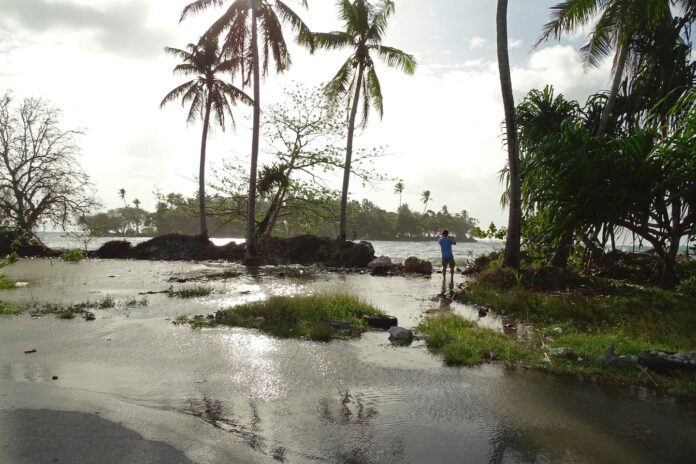
In the swirling nexus of climate crisis and migratory upheaval, a compelling narrative emerges—one that challenges patriarchal conventions and reframes the environmental catastrophe through the prism of feminism. As islands disappear beneath rising tides, the traditional stories of displacement evolve. This is not merely a tale of loss; it is a manifesto of matriarchal resilience and radical relocation. The impending submersion of island nations prompts a profound interrogation: what if the future of climate migration is soaked not in despair, but bathed in feminist agency? The discourse demands a seismic shift, steering away from the draining rhetoric of victimhood and toward a vibrant cartography of female-led corridors of hope and adaptation.
Climate Migration: A New Cartography of Displacement
Geographic shifts triggered by climate change often unfold as crude lines on a map—territorial losses, changing borders, and forced movements. Yet, beneath this sterile cartography lie intricate human stories, shaped profoundly by gender. Islands facing obliteration are not only sinking into oceans but are also setting the stage for a profound social recalibration. These environmental exiles, disproportionately women and daughters of these vanishing lands, are casting new routes for migration that defy conventional, often male-dominated paradigms.
Climate migration traditionally conjures images of men seeking work or crossing borders in search of survival. However, in island contexts, the matrilineal transmission of culture, knowledge, and identity challenges these drastic simplifications. The maps of departure and arrival are replete with female narratives — women passing down ancestral wisdom, crafting new community bonds, and pioneering socio-ecological resilience in receiving lands. These networks undermine geopolitical assumptions and sketch a new archipelago of interwoven female experiences, rich with complexity and resistance.
Matriarchal Relocation: Beyond Survival to Reimagination
Relocation evokes images of statelessness and disenfranchisement. Yet, when refracted through a feminist lens, it presents opportunities for empowerment and redefinition. The phenomenon of matriarchal relocation transcends mere survival; it becomes an incubator of radical imagination. In societies where women have traditionally been custodians of the land and intergenerational memory, their lead in orchestrating resettlement processes challenges normative power structures and paves the way for culturally sensitive adaptation strategies.
These matriarchal frameworks foster community cohesion, enabling displaced populations to anchor themselves not just physically but also spiritually and culturally, in new environments. They disrupt the gravity of dislocation by actively reconstituting identity. Women’s roles as environmental stewards provide unique insights into sustainable practices essential for rebuilding vulnerable ecologies. Their leadership, therefore, catalyzes a profound shift from passive recipients of aid to proactive architects of their futures.
Feminist Ecology and Island Vulnerability
The entanglement of feminism with ecological concerns births a critique of anthropocentrism that is particularly potent in island contexts. Feminist ecology underscores how environmental degradation disproportionately impacts women, especially in insular environments where livelihoods are intimately intertwined with natural systems. In small island nations, women’s labor in subsistence farming, fishing, and water management situates them at the frontline of climate vulnerability, yet also uniquely equips them with contextual knowledge vital to resilience-building.
This ontological vantage point reveals that island vulnerability is not solely a function of geographic exposure but also sociopolitical marginalization of feminine knowledge systems. By centering women’s environmental expertise, feminist ecology disrupts extractive models of development and champions adaptive strategies rooted in respect for interdependence and reciprocity with nature. It suggests that the preservation of islands is not just a geo-frontier but a feminist imperative demanding structural transformation of the global climate discourse.
The Intersection of Climate Justice and Gender Equity
Climate justice is inseparable from gender equity; they are braided struggles that must be addressed concurrently to dismantle ingrained systems of oppression. As island nations face existential threats, the lenses of justice reveal deep inequities in whose voices are heard and whose futures are protected. Women from these communities, often sidelined in international forums, carry invaluable perspectives on adaptation and mitigation. Ignoring their agency perpetuates a cycle of invisibility and marginalization.
Embedding gender equity into climate policy reframes migration not as a failure of governance but as an opportunity for redress and reparative justice. It challenges power asymmetries both within and beyond affected communities. Empowering women in island nations through capacity-building, leadership roles, and inclusion in environmental decision-making is essential to forging a just transition. This intersectional approach dismantles dangerous binaries between nature and culture, men and women, and center and periphery.
Imagining Futures: Feminism as a Navigational Compass
In the face of inexorable environmental transformation, feminism offers a compass pointing toward radical hope and ingenuity. It invites a reimagining of climate migration as a mosaic of matriarchal narratives—stories of not just fleeing but flourishing, not merely displacement but dynamism. These narratives disrupt the catastrophic scripts that dominate media and policy, revealing a nuanced geography where roots and routes coexist.
Feminist praxis in climate migration emboldens us to envision new ecologies of belonging, where relocated communities draw upon ancestral ties and feminine solidarity to cultivate spaces of sanctuary and innovation. It reclaims migration as a potent form of adaptation rather than loss. The promise inherent in this shift is profound: it dismantles fossilized hierarchies of knowledge and power, paving avenues for decentralized, community-led futures.
The sinking islands thus become apocalyptic classrooms, teaching the world about resilience through femininity’s multifaceted prism. They compel a reexamination of global priorities, insisting that climate responses be suffused with empathy, justice, and the unyielding strength of women united across archipelagos. Feminism, in this light, is not ancillary but central to navigating the turbulent waters of climate migration, mapping pathways that refuse to yield to despair and instead chart a course toward collective endurance and redefinition.