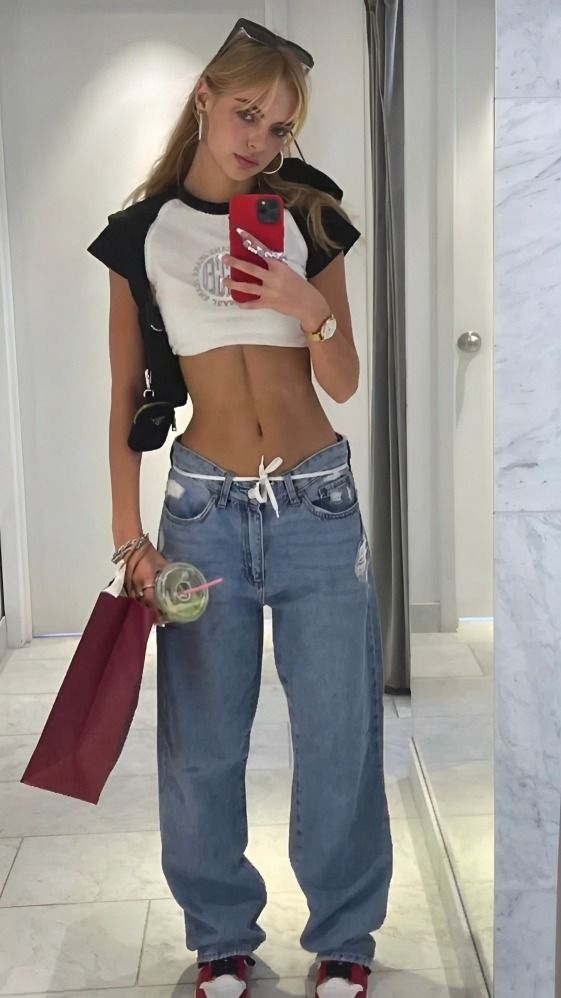
Is the resurgence of low-rise jeans a sly sartorial nod to feminist empowerment, or merely a nostalgic trap that reawakens the problematic body ideals of the Y2K era? As these scandalously seductive silhouettes reclaim closet space, they spark a provocative discourse: can fashion ever truly divorce itself from cultural constructs of gender and power? Or do these clothes dictate more than style, subtly reigniting centuries-old debates about women’s autonomy over their bodies and their representation?
The Low-Rise Jeans Revival: A Bold Statement or a Double-Edged Blade?
The low-rise jean, once the epitome of early-2000s rebellion and teenage allure, is clawing its way back into the fashion limelight with unapologetic persistence. This isn’t just about recapturing nostalgia; it’s a deliberate act of sartorial defiance that challenges the prevailing high-waisted dominance and the “comfort-over-form” narrative. Yet, beneath its playful, cheeky veneer lies a polarizing conversation. The low-rise cut forcibly re-centers the hips and abdomen — areas long scrutinized and politicized in feminist discourse.
Is this revival an emancipatory gesture that allows women to flaunt their bodies on their own terms, embracing sensuality without shame? Or does it reinscribe a narrow template of beauty, a tacit concession to the male gaze and the restrictive displays of femininity that feminism has been pushing against for decades? The challenge lies in reconciling these two possibilities without devaluing either the liberatory potential of choice or the potential pitfalls of aesthetic conformity.

Y2K Body Standards: A Flashback to Restrictive Ideals
The early 2000s, symbolized by the ubiquitous presence of Britney Spears, Paris Hilton, and the ever-slinky low-rise jeans, promulgated a very specific body ideal—slim hips, flat stomachs, and a controlled sensuality calibrated to turn heads yet remain “appropriate.” The low-rise’s return resurrects this silhouette, but the question remains: are we nostalgically glamorizing a thin, nearly fragile form that triggered countless insecurities and exclusionary beauty myths?
The Y2K aesthetic was more than just about denim placement; it was about policing bodies, creating a cultural pressure cooker where deviation from the slim, hourglass figure was overlooked or, worse, ridiculed. This period glamorized youth, flatness, and tightness, often ignoring the diversity of bodies that exist beyond media-generated ideals. As low-rise jeans return, so too do whispers—and sometimes roars—of these standards, prompting a necessary reckoning with what we prioritize in fashion: inclusivity or nostalgia?
Feminism’s Complex Relationship With Fashion and Body Politics
Feminism has never been monolithic, especially when it intersects with fashion’s intimate realm. The body is both a battleground and a sanctuary, a site where oppression and empowerment collide. Low-rise jeans epitomize this complexity: they can be a tool for flirtatious self-expression or an instrument of objectification, depending largely on the lens through which they are viewed.
The feminist challenge becomes how to reclaim sartorial choices without falling into the trap of judging women for their embrace of traditionally sexualized garments. After all, autonomy means the right to choose—in some moments provocative, in others protective. Ignoring this multiplicity betrays feminism’s nuanced fight against patriarchal control. Instead, the question is whether the current cultural moment can support a form of feminism that accepts low-rise jeans as valid empowerment, even if it tangentially triggers the specter of past constraints.
Body Autonomy Versus Cultural Pressure: Navigating a Fraught Terrain
What happens when personal empowerment collides with collective cultural pressure? Low-rise jeans resurrect this enduring tension. For some, slipping into these jeans is an act of reclaiming control—choosing to wear what pleases them, regardless of shifting trends or societal expectations. For others, these same jeans may feel like a subtle submission to a beauty ideal that continues to elevate certain body types over others.
The fashion world thrives on cycles, but these cycles carry cultural baggage. The Y2K aesthetic’s revival invites us to scrutinize who is included and who is excluded by these trends. It prods us to ask: are these jeans a symbol of freedom, or a reflection of enduring exclusionary standards? Can radical body positivity coexist with garments historically tied to narrow definitions of desirability? Fashion is rarely innocent, and the answers are entangled in history and ideology.
The Low-Rise Phenomenon and the Intersectionality of Identity
Examining low-rise jeans and Y2K standards through an intersectional feminist lens reveals even greater complexity. Race, class, sexuality, and body size all influence how these fashions are worn and received. The original Y2K wave primarily spotlighted a slender, often white ideal, frequently sidelining other representations of beauty and desire.
Today’s reclamation of low-rise jeans could serve as an opportunity to diversify the narrative, celebrating multiple bodies that break free from the restrictive mold of the past. Or, it could risk resurrecting exclusionary tropes under the guise of retro-chic resurgence. Intersectionality demands vigilance, ensuring that the celebration of this trend is not just a surface-level revival but a deeper embrace of plurality.
Concluding Reflections: Beyond Denim, Toward Genuine Feminine Empowerment
Low-rise jeans are much more than a fleeting fashion moment. They are a charged symbol, teasing out anxieties and aspirations around feminism, body politics, and cultural memory. They invite us to question: can style transcend its historical baggage, or are we destined to be haunted by the shadows of past ideals?
True empowerment may not lie in the cut of a jean or the height of a waistband. It emerges when women and people of all identities are free to make choices—about clothing, bodies, and expression—without the strain of imposed standards. The low-rise revival is a playful yet potent challenge to this ideal. Will it become a celebration of diverse freedom, or an echo of yesteryear’s narrow prescriptions? The answer, much like fashion itself, remains fluid, provocative, and fiercely personal.