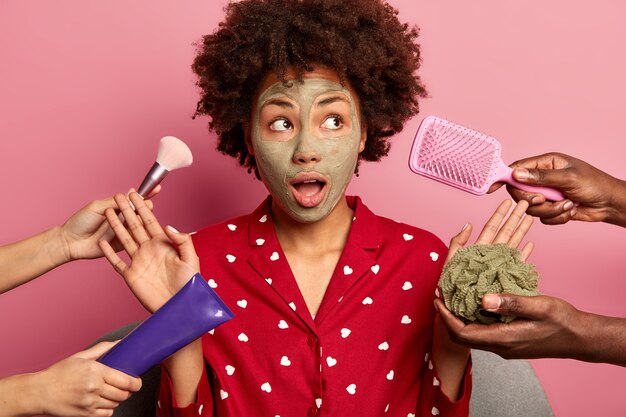
Is choosing a lipstick shade or splurging on an extravagant skincare routine truly an emblem of feminist liberation, or is it merely a dazzling façade masking entrenched patriarchal aesthetics? What if the celebrated “choice feminism” that applauds every purchase of beauty products actually reinscribes the very norms it claims to defy? This conundrum is not just a passing thought but a pivotal interrogation into how “empowerment” is commodified and repackaged in our consumerist age. When does personal autonomy slip stealthily into complicity with commercialized ideals of femininity?
Dissecting Choice Feminism: Autonomy or Illusion?
At first glance, choice feminism seems an unassailable champion of women’s freedom — the notion that every decision made by a woman, particularly in relation to her appearance, is inherently an act of empowerment. This reasoning proposes that the simple act of buying or using beauty products is a manifestation of self-ownership and rebellion against oppressive dictates. But can every ‘choice’ be truly disentangled from the cultural frameworks that shape it?
Choice feminism risks becoming a tautology; by celebrating any and all choices indiscriminately, it flattens complexity and sidesteps critical discourse. This unrestricted validation eschews evaluation of the socio-economic and ideological forces that funnel women towards certain decisions. The empowerment touted is not always self-generated but often engineered by industries lurking behind the guise of freedom.
The Commodification of Feminism: Beauty as Currency
Beauty, once a deeply personal and culturally situated concept, has been recalibrated into a tradable commodity in the global marketplace. The booming beauty industry doesn’t just provide products; it manufactures desires, insecurities, and “solutions.” Here, feminism is commodified and distilled into marketable slogans like “You deserve this,” or “Be your best self.”
Choice feminism, entwined with this commercial web, turns the act of purchasing beauty products into an aspirational symbol of independence. Yet, this dynamic reifies normative standards of attractiveness that remain overwhelmingly Eurocentric, youth-obsessed, and heteronormative. Women are courted to believe buying a product is not a capitulation, but an audacious assertion of identity — an identity painstakingly crafted by the beauty industrial complex.
Masked Pressures: The Double-Edged Sword of Beauty Norms
The paradox is pointed: while beauty products can enhance confidence, they simultaneously anchor women to a relentless quest for perfection as dictated by ubiquitous advertising and social media. The narrative of choice feminism often overlooks how these beauty norms distribute themselves unevenly, creating hierarchies within femininity itself. Certain looks and products are valorized, while others are dismissed, enhancing exclusion rather than inclusivity.
Is this empowerment, or a subtle coercion? The pressures to conform are insidiously internalized, morphing choice into a mandate — the “freedom” to select your weapon of daily self-policing. In this light, choice feminism masquerades as rebellion but may just be acquiescence to a more insidious form of control.
Intersectionality and the Invisible Boundaries of Choice
No feminist discourse can ignore the prism of intersectionality when critiquing choice feminism in beauty consumption. Not all women navigate these choices from positions of privilege. For women of color, queer individuals, and those economically marginalized, the “freedom” to choose beauty products is often circumscribed by systemic inequities.
Marketing and availability skew towards certain demographics, framing an exclusive narrative of what empowerment looks like. When beauty and choice are filtered through these lenses, the cracks in the façade become evident. Empowerment, in many cases, is not universally accessible but stratified — a selective liberation that mirrors broader social disparities.
Reclaiming Empowerment: Beyond Products, Towards Purpose
True feminist empowerment transcends mere consumption. It requires a conscientious unmasking of the forces that shape “choice” and an active dialogic engagement with the socio-political contexts of beauty. The reductive celebration of buying as inherently liberating must give way to a more nuanced understanding: that empowerment can coexist with critique.
Women reclaim agency not just by wielding the latest beauty product, but by questioning the necessity of these products in defining worth or identity. Empowerment, then, becomes an act of discernment — choosing when to engage with these ideals and when to reject their prescribed narratives altogether. This reimagining transforms “choice” from a perfunctory action into a deliberate, politicized stance.
Conclusion: Reading Between the Lines of Cosmetic Chic
The celebration of choice feminism in beauty consumption offers a tantalizing promise: that freedom can be bought and worn like a badge. Yet, an uncritical embrace risks endorsing a cycle where agency is packaged and sold back to us, cloaked in the language of empowerment. The true challenge is to interrogate how power operates beneath the shiny veneer of consumer ‘choices’ and to circumvent the spectacle to reclaim feminism as a radical, collective force — not a transactional endorsement of the status quo.