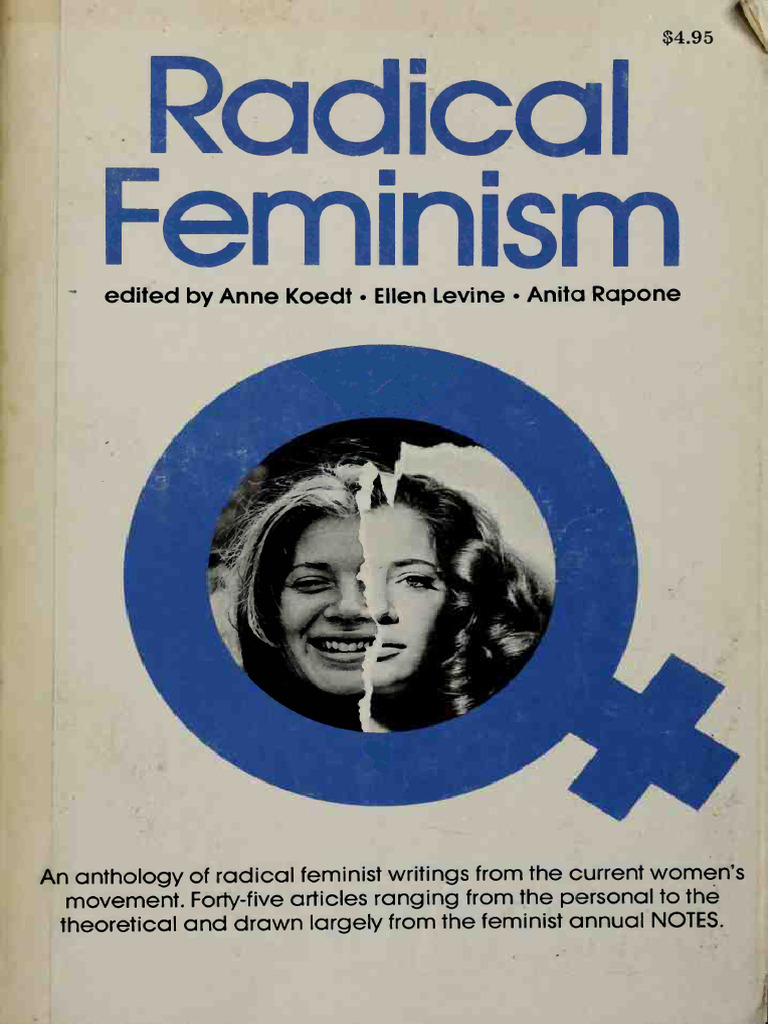
Radical feminism has long been a crucible of uncompromising critique, a movement that dissects the roots of oppression with surgical precision. Yet, in recent years, a seismic shift has occurred—one that refuses to divorce the struggle for women’s liberation from the fight for trans liberation. This is not a dilution of feminist principles but an expansion of them, a recognition that the cages of gender are not built to hold anyone. The radical feminism of today is one that embraces intersectionality with a ferocity that leaves no body behind. To navigate this terrain, one must arm themselves with texts that challenge, provoke, and illuminate. Below, a curated reading list that serves as both a manifesto and a map for those who dare to redefine liberation.
The Foundational Texts: Where Radical Feminism Meets Trans Feminism
To understand the marriage of radical feminism and trans liberation, one must begin with the texts that dismantle the myth of gender as a biological inevitability. Transfeminist Manifesto by Emi Koyama is not just a pamphlet—it is a Molotov cocktail hurled at the edifice of cisnormativity. Koyama’s work is a clarion call, insisting that feminism must be a sanctuary for all women, regardless of the shape their bodies take or the names they claim. This is not a plea for tolerance but a demand for solidarity rooted in the understanding that the oppression of trans women is not a tangential issue but a core pillar of patriarchal control.
Then there is Whipping Girl by Julia Serano, a book that flips the script on the tired narratives of trans women as either victims or predators. Serano, a trans woman herself, crafts a searing critique of what she terms “oppositional sexism”—the belief that male and female are rigid, opposing categories. Her prose is both academic and intimate, weaving personal narrative with sharp theoretical insight. This is the kind of text that doesn’t just inform; it transforms the reader’s perception of gender itself.
Dystopian Fiction as a Mirror: Imagining Liberation in a Hostile World
Fiction has always been a space for radical imagination, and speculative literature is no exception. The Left Hand of Darkness by Ursula K. Le Guin is a masterclass in deconstructing gender binaries, even if it was written decades before trans liberation became a mainstream feminist concern. The novel’s androgynous Gethenians challenge the reader to question why gender is even necessary—a question that feels urgent in an era where anti-trans legislation seeks to reassert rigid definitions.
For something more contemporary, The City in the Middle of the Night by Charlie Jane Anders offers a world where gender is fluid, and survival depends on rejecting the old hierarchies. Anders’ prose is lush and immersive, but the novel’s true power lies in its subtext: a world where trans and nonbinary identities are not just accepted but essential to the survival of humanity. These are not just stories; they are blueprints for a future where liberation is not a privilege but a birthright.
Academic Rigor Meets Activist Fire: Theory That Doesn’t Just Talk, But Acts
The academy has long been a battleground for feminist thought, and the intersection of radical feminism and trans liberation is no exception. Feminist, Queer, Crip by Alison Kafer is a text that refuses to let disability justice be an afterthought. Kafer’s work is a reminder that the fight for trans liberation is also a fight against ableism, a system that polices bodies in multiple ways. Her arguments are meticulously researched, yet her writing crackles with the urgency of someone who knows that theory must lead to action.
Then there is Black on Both Sides by C. Riley Snorton, a book that excavates the history of Black trans identity in America. Snorton’s work is not just historical—it is a reclamation, a refusal to let trans narratives be erased or co-opted. The prose is dense, but the payoff is immense: a history that has been deliberately buried, now unearthed for those who seek to understand the roots of trans oppression.
Memoirs That Shatter Silence: Personal Stories as Political Acts
Sometimes, the most radical act is to speak your truth when the world demands your silence. Redefining Realness by Janet Mock is a memoir that does more than recount a life—it dismantles the lies that society tells about trans women, particularly trans women of color. Mock’s writing is both tender and unflinching, a balance that makes her story impossible to ignore. This is not just a personal narrative; it is a political weapon.
For a more experimental approach, In the Dream House by Carmen Maria Machado is a memoir that refuses to be linear, mirroring the fragmented experiences of queer and trans lives. Machado’s prose is lyrical, almost incantatory, but beneath the beauty lies a searing indictment of the systems that seek to erase trans women’s stories. This is a book that doesn’t just demand to be read—it demands to be reckoned with.
Zines and Underground Literature: The Unfiltered Voice of the Margins
Not all radical literature is bound by the constraints of traditional publishing. Zines, pamphlets, and underground texts offer a raw, unfiltered perspective that mainstream academia often sanitizes. Gender Outlaw by Kate Bornstein is a classic in this vein—a manifesto that gleefully defies categorization, blending performance art, theory, and personal anecdote into a singular, subversive whole. Bornstein’s work is a reminder that radical feminism doesn’t need to be polite; it needs to be effective.
The Cliterature zine series, edited by multiple trans and nonbinary writers, is a collection of poetry, essays, and art that centers the voices of those who have been systematically silenced. These zines are not just reading material; they are acts of resistance, a refusal to let trans and nonbinary voices be drowned out by the noise of cisnormative discourse.
Visual and Multimedia Radicalism: Art as a Tool for Liberation
Liberation is not just a theoretical pursuit—it is a visceral, embodied experience. The documentary Paris Is Burning is more than a film about ballroom culture; it is a testament to the power of trans women of color to carve out spaces of joy and resistance in a world that seeks to destroy them. The film’s archival footage is a time capsule of a movement that refused to be erased.
For something more contemporary, the podcast Gender Reveal by Tuck Woodstock is a space where trans and nonbinary voices are centered, not as objects of study but as experts in their own lives. The podcast’s interviews are intimate, revealing the personal as political in ways that challenge the listener to think differently about gender, power, and liberation.
Where to Begin? A Path Through the Radical Feminist Canon
For those new to this intersection of radical feminism and trans liberation, the journey can feel overwhelming. Start with the memoirs—Mock and Machado’s works are accessible yet profound, grounding the theory in lived experience. From there, move to the foundational texts like Koyama and Serano, which will arm you with the language to engage with more complex academic works like Kafer and Snorton. Don’t neglect the zines and multimedia—these are the lifeblood of the movement, the voices that refuse to be policed.
This reading list is not just a collection of texts; it is a call to arms. Radical feminism today is not a monolith but a coalition of voices demanding a world where no one is left behind. The texts here are not just to be read—they are to be wielded, shared, and acted upon. The revolution will not be televised, but it will be written, filmed, and spoken into existence. Will you answer the call?