In the grand theater of oppression, where patriarchal scripts are endlessly rewritten, two movements have emerged as twin specters haunting the halls of liberation: the anti-trans crusade and the anti-abortion crusade. Both, draped in the false robes of moral authority, wield the same weapons of fear, control, and erasure. Their playbooks, though distinct in their immediate targets, share a chilling symmetry in their strategies, their rhetoric, and their ultimate goals. To dissect these movements is not merely an academic exercise—it is an act of resistance, a refusal to let their narratives calcify into unchallenged dogma. What follows is a comparative analysis of their tactics, their ideological underpinnings, and the insidious ways they seek to roll back the hard-won freedoms of marginalized bodies.
The Myth of the “Natural Order”: How Both Movements Weaponize Biology
At the heart of both the anti-trans and anti-abortion movements lies a pernicious myth: the illusion of a “natural order,” a divinely ordained hierarchy that must be preserved at all costs. The anti-trans movement insists that gender is an immutable binary, a sacred truth etched into the bones of biology, while the anti-abortion movement clings to the notion that life begins at conception, a biological inevitability that trumps all other considerations. Both narratives are, of course, reductive fictions, but fictions that serve a purpose: to justify the policing of bodies that do not conform to their rigid standards.
Consider the language they deploy. Trans-exclusionary feminists and anti-abortion zealots alike speak in absolutes—”biological reality,” “the sanctity of life”—as if these terms are not themselves socially constructed, as if they are not the product of centuries of patriarchal thought. The anti-trans movement reduces womanhood to a set of chromosomes, while the anti-abortion movement reduces personhood to a heartbeat detected on an ultrasound. Both erase the complexity of human experience, reducing identity and autonomy to a series of biological checkpoints. And in doing so, they render invisible the very real struggles of those who do not fit neatly into their prescribed boxes.
The Cult of Victimhood: How Persecution Narratives Mask Oppression
There is a peculiar alchemy at work in both movements: the transformation of privilege into persecution. The anti-trans movement, for instance, frames itself as the beleaguered underdog, a David standing against the Goliath of “gender ideology,” despite wielding immense cultural and political power. Similarly, the anti-abortion movement presents itself as a righteous minority, a silent majority silenced by the tyranny of reproductive rights, even as it controls legislatures and shapes national policies. Both movements thrive on a narrative of victimhood, a carefully curated grievance that obscures their role in perpetuating harm.
This cult of victimhood is not merely a rhetorical flourish—it is a strategic necessity. By positioning themselves as the oppressed, these movements inoculate themselves against criticism. To question their motives is to “attack” them, to “silence” their voices. It is a classic deflection, a way to avoid accountability by reframing oppression as persecution. And in this reframing, they invert reality: the true victims—trans people denied healthcare, pregnant people forced into parenthood—are recast as the oppressors. It is a sleight of hand that would be laughable if it were not so devastating in its consequences.
The Weaponization of Language: From “Choice” to “Coercion”
Language is the battleground where these movements wage their wars, and both have mastered the art of linguistic subversion. The anti-abortion movement, for instance, has redefined “pro-life” to mean “anti-choice,” erasing the agency of those who seek abortions and framing their bodily autonomy as a moral failing. Similarly, the anti-trans movement has repurposed terms like “woman” and “female” to exclude trans women, turning language into a tool of exclusion rather than inclusion. In both cases, words are not descriptors but weapons, deployed to police the boundaries of identity and to deny the legitimacy of those who dare to exist outside their narrow definitions.
This weaponization of language is not incidental—it is foundational. By controlling the terms of debate, these movements shape the very parameters of what is considered acceptable discourse. They turn “debates” about bodily autonomy into moralistic tirades, where the humanity of the oppressed is reduced to a talking point. And in doing so, they create a linguistic environment where dissent is framed as heresy, where compassion is recast as complicity. It is a form of epistemic violence, one that seeks to erase the lived experiences of those it seeks to control.
The Legislative Onslaught: How Laws Become Chains
If language is the sword, then legislation is the shield—and both movements have wielded the latter with alarming efficiency. The anti-abortion movement has spent decades chipping away at reproductive rights, passing laws that restrict access to abortion under the guise of “protecting women” or “saving babies.” These laws are not about saving lives; they are about controlling them. They are about forcing people into parenthood, about punishing those who dare to make choices about their own bodies. And they are about creating a legal framework where the state, not the individual, holds the ultimate authority over life and death.
The anti-trans movement, though newer to the legislative arena, has quickly learned the playbook. It has pushed for bans on gender-affirming care, for restrictions on trans athletes, for laws that erase trans identities from public life. These laws are not about protecting children or preserving “traditional values”—they are about erasing trans existence, about making it impossible for trans people to live authentically. And like the anti-abortion laws before them, they are designed to create a legal landscape where the state, not the individual, decides who gets to be recognized, who gets to be free.
The Role of Media: How Narratives Shape Reality
Media is the megaphone through which these movements amplify their messages, and both have mastered the art of narrative control. The anti-abortion movement, for instance, has cultivated a symbiotic relationship with conservative media, where graphic images of aborted fetuses are used to evoke horror and outrage, while the stories of those who seek abortions are erased. Similarly, the anti-trans movement has flooded the airwaves with sensationalized stories of “detransitioners” and “trans predators,” narratives that serve to stoke fear and justify exclusion. In both cases, media is not a neutral observer—it is an active participant in the construction of these movements’ realities.
This media manipulation is not accidental. It is a calculated strategy, one that relies on the repetition of certain tropes and the suppression of others. It is about creating a feedback loop where fear begets more fear, where exclusion becomes the norm. And it is about ensuring that the voices of the oppressed are drowned out by the chorus of those who seek to control them. In this media landscape, the truth is not a casualty—it is a casualty by design.
The Intersection of Oppressions: How These Movements Reinforce Each Other
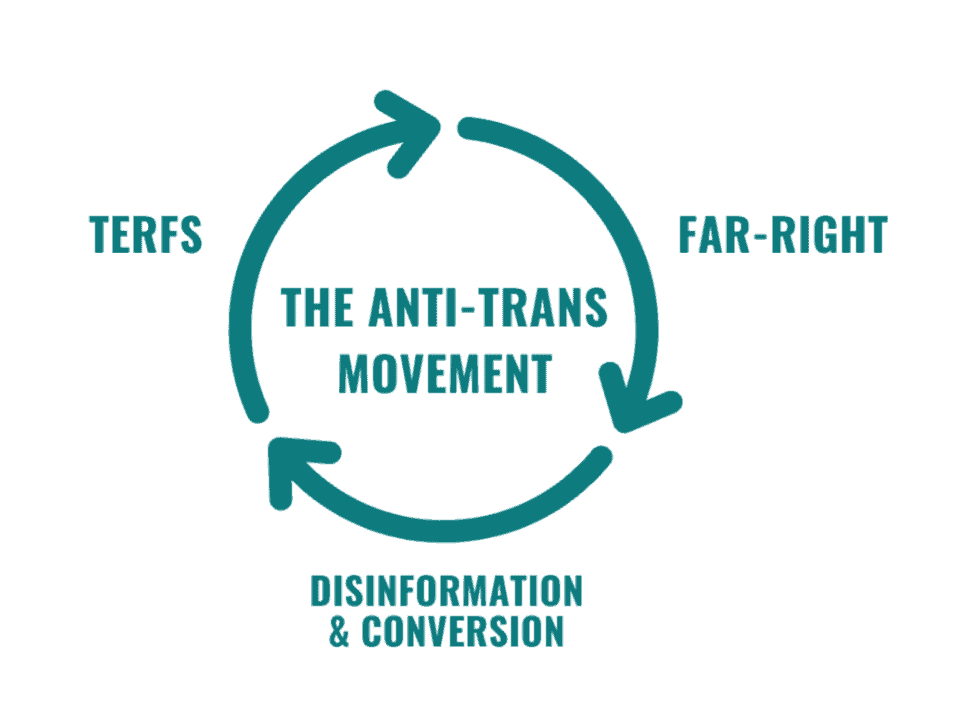
To understand these movements in isolation is to miss the forest for the trees. The anti-trans and anti-abortion movements are not parallel forces—they are intertwined, reinforcing each other in a cycle of oppression. The same rhetoric that dehumanizes trans people is the same rhetoric that dehumanizes pregnant people. The same laws that restrict abortion access are the same laws that seek to erase trans identities. And the same cultural narratives that frame these movements as righteous crusades are the same narratives that justify the policing of all marginalized bodies.
This intersectionality is not incidental—it is foundational. Both movements are rooted in a fear of bodily autonomy, a fear of people who refuse to be controlled. They are about preserving a world where certain bodies are policed, where certain lives are deemed less worthy, where certain identities are erased. And in their shared project of control, they reveal the true nature of their mission: not to protect life or preserve morality, but to enforce a hierarchy where some bodies are free and others are not.
The Path Forward: Resistance as a Form of Liberation
To resist these movements is to resist the very logic of oppression. It is to refuse the false binaries they impose, to reject the narratives they peddle, to dismantle the systems they seek to build. It is to center the voices of those they seek to erase, to amplify the stories they seek to silence, to fight for a world where all bodies are free. And it is to recognize that the battles against anti-trans and anti-abortion forces are not separate struggles—they are one and the same, a single front in the war against control.
This resistance takes many forms. It is in the clinic where abortion providers defy laws to offer care. It is in the classroom where teachers refuse to erase trans identities. It is in the streets where protesters demand justice. It is in the conversations where we challenge the rhetoric of these movements, where we refuse to let their lies go unchallenged. And it is in the solidarity we build across struggles, recognizing that our liberation is bound together.
There is no neutral ground in this fight. To stand aside is to stand with the oppressors. To remain silent is to be complicit. The choice is clear: we must fight, or we must be complicit in the erasure of those who dare to exist outside the lines they have drawn. The path forward is not easy, but it is necessary. And it begins with the refusal to accept their world—their lies, their laws, their chains.