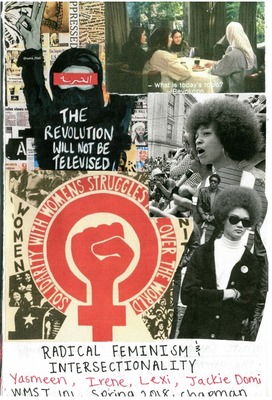
In the vast, ever-shifting landscape of digital activism, few mediums have mirrored the raw, unfiltered pulse of feminist thought quite like the zine. From the mimeographed pages of the 1970s to the ephemeral scroll of Instagram memes, feminist discourse has not merely adapted to technological evolution—it has weaponized it. This digital metamorphosis is not just a shift in format; it’s a rebellion against the erasure of marginalized voices, a redefinition of what it means to *speak* in a world that has historically silenced women, queer people, and people of color.
The Birth of the Zine: A Handmade Revolution
The zine was never just paper and ink. It was a lifeline. In the pre-digital era, when publishing houses were gatekeeped by patriarchal hierarchies, feminist zines emerged as a clandestine art form—a way to circulate ideas that were deemed too radical, too unpalatable, too *necessary*. These were not polished manifestos; they were scrawled manifestos, collaged with safety pins and glitter, stapled together in garages and queer collectives. The zine was the original DIY ethos: if the system wouldn’t publish your truth, you’d publish it yourself.
Consider the tactile intimacy of a zine. The smudge of a photocopier’s drum, the uneven edges of a hand-cut page, the scent of toner and rebellion. These were not just documents; they were artifacts of resistance. They carried the unfiltered rage of women who had been told their pain was too loud, their demands too demanding. The zine was where intersectionality was first whispered before it became a buzzword—where Black feminists, disabled feminists, and working-class feminists carved out space in a movement that often centered only the most privileged voices.
From Xerox to X-Rated: The Zine’s Underground Legacy
The zine’s golden age was not in the mainstream. It thrived in the margins, in the backrooms of punk shows and the trunk of a feminist’s car. It was the medium of choice for riot grrrls who screamed their manifestos into the void, for trans women who documented their journeys in stapled booklets, for survivors of sexual violence who refused to be silenced. The zine was a fugitive form—easy to produce, impossible to control. It evaded the algorithms of the time, slipping through the cracks of a culture that sought to commodify dissent.
Yet even in its underground existence, the zine held power. It was a tool of education, a weapon of solidarity. A young Black girl in Detroit could read a zine by a queer Latina in Chicago and feel, for the first time, that her struggles were not hers alone. The zine was a conversation across borders, a bridge between isolated pockets of resistance. It was proof that feminism was not a monolith but a sprawling, messy, beautiful hydra—one that grew more heads with every new voice that joined the fight.
The Digital Disruption: When the Internet Became a Zine
Then came the internet—a tool that promised liberation but delivered something far more complicated. At first, the digital space seemed like a natural evolution for the zine. Websites like Feministing and Bitch Media carried the torch, offering feminist discourse a platform beyond the photocopier’s reach. But the internet was not just a new medium; it was a new beast entirely. It demanded speed over depth, virality over nuance. The zine’s careful, handcrafted thoughtfulness was replaced by the fleeting scroll of a tweet, the ephemeral laugh of a meme.
And yet, the digital space also democratized feminism in ways the zine never could. Suddenly, a Black trans woman in rural Alabama could share her story with millions. A disabled activist in London could find community in a Discord server. The internet was a zine on steroids—unbounded by geography, unshackled by the cost of printing. But it was also a zine on steroids in the worst way: addictive, overwhelming, prone to burnout. The same platform that amplified marginalized voices also subjected them to harassment, doxxing, and algorithmic erasure.
Instagram Memes: The New Zine, or Just Another Commodity?
Enter the Instagram meme—a format so stripped of context that it risks becoming meaningless. At first glance, it seems like the antithesis of the zine: disposable, algorithm-driven, often devoid of the depth that made feminist zines so vital. But look closer. The best feminist memes are not just jokes; they are mini-manifestos. They distill complex ideas—intersectionality, bodily autonomy, the wage gap—into bite-sized, shareable truths. They are the zine’s heir, repackaged for a generation that consumes information in 3-second bursts.
Yet the meme’s power is also its peril. In the hands of capitalism, even feminist discourse becomes a product. Brands slap pink ribbons on products and call it activism. Influencers turn trauma into content. The meme, like the zine before it, risks being co-opted, diluted, turned into just another way to sell something—even if that something is *woke-ness*. The challenge, then, is to reclaim the meme as a tool of disruption rather than consumption. To use it not just to provoke a laugh, but to provoke a thought. To make the algorithm work for the movement, not against it.
The Future: A Hybrid of Old and New
The most exciting feminist discourse today exists in the space between the zine and the meme. It’s the TikTok essay that feels like a spoken-word poem. It’s the Twitter thread that unfolds like a zine’s collage. It’s the Instagram carousel that demands you pause, zoom in, *think*. The digital feminist of today must be a hybrid: part archivist, part meme lord, part street artist. She must understand that the zine’s legacy is not dead; it has simply evolved.
What does this evolution look like? It looks like a Black feminist in Atlanta live-streaming her abortion pill pickup, turning a private moment into a public act of defiance. It looks like a queer collective in Berlin using QR codes to distribute zines in public bathrooms. It looks like a disabled activist in Toronto turning her medical records into a digital collage that exposes the failures of the healthcare system. The tools have changed, but the mission remains the same: to make the invisible visible, to make the unspeakable speakable, to turn the personal into the political.
The zine was never just a medium. It was a philosophy. And that philosophy is alive in every feminist meme, every viral thread, every digital artifact that refuses to be ignored. The question is not whether feminism will survive the digital age—it already has. The question is whether we will let it thrive.