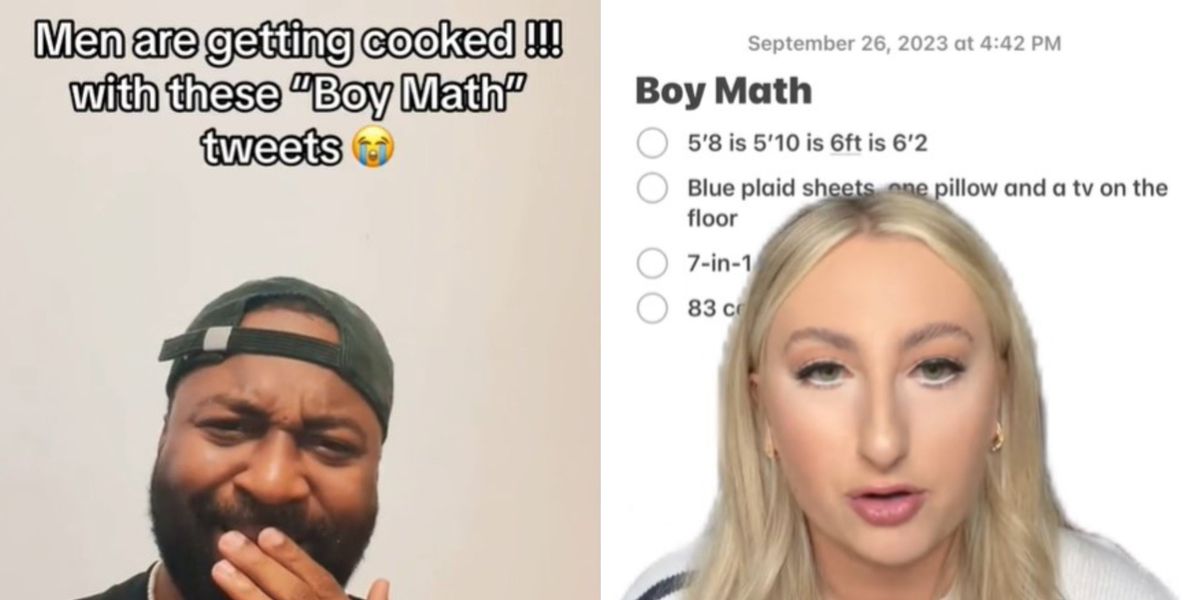
In the labyrinth of social media trends, where algorithms dictate what we consume and how we perceive the world, a new phenomenon has emerged: “Girl Math.” This viral concept, seemingly innocuous at first glance, has sparked a fierce debate about its implications for women’s financial literacy, autonomy, and societal perceptions of gendered economic behavior. Is it a celebration of savvy financial navigation, a subtle reinforcement of gendered stereotypes, or something far more insidious? The discourse surrounding “Girl Math” transcends mere internet banter—it is a mirror reflecting the complex, often contradictory ways society views women and money.
The Genesis of a Trend: How “Girl Math” Took Over the Internet
The term “Girl Math” first surfaced as a playful, tongue-in-cheek hashtag on TikTok, where users—primarily young women—shared unconventional ways they justified their spending habits. The logic was simple: if a purchase made them happy, it was “free” in the grand scheme of their emotional well-being. A $200 dress worn once? “It’s free because it made me happy.” A daily latte? “It’s an investment in my productivity.” The trend quickly evolved into a cultural shorthand, encapsulating a broader conversation about how women navigate financial decisions in a world that often polices their choices under the guise of fiscal responsibility.
Yet, beneath the surface of this seemingly harmless trend lies a more troubling question: why is it that women’s financial logic is so often dismissed as frivolous or irrational, while men’s spending habits are rarely scrutinized through the same lens? The virality of “Girl Math” reveals a paradox—it is both a coping mechanism and a critique of a system that undervalues women’s economic agency. It is a rebellion against the rigid expectations that women must justify every penny spent, while men are rarely held to the same standard.
The Double-Edged Sword: Empowerment or Reinforcement of Stereotypes?
Proponents of “Girl Math” argue that it is a form of financial empowerment—a way for women to reclaim agency in a world that has historically dictated how they should spend, save, and invest. In a society where women are often told to “shop less” or “budget more,” this trend flips the script, asserting that women’s spending is not inherently wasteful but rather a reflection of their priorities. It challenges the notion that financial literacy is a male domain, positioning women as the arbiters of their own economic destinies.
However, critics contend that “Girl Math” is a double-edged sword. By framing women’s financial decisions as inherently illogical or emotional, the trend risks reinforcing the very stereotypes it claims to subvert. The language of “Girl Math” implies that women’s spending is governed by whims rather than reason, a narrative that aligns with long-standing tropes about female irrationality. This is not empowerment—it is a subtle form of gaslighting, suggesting that women’s financial choices are less valid than those of men.
The dichotomy is stark: is “Girl Math” a feminist triumph, a celebration of women’s autonomy, or is it a Trojan horse, smuggling in outdated gender norms under the guise of humor? The answer, as with most things, is complicated. It is both a rebellion and a reinforcement, a moment of liberation and a trap. The key lies in how we choose to interpret it—and whether we allow it to evolve beyond a fleeting trend into a meaningful conversation about financial equity.
Economic Literacy vs. Gendered Narratives: Where Does the Truth Lie?
The debate over “Girl Math” inevitably circles back to the broader issue of financial literacy, particularly as it pertains to women. Studies consistently show that women, despite being as capable as men in managing money, are often less confident in their financial skills. This lack of confidence is not a reflection of ability but of systemic barriers—wage gaps, societal expectations, and a financial industry that has long catered to men. In this context, “Girl Math” can be seen as a coping mechanism, a way for women to navigate a system that was not designed with them in mind.
Yet, the trend also highlights a troubling disconnect. If “Girl Math” is a response to financial insecurity, why is it so often framed as a joke rather than a legitimate critique of economic inequality? The answer may lie in the way society processes women’s frustrations. Women’s anger, whether about money or anything else, is frequently trivialized or dismissed as irrational. By packaging financial grievances in humor, “Girl Math” allows women to voice their concerns without being labeled as “difficult” or “complainy.” But at what cost? Does this humor dilute the seriousness of the issues at hand, or does it provide a necessary outlet for women to reclaim their narratives?
The tension between empowerment and stereotype is palpable. On one hand, “Girl Math” gives women a language to articulate their financial frustrations. On the other, it risks normalizing the idea that women’s economic decisions are inherently flawed. The challenge, then, is to separate the wheat from the chaff—to celebrate the moments of financial agency while dismantling the structures that force women to justify their worth in the first place.
The Broader Implications: How “Girl Math” Reflects Societal Attitudes Toward Women and Money
To understand “Girl Math,” we must zoom out and examine the larger cultural landscape in which it thrives. Women have long been subjected to contradictory expectations when it comes to money. They are told to be thrifty, to save every penny, to prioritize others’ needs over their own. Yet, they are also bombarded with messages that equate self-worth with material possessions, that suggest happiness can be bought, if only they spend enough. In this paradox, “Girl Math” emerges as a coping mechanism—a way to navigate the cognitive dissonance between societal expectations and personal desires.
But the trend also exposes a deeper truth: society is uncomfortable with women who spend money freely. When men engage in conspicuous consumption, it is often celebrated as ambition or success. When women do the same, it is scrutinized as frivolity. “Girl Math” is, in many ways, a response to this double standard. It is a way for women to assert their right to spend without apology, to reject the idea that their financial choices must be justified to a patriarchal gaze.
Yet, the trend also reveals the limits of individual empowerment in a system that is rigged against women. No amount of clever accounting can bridge the gender pay gap. No amount of “Girl Math” can erase the fact that women, on average, retire with less wealth than men due to career breaks, wage disparities, and longer lifespans. The real question is not whether women can outsmart the system with humor and creativity, but whether society will ever stop forcing them to do so.
Beyond the Trend: What’s Next for Women and Financial Empowerment?
The conversation around “Girl Math” is far from over. If anything, it is a starting point—a way to broach the larger, more uncomfortable discussions about gender, money, and power. The next step is to move beyond the trend and address the systemic issues that make such conversations necessary in the first place. This means advocating for equal pay, challenging workplace discrimination, and demanding financial education that is accessible to all women, regardless of their background.
It also means redefining what financial literacy looks like. True empowerment is not about finding loopholes in a broken system—it is about dismantling the system entirely. It is about creating a world where women’s spending is not a joke but a right, where their financial decisions are not scrutinized but respected. “Girl Math” may be a viral sensation, but its legacy should be a call to action—a reminder that women’s economic agency is not a trend to be dissected and discarded, but a fundamental human right to be fought for.
The future of women’s financial empowerment lies not in clever hashtags or viral memes, but in structural change. Until then, trends like “Girl Math” will continue to serve as both a salve and a symptom—a way for women to navigate a world that was never designed with them in mind, and a reminder of the work that still needs to be done.