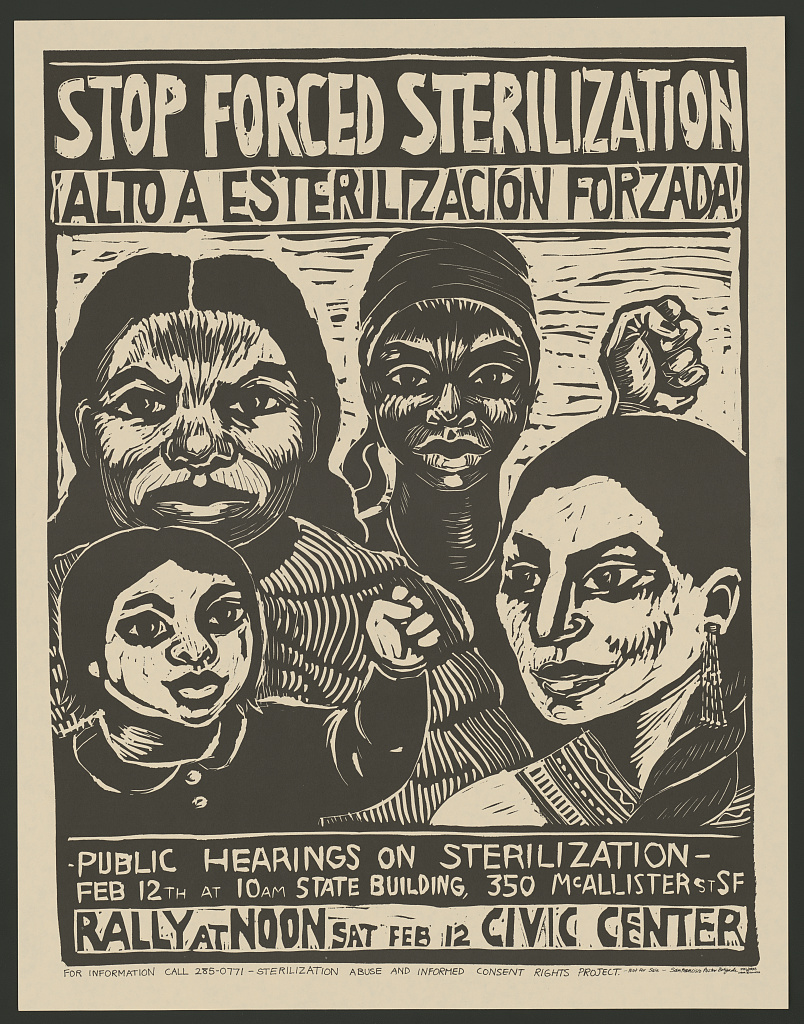
The specter of eugenics slithers through the corridors of modern medicine, its tendrils entwined around the bodies of disabled women—often unseen, always unheard. Forced sterilization and systemic medical neglect are not relics of a bygone era; they are contemporary weapons of oppression, wielded with chilling precision. This is not merely a historical footnote but an ongoing atrocity, one that demands our unflinching gaze. The erasure of disabled women’s autonomy is not accidental; it is engineered, institutionalized, and perpetuated under the guise of “care.” To confront this genocide, we must dismantle the myths that justify it, expose the complicity of medical systems, and reclaim the bodily sovereignty that has been violently stripped away.
The Eugenic Legacy: How “Progress” Became a Death Sentence
Eugenics did not vanish with the Nazis—it merely rebranded, draping itself in the sterile language of public health and reproductive “responsibility.” Disabled women, particularly those with intellectual or psychiatric disabilities, have long been deemed “unfit” to reproduce, their bodies marked as threats to the genetic purity of the nation. Laws permitting forced sterilization were not abolished; they were repackaged. Today, guardianship laws, “informed consent” loopholes, and the medicalization of disability allow for the same violations under the guise of protection. The language shifts—from “defective germ plasm” to “best interests”—but the outcome remains the same: the forcible sterilization of women whose autonomy is deemed expendable.
Consider the case of women with Down syndrome, whose reproductive rights are often decided by courts or medical boards. Their capacity to consent is preemptively denied, their desires dismissed as “unreliable.” This is not care; it is a modern-day witch trial, where the accused are already convicted by the mere fact of their existence. The eugenic impulse persists because it is profitable—disability is framed as a financial burden, and sterilization as a “solution.” The bodies of disabled women are treated as public property, their wombs subject to state and medical control.
Medical Neglect: The Slow Violence of Denied Care
Forced sterilization is only the most visible form of violence. The broader crime is medical neglect—a systemic failure to provide disabled women with basic healthcare, let alone reproductive autonomy. Gynecological exams are withheld under the pretense of “inconvenience.” Pain is dismissed as “part of the disability.” Contraception is forced upon them, while treatment for conditions like endometriosis or PCOS is denied because “they wouldn’t understand.” This is not incompetence; it is active sabotage. The medical industry, which profits from the pathologization of disability, ensures that disabled women are either sterilized or left to suffer in silence.
Pregnancy itself becomes a battleground. Disabled women are routinely denied prenatal care, their pregnancies deemed “high-risk” not because of medical necessity but because their ability to parent is already assumed to be nonexistent. When they do give birth, they face coercive interventions—C-sections performed without consent, babies taken away under the guise of “child protection.” The message is clear: disabled women do not have the right to create life, nor the right to nurture it. Their bodies are sites of experimentation, their reproductive futures collateral damage in a society that deems them unworthy of existence.
The Intersectional Erasure: Race, Class, and Disability
To understand the genocide of disabled women, we must acknowledge its intersectional dimensions. Disabled women of color, poor disabled women, and those with multiple marginalized identities face compounded violence. The history of eugenics is steeped in racial pseudoscience—Black women were sterilized at rates far exceeding white women under programs like North Carolina’s, which targeted “unfit” populations. Today, disabled Black women are disproportionately funneled into the foster care system, their children removed at alarming rates under the pretense of “neglect,” while white disabled women are sterilized under the guise of “protection.”
Class further exacerbates this oppression. Poor disabled women are denied access to contraception until it’s too late, then forced into sterilization when they “fail” to comply with state expectations. Wealthy disabled women, meanwhile, face subtler forms of coercion—pressure to undergo sterilization to “avoid the burden” of parenting, or to prevent “genetic contamination.” The message is the same: your body is not your own. Whether through brute force or insidious manipulation, disabled women are denied the fundamental right to shape their own futures.
Legal Battles and Hollow Victories
The legal system has been both a weapon and a battlefield in this genocide. Landmark cases like Buck v. Bell (1927) upheld forced sterilization, with Justice Holmes infamously declaring, “Three generations of imbeciles are enough.” While such overt rulings are rare today, legal loopholes abound. Courts routinely appoint guardians to make “medical decisions” for disabled women, stripping them of autonomy. In some U.S. states, judges can authorize sterilization if they deem it in the “best interests” of the woman—an inherently ableist standard that assumes disability equals suffering.
Advocacy groups have fought for reforms, such as the Assisted Decision-Making (Capacity) Act in Ireland, which aims to replace guardianship with supported decision-making. Yet even these reforms are riddled with pitfalls. The burden of proof still falls on disabled women to demonstrate their competence, while the default assumption remains that they are incapable. The law does not protect; it polices. Until disabled women are presumed competent by default, legal victories will remain hollow, paper-thin concessions in a system designed to erase them.
Resistance and Reclamation: The Fight for Bodily Sovereignty
Despite the relentless violence, disabled women are not passive victims—they are warriors, reclaiming their bodies and their futures. Grassroots movements led by disabled activists, such as Disabled Women’s Reproductive Rights collectives, are demanding the end of forced sterilization and medical neglect. They are creating alternative models of care, where disabled women’s consent is sacred, and their reproductive choices are respected. Organizations like SisterSong and National Women’s Law Center are pushing for policy changes that center disabled women’s autonomy, challenging the medical-industrial complex to do better.
The fight is also cultural. Disabled women are rewriting the narrative, refusing to be defined by their disabilities or their reproductive capacity. Art, literature, and digital activism are platforms for their voices—podcasts like Disability After Dark and books like Care Work: Dreaming Disability Justice by Leah Lakshmi Piepzna-Samarasinha challenge the myth of the “asexual disabled woman,” exposing the lie that disability negates desire or the right to parenthood. The goal is not just legal change but a cultural revolution, one that dismantles the idea that disabled bodies are disposable.
The Way Forward: A Call to Action
This genocide will not end with polite petitions or incremental reforms. It demands a radical reimagining of care, one that centers disabled women’s humanity. Medical professionals must be held accountable—not just for overt violations, but for the slow violence of neglect. Laws must be rewritten to presume competence, not strip it away. Society must confront its deep-seated ableism, which frames disability as a fate worse than death. And disabled women must be at the forefront of these changes, their leadership not just welcomed but demanded.
The bodies of disabled women are not battlegrounds for eugenic fantasies. Their wombs are not public property. Their choices are not up for debate. The time for silence is over. The time for action is now. Will you stand with them, or will you be complicit in their erasure?