In the labyrinthine corridors of global migration, where borders are both shields and swords, a silent crisis festers—one that weaponizes the bodies of women. The asylum system, designed to be a sanctuary, often becomes a battleground where the scars of domestic violence are dismissed as “private matters,” unworthy of international protection. Yet, the tide is turning. Feminist advocacy has begun to carve a path through the legal thicket, demanding recognition that violence against women is not a domestic trifle but a transnational epidemic. The fight for asylum protections for battered women fleeing oppressive states is not just about legal precedent; it’s about dismantling the patriarchal fortress that has long justified their suffering in the name of sovereignty.
The Myth of the “Private” Sphere: When Home is a War Zone
For centuries, the home has been mythologized as a haven, a sacred space where the state’s gaze dare not intrude. Yet, for millions of women, the four walls of domesticity are not a refuge but a prison. Domestic violence is not an aberration; it is a systemic tool of control, a quiet coup d’état where the batterer rules with impunity. When these women flee, they are not merely crossing a border—they are escaping a state-sanctioned culture of terror. The asylum system, however, has long treated their plight as a footnote, a domestic squabble beneath the notice of international law.
This is the paradox of sovereignty: a state’s right to govern its territory is absolute, yet its failure to protect half its population is rendered invisible. The legal fiction of the “private sphere” has been wielded like a shield, deflecting accountability. But what happens when the private sphere is a war zone? When the violence is not just tolerated but encoded into law? The asylum seeker becomes a refugee not of geography, but of gender—a fugitive from a state that has declared war on her body.
The Carceral State’s Double Standard: Borders as Battlegrounds
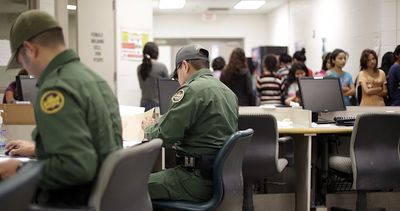
The irony is stark: a woman fleeing a husband who has beaten her within an inch of her life may be denied asylum, while a man fleeing political persecution is granted refuge without question. The state’s obsession with “legitimate” persecution—political, religious, ethnic—has rendered gender-based violence a second-class atrocity. Yet, the carceral logic of borders is itself a form of violence. Detention centers, with their razor-wire smiles and bureaucratic indifference, are not neutral spaces; they are extensions of the patriarchal state, where women are re-traumatized under the guise of “security.”
Consider the woman who arrives at a border, her body still trembling from the last blow, her children clinging to her skirt. She is met not with compassion, but with suspicion. Her story is dissected for inconsistencies, her trauma reduced to a checklist of eligibility. The state demands proof of persecution, yet the scars on her skin are not enough. She must prove that her government is complicit, that the police will not protect her, that the courts are rigged against her. But what if the state itself is the architect of her suffering? What if the law is the weapon?
The Feminist Cartography: Mapping the Routes of Escape
Feminist scholars and activists have begun to redraw the map of asylum law, tracing the routes of escape not as lines on a page, but as arteries of resistance. The concept of “gender-based persecution” has emerged as a radical redefinition of harm, one that refuses to compartmentalize violence into neat legal categories. A woman fleeing female genital mutilation, forced marriage, or honor killings is not a refugee by happenstance; she is a survivor of a state that has failed to safeguard her most basic rights.
Yet, the path to recognition is fraught with obstacles. Legal systems are slow to evolve, and cultural relativism often masquerades as tolerance. Some argue that asylum claims based on gender violence undermine the “integrity” of refugee law, as if the integrity of a system that has historically excluded women is worth preserving. But integrity, in this context, is a euphemism for complicity. The real question is not whether gender-based persecution fits into existing frameworks, but whether those frameworks are fit for purpose at all.
The Weaponization of Culture: When Tradition Becomes Torture
Culture is not a monolith; it is a battleground. And in this battle, women’s bodies are the most contested terrain. From the acid attacks of Pakistan to the bride burnings of India, from the marital rape exemptions of the United States to the forced veiling laws of Iran, the state often wields tradition like a cudgel. The asylum system, when it deigns to acknowledge these crimes, frequently dismisses them as “cultural practices,” as if the oppression of women is a quaint local custom rather than a global pandemic.
This is the insidious logic of patriarchal multiculturalism: it grants states the right to oppress in the name of diversity. But diversity does not justify violence. The right to asylum is not a cultural privilege; it is a human one. When a woman flees a state that has criminalized her very existence, she is not seeking special treatment—she is demanding the most basic recognition of her humanity.
The Legal Alchemy: Turning Trauma into Testimony
Asylum claims are not just legal petitions; they are acts of defiance. Each woman who stands before a judge and recounts her story is performing a kind of alchemy, transmuting pain into proof. Yet, the legal system is ill-equipped to handle such raw testimony. Judges, trained in the cold calculus of precedent, often struggle to grasp the visceral reality of domestic violence. They demand corroboration—medical reports, police records, witness statements—yet the nature of gender-based violence is such that evidence is often ephemeral, hidden in the shadows of shame.
This is where feminist legal theory intervenes, arguing that credibility should not be contingent on the neat packaging of trauma. A woman’s word should be enough. Her fear should be enough. The fact that she has fled, that she has survived, that she has dared to speak—this should be the beginning of her asylum, not the end of the state’s skepticism.
The Future of Flight: Toward a Feminist Asylum Law
The fight for asylum protections for battered women is not merely a legal battle; it is a revolution in how we define persecution. It demands that we see the state not as a neutral arbiter, but as an active participant in the violence against women. It requires us to dismantle the myth of the “private sphere” and recognize that the home is not a sanctuary when the law itself is a battering ram.
This is not a call for pity, but for justice. Not a plea for charity, but for rights. The woman who flees is not a supplicant at the altar of international law; she is a revolutionary, carving a path through the legal desert with nothing but her courage and her story. And if the state refuses to recognize her, then it is the state that must be held to account—not her.
The asylum system must evolve, or it will become obsolete—a relic of a time when women’s suffering was considered collateral damage in the grand game of geopolitics. The question is not whether we can afford to grant asylum to battered women, but whether we can afford not to.