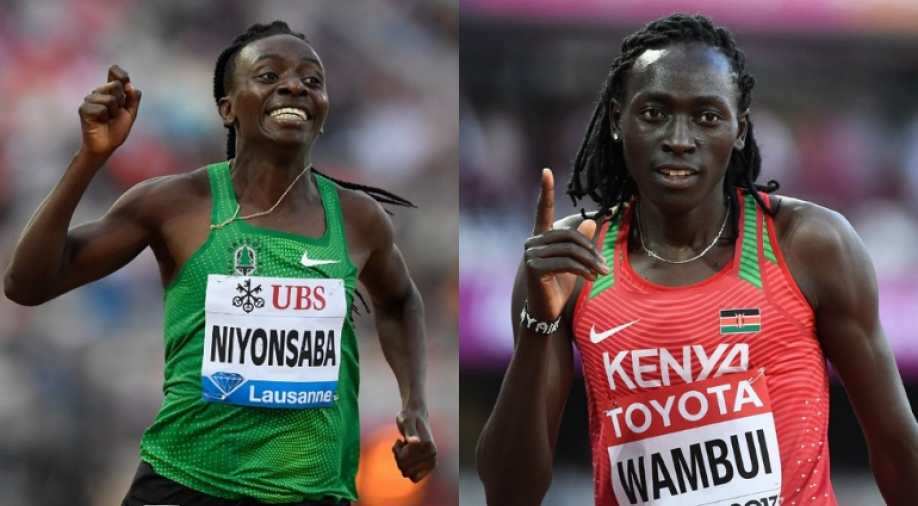
In the realm of women’s athletics, a storm is brewing—a storm that has begun to unravel the very fabric of what it means to be a female competitor in sport. The International Association of Athletics Federations (IAAF), now rebranded as World Athletics, has introduced a controversial regulation that seeks to dictate natural levels of testosterone among female athletes. This rule has sparked outrage and ignited fervent debates across the globe, particularly within feminist circles. It raises an essential question: Is this regulation a necessary safeguard for fairness, or is it an insidious act of policing women’s bodies?
At the crux of this controversy lies a vague but powerful dichotomy—a battleground of “inclusive” competitiveness versus “unfair” advantage. While the IAAF claims to champion fairness in competitive sports, their actions pose a direct threat to the very identity and autonomy of female athletes. By exerting control over their biological makeup, we risk creating a narrative that undermines progress toward equality.
In examining this contentious issue, we come face to face with a multifaceted dilemma steeped in power dynamics, societal norms, and entrenched stereotypes. The implications ripple beyond the track and field; they traverse the realms of gender politics, identity, and bodily autonomy, necessitating a conscientious and critical exploration.
Empowerment or Disempowerment? The Double-Edged Sword of Fairness
We live in an age where the pursuit of equality often coexists uncomfortably with the reality of enforced standards. The IAAF’s regulation purports to promote fairness by imposing testosterone thresholds, effectively defining what it means to be a ‘woman’ in sport. But are we truly valuing fairness if such measures are actually disempowering? By dictating how much femininity an athlete can exhibit—through her testosterone levels—we are creating a narrow definition of womanhood. This regulation essentially punishes women who don’t conform to a predefined standard.
Consider the implications of such a rule: athletes who naturally produce higher levels of testosterone—often a genetic quirk—are effectively marginalized and coerced into modifying their bodies to meet arbitrary standards. The irony here is palpable. The very trait that might enhance their performance becomes a weapon against them. In this sense, the regulation becomes less about fairness and more about control—an insidious tightening of the grip on women’s bodies in a domain where they have fought fiercely for recognition.
Enforcing such regulations presupposes the existence of a universal female experience, ignoring the diverse ways in which bodies manifest gender. To assert that testosterone should be kept in check effectively denies the existence of intersex individuals, those who embody a spectrum of biological traits beyond the binary categorization of male and female. In striving for fairness, we tread dangerously close to defining and policing femininity itself.
Redefining the Playing Field: A Feminist Perspective on Success
As we grapple with the fallout of the IAAF’s rule, an essential discourse emerges: How do we redefine success in women’s sports? This is not merely a conversation about structures; it’s a matter of redefining what it means to excel. In a world where participation should matter more than the podium, the fixation on performance metrics rooted in biological determinism holds us back. Does achieving success require adherence to particular biochemical standards? Or does it hinge on the grit, determination, and passion women athletes bring to their discipline?
Reimagining the lens through which we view female athletes requires us to dismantle the outdated paradigms of success that have long permeated the sporting world. Instead of imposing a single narrative—one dictated by the IAAF—let us encourage a celebration of diverse stories, experiences, and achievements. The triumphs of athletes should not be measured solely in terms of raw performance metrics but also in the strength of character, resilience, and the sheer audacity to challenge established norms.
It is time to advocate for a sporting landscape that champions inclusivity and diversity rather than one that builds walls around prescribed femininity. Changing the conversation from one of exclusion to one of empowerment beckons a new generation to rise up and demand their rightful place in the arena.
Unveiling the Underbelly: The Corporate and Political Spectrum
As the dust settles on this dialogue, we must confront an uncomfortable truth: the intersection of sport, politics, and commerce casts a long shadow over authentic female empowerment. The IAAF’s actions cannot be examined in isolation from the larger political, economic, and cultural influences that have shaped its policies. Who truly benefits from the enforcement of testosterone regulations? A deeper investigation reveals a complex web of interests encompassing corporations, sponsorship deals, and the perpetuation of existing power structures.
When we delve into the machinations of sporting governance, it becomes apparent that the IAAF, much like other governing bodies, is not an altruistic entity. The allure of lucrative broadcast rights and sponsorship arrangements creates an environment where female athletes are often treated as commodities rather than individuals with rights and aspirations. The controversial regulation regarding testosterone levels becomes a tool—not merely for fairness, but as a means to enhance commercial viability.
The question that lingers in the air is, at what cost do we entertain the definition of fairness crafted by these governing bodies? Are we prepared to sacrifice the autonomy of female athletes on the altar of corporate interest and political posturing? The answer, it seems, requires a collective awakening to the realities of who holds power in the world of sports.
A Future Reclaimed: Allies in Advocacy
In response to the IAAF’s draconian regulation, a call to arms must be issued within feminist movements, sports advocacy groups, and beyond. United, we can dismantle the systems that seek to marginalize athletes who do not conform to narrow standards. It is crucial to foster a collective stance urging organizations to rethink old narratives surrounding gender and performance.
Let us explore the possibility of reforming the criteria by which athletes are judged. Instead of imposing an exclusionary standard, we can champion systems that account for diverse expressions of femininity. The reclamation of sports must revolve around a radical inclusivity that recognizes the range of identities and experiences that women embody in the athletic arena.
It is incumbent upon all of us—fans, athletes, policymakers, and advocates—to forge pathways that prioritize the voices, experiences, and rights of female athletes that resonate with authenticity. Together, we can confront the contentious narratives that have persisted for too long, presenting a formidable front that insists on the right to unapologetically exist as female athletes, without the shackles of biologically deterministic narratives.
In closing, the regulation around testosterone levels signifies more than a mere set of guidelines; it is a reflexive action illuminating the underlying cultural tensions that sustain the status quo. To truly empower female athletes, we must dismantle the metrics dictating worth, demand a broader definition of womanhood, and envision a future where sports is a critique of inequality rather than an embodiment of it. The fight for equity in athletics cannot be won in isolation; it demands solidarity, tenacity, and an unwavering commitment to justice. Only then can we pivot towards a sporting experience that resonates with authenticity and inclusivity for all women athletes.