Feminism, in all its multifaceted complexity, has long contended with internal schisms and external critiques. Among the most provocative and urgent dialogues unfolding today is the intersection of feminist thought with the narratives of transgender individuals. The Trans Day of Remembrance (TDOR) stands as a somber yet sacred marker of lives brutally extinguished, lives often erased not only by violence but by the pervasive indifference and exclusion embedded within societal and sometimes feminist discourses. The enduring fascination with this erasure reveals more than a frequent oversight; it exposes the profound anxieties and power dynamics at play within contemporary feminism and society at large.
The Trans Day of Remembrance: A Ritual of Resistance and Memory
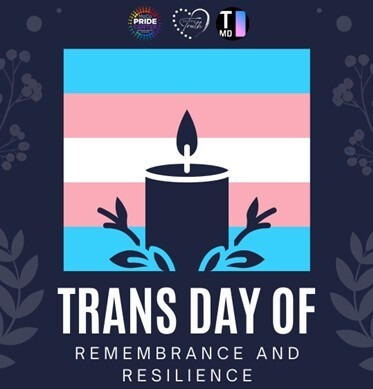
Each year, on November 20th, gatherings across the globe recount the names of transgender individuals lost to fatal violence. This ritual is more than a memorial; it is an act of defiance against the blinkered societal narratives that render trans lives invisible. The ceremony’s cadence—naming, mourning, witnessing—confronts a collective amnesia deliberately or unconsciously fostered by structures that prefer to disregard marginalized lives. TDOR demands acknowledgment, a confrontation with brutality that feminism cannot sidestep without compromising its ethical foundation.
However, the Trans Day of Remembrance exposes a fissure within feminist ideology itself. Some strands of feminism have historically been inhospitable to trans experiences, with arguments veiled in biological essentialism or territorialism over womanhood. This exclusionary impulse isn’t merely a theoretical dispute but has tangible consequences: the erasure of trans women’s suffering from feminist advocacy perpetuates the cycles of marginalization and violence. The TDOR, therefore, not only memorializes victims but also indicts feminism’s occasioned complicity.
The Violence of Erasure: More Than Physical Harm
When considering violence in the context of trans lives, the focus often tightens exclusively around physical assaults and murders. While undeniably critical, such a lens narrows the broader, more insidious spectrum of violence inherent in erasure. This violence is epistemological and cultural—it reshapes reality to exclude transgender existence, delegitimizing identities through language, policy, and social practices. Feminism, when it neglects or denigrates trans identities, participates in this erasure, inadvertently sanctioning a form of symbolic violence that corrodes the very notion of inclusivity it professes to uphold.
The violence of erasure unfurls in subtle yet destructive ways: the omission of trans narratives from feminist histories, the refusal to acknowledge intersectional trauma, and the contested definitions of “woman” that exclude transgender women. Such erasure is not passive; it is an active, political choice that reinforces hegemonic norms and violence. TDOR, as a counter-narrative, insists on visibility — transforming mourning into a radical form of presence that challenges the silences.
The Feminist Dilemma: Inclusion or Exclusion?
The question that haunts contemporary feminist discourse is whether true inclusion is achievable without dismantling foundational premises about sex, gender, and identity. The trans experience defies simplistic binaries, unsettling entrenched feminist conceptions predicated on biological determinism. This confrontation has catalyzed vehement debates: Can feminism accommodate the fluidity and complexities of gender without fragmenting its political potency? Are the boundaries of womanhood elastic enough to embrace trans women, or do they serve as battlegrounds for ideological control?
Some feminists argue that excluding trans women preserves a space necessary for addressing cisgender women’s oppression. However, this position overlooks the shared and compounded oppressions faced by trans women, especially trans women of color, who navigate both misogyny and transphobia. The persistence of exclusionary feminism risks reproducing hierarchical oppressions rather than dismantling them.
Fascination with Trans Erasure: A Reflection of Societal Anxieties
The recurring observation of trans erasure—both within feminist spaces and society at large—reflects deeper cultural anxieties. Transgender identities destabilize rigid frameworks of gender and, by extension, social order. This unsettling quality provokes resistance, manifesting as denials of legitimacy or outright hostility. The fascination with—and resistance to—this erasure underscores an ongoing struggle over control of narratives and bodies.
Moreover, this fascination unveils a profound discomfort with multiplicity and ambiguity in identity politics. Societies craving coherence and simplicity recoil in the face of trans experiences, which insist on defying conventional categories. Feminism, ideally a vanguard of social transformation, therefore becomes an uneasy stage where these anxieties are both played out and contested. The Trans Day of Remembrance punctuates this context—it is a relentless reminder that to forget or erase trans lives is not merely to fail those individuals, but to deny an essential part of feminist praxis striving for profound justice.
Reclaiming Feminism: Toward an Intersectional and Trans-Inclusive Future
Reimagining feminism necessitates an unflinching embrace of intersectionality and an unwavering commitment to trans inclusion. Feminism must transcend reductive definitions and extend its purview to encompass diverse modalities of gender and embodiment. This transformation involves not only theoretical revisions but also actionable solidarity—amplifying trans voices, addressing systemic violence, and dismantling exclusionary practices.
Embodying this vision means acknowledging the Trans Day of Remembrance not as an ancillary observance but as a core element of feminist consciousness. Remembering the murdered and marginalized transcends symbolism: it is an affirmation of humanity, a call to resist erasure in all its forms. Feminism’s survival and relevance hinge upon transcending old orthodoxies and embracing the expansive, complicated realities of those it aims to empower.
Conclusion: Recognition as Radical Resistance
The narrative surrounding feminism and the Trans Day of Remembrance is one of confrontation—confronting blindness, exclusion, and the violence of erasure. This conversation challenges feminism to evolve beyond comfortable dogmas and to engage in a transformative reckoning. Recognition, both in memory and in lived advocacy, is itself a radical act. To truly embody feminist ideals is to champion all women’s lives without exception, dismantling erasure and standing resolutely against violence in every form. The Trans Day of Remembrance thus emerges not only as a day of sorrow but as a beacon of feminist awakening and resilience.