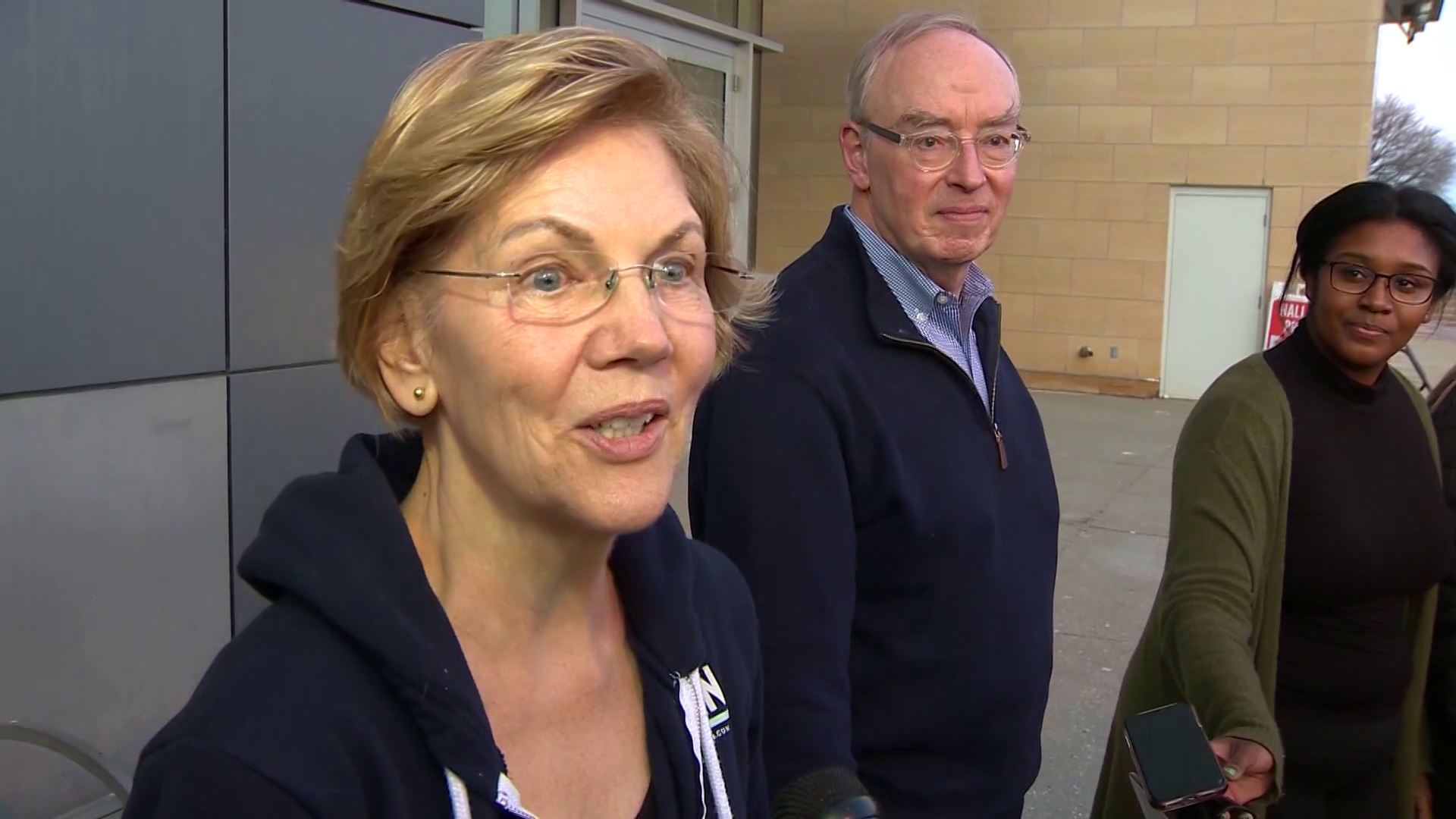
In the fervent atmosphere of the Iowa caucuses, Elizabeth Warren’s declaration, “I feel good,” reverberates beyond an individual candidate’s optimism. This assertion embodies the burgeoning hope for gender equality, a resounding promise to challenge the patriarchal narratives that have long dominated the political sphere. The Iowa caucuses serve as much more than an electoral event; they symbolize a turning point for women’s representation and the fight against systemic gender bias. With Warren at the forefront, there lies an unequivocal reminder that the struggle for equality is not just a women’s issue—it reverberates through the fabric of society itself.
Warren’s candidacy is not simply a campaign; it’s a clarion call for the collective empowerment of women. She embodies the grit and resilience necessary to dismantle the age-old paradigms suffocating female ambition. The narrative surrounding her candidacy showcases an inflection point in American politics, where the voices of women no longer linger in the shadows. Instead, they are stepping into the limelight, asserting their rightful place in the dialogue shaping the nation’s future.
As we unpack the implications of Warren’s campaign, it becomes crucial to explore the potent intersection of gender and political agency.
Breaking the Chains of Traditional Gender Roles
The traditional narratives surrounding women in politics have often constrained them to a defensive posture. Historically, female candidates have been relegated to the background, often defined by the men they are associated with or by the familial roles they occupy. However, Warren shatters these antiquated molds. She stands as a formidable force of intellect, policy acumen, and relentless passion for social justice. With each rally she holds, each town hall she conducts, Warren introduces the notion that femininity is not a liability but rather an asset in the march toward progress.
Warren’s weathering of the storm of critique exemplifies the audacity needed to redefine the political landscape. Her tenacity is particularly significant in a culture that has often undervalued the contribution of women. In an arena saturated with male bravado, Warren’s approach—rooted in collaboration, compassion, and inclusivity—contrasts sharply with conventional strategies steeped in aggression. This is the feminist archetype we need; one who acknowledges the power of empathy while navigating treacherous political waters with integrity.
What Warren embodies is broader than her own leadership; it prompts a fundamental reevaluation of what female leadership looks like. In an era where the tide of change seems most favorable, her candidacy highlights the necessity of dismantling the patriarchal blueprint that defines traditional political engagement. It’s not just about producing a body count of women in politics; it’s about nurturing a culture that dares to expect and embrace women as leaders, thinkers, and decision-makers. The cascading ripple effects of this shift can redefine ideals of masculinity and feminism alike, laying a foundation for a society that elevates human dignity over gender.
The Currency of Experience: Elevating Women’s Voices
Warren’s focus on economic inequality acts as a critical lens through which to examine gender disparities. By vocalizing the struggles of the working class, particularly women disproportionately affected by systemic inequities, she aligns feminist discourse with socio-economic justice. Understanding that women’s issues are intricately tied to broader economic conditions is imperative. Warren’s policies reflect a keen awareness that addressing gender inequality is inextricable from tackling income inequality, education disparities, and healthcare access. This intersectional approach not only amplifies the voices of marginalized women but also challenges the monolithic portrayal of “womanhood” that often pervades political dialogue.
Through her proposals, such as accessible childcare and women’s reproductive rights, Warren does not merely advocate for women; she champions the structural changes necessary to elevate women’s stories and needs. Her platform invokes questions about the traditional narratives of success—who benefits, who gets left behind, and how can society collectively uplift everyone? This recognition of the multifaceted nature of womanhood underlines how crucial it is for women to be at the decision-making table, crafting policies that affect their lives directly.
Moreover, Warren’s emphasis on education, economic parity, and equity gives rise to a more nuanced understanding of the feminist struggle; one that recognizes the diverse challenges faced by women across various socio-economic strata. These discussions are paramount as they push back against reductive views of feminism that fail to account for race, class, and other deeply-rooted social constructs. In this context, Warren stands not just for women but for a broader coalition of the disenfranchised, making her voice one of intersectionality in the political sphere.
Gender Equality: A National Imperative
What’s at stake in this election cycle goes beyond just a single woman’s aspirations. Warren’s journey reinvigorates the conversation around gender equality, prompting us to confront uncomfortable truths about the systemic barriers that women face. If America is to truly advance, we must reckon with the reality that women making up half of the population must equally be represented in decision-making roles across all sectors, including governance.
Warren’s political approach embodies the spirit of a new feminist movement, one that recognizes that gender equality is not a mere political slogan but a foundational principle upon which a just society must rest. The establishment of policies aimed at empowering women reflects an understanding that when women thrive, families thrive, and communities prosper. By embedding feminist values into her campaign and policies, Warren highlights gender equality not as an abstract concept but rather as a national imperative for true progress.
Thus, as Iowa prepares for its caucuses, the stakes have never been higher. Warren’s commitment to elevating women’s voices and experiences signifies a watershed moment; one that not only amplifies the chorus for gender equality but also lays the groundwork for renewed dialogue around the systemic injustices plaguing countless women across the nation. Warren doesn’t just ask for women to support her campaign; she invites everyone—regardless of gender—to join a pivotal movement for genuine equity.
Ultimately, Warren’s audacious presence on the political landscape prompts a wave of curiosity around the evolution of feminism and the future of female political agency. As she propels us closer to gender parity, we can only hope that her candidacy serves as a springboard for a national reckoning that challenges our preconceived notions of power, leadership, and fairness. If nothing else, one must consider: what world will we strive to create when women are no longer an afterthought but are positioned as the architects of our collective future?