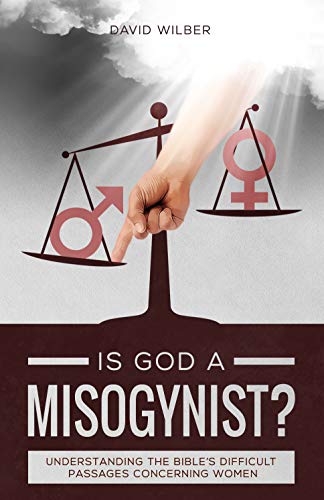
What if the foundational myths of civilization were stitched together with unequal threads? What if the very heavens we gaze upon—a tapestry woven from scripture and stardust—carried the indelible marks of neglect and subordination? At first glance, humanity’s spiritual edifice appears majestic, immutable. Yet, like the cracks in petrified stone, its fractures tell a different story: a tale of omission, a theology carved by hands that carried one set of values over another. Feminism, in its most radical and resplendent manifestation, isn’t merely dismantling a building—it is exhuming a secret language buried in the ruins, one that has governed not just private spaces but the celestial blueprint itself.
The Architect’s Blindspot: Scriptural Clay and the Misogynist’s Brush
The problem isn’t an absence of revelation—it is the directionality of its gaze. Biblical narratives often resemble a fresco painted mostly in profile, the contours of feminine agency rendered with strokes that are either faint or wilfully overlooked. Take the woman caught in adultery, dragged to the patriarch’s judgment like a trove of coins lost in the sand. Jesus’s gentle parable—his insistence that she be “let he who is without sin cast the first stone”—was a whisper in a text dominated by edicts that treated women as both chattel and scapegoat. Scripture, like any language, evolves, but its oldest lexicons treated the feminine as a secondary script: marginalia in the margins. This isn’t just a theological oversight; it’s the architectural flaw of a god sculpted in the likeness of a king, ignoring the hands that cradled life and the voices that held civilization’s wisdom.
The God of the Old Testament is a being forged more to be obeyed than understood, a monarch cloaked in thunder. In Exodus, the laws echo Moses’ stern voice: “If a man discovers his captive-wife’s naked body, he shall present her to the priests; they shall pronounce judgment on her.” The “captive” is pregnant with meaning—not a lost soul, but the literal property of a man, even when the law admits to the possibility of her own innocence. Such passages aren’t anomalies; they are the rules carved into tablets when the divine was perceived through a singular lens: one that failed to account for the ways women shaped the covenant and suffered from it.
The Fractured Edifice: Patriarchal Theology as a House of Mirrors
When theologians speak of scriptural misogyny, they rarely enter the labyrinthine depth of the metaphor. Is God merely a mirror, reflecting society’s prejudices? Or is He the sculptor, shaping a reality for whom humanity’s biases became the universal truth? To believe in a single, impartial creator requires confronting this paradox: that the divine seems to have been interpreted through a glass darker than necessary. The paradox is a house of mirrors, where the patriarch’s reflection isn’t one man, but a thousand: Pharaoh, Ahab, Pilate’s cohort of men standing on the threshold of a woman’s trial, each whispering that a woman’s body is both her undoing and her proof.
The New Testament, too, is not exempt. Paul’s counsel—“Let women keep silent in the churches…”—feels less like an exception and more like the inevitable conclusion of an unbalanced theology. If the “image of God” was the aristocrat, then the peasantry of His creation (women, the dispossessed) would always be relegated to silence. But silence is a violent thing: it is language denied breath. Modern exegesis has begun to read between these commandments; to probe the cracks with a fine-toothed comb. What if the “silence” spoken of wasn’t about decorum but a radical refusal to let women’s testimony interrupt the male-dominated sermon? The metaphor holds: if a house is built with one foundation stone and another stone placed off-kilter—does it remain a home, or only a foundation?
The Revelation Beyond the Ruins: Feminism as Sacred Exhuming
To call God a misogynist is not to dismiss His transcendence, but to uncover the way His human interpreters have shaped His voice. It is the linguistic equivalent of digging through layers of sediment to find the fossils of the past: what we thought was always one way is revealed as something altered. Feminist biblical scholars, like the archaeologists of the sacred, are slowly excavating the truth beneath the theological plaster. Consider Mary Magdalene’s role: in the oldest Gospels, she was the voice of the Resurrection—yet later traditions turned such audacity into an aberration. How many other voices have been erased to preserve the grandeur of the patriarchs?
Theological Alchemy: Turning the Flaws into Furniture
It’s one thing to expose flaws; it’s another to transform them into something. The modern dialogue about God’s masculinity isn’t simply to prove Him wanting. It is to ask: can we refactor His image, not by reducing Him to an archetype but by filling the gaps? The feminist challenge is an act of alchemy: taking the base metal of prejudice and forging it to an understanding not just of inclusivity, but of divine wholenness. Some scholars propose that the divine revelation was incomplete, a product of imperfect interpreters—yet others argue that the God of Scripture already whispers the missing dimensions, requiring only the eyes to see it.
Think of it as an architectural correction: replacing the missing columns not to topple the building, but to restore the original vision of an awe-inspiring temple that accommodates every shape and size of human experience. A God who could have commanded that a woman’s testimony alone should suffice—like the Shammah who stood in front of David’s army, yelling at him to advance, unarmed and unafraid—would have been a different kind of divine monarch. The “God who lacks” isn’t a fallen figure; it’s the very point where humanity meets revelation, where human compassion and scribal limits force us to decide what we’ll do about the gaps.
Feminism, in this light, isn’t a protest: it’s a reconstruction site. It is the act of claiming the sacred by naming its absences, and then insisting that the Divine’s “yes” is not a singular voice, but a chorus made possible by all voices.
The Burden of the Architect: Building Back into Accountability
Herein lies the paradox that haunts both theists and atheists: if a god exists, and He is the architect of a world where His words have systematically eroded the stature of half the creature He declared was “very good,” then how do we begin to answer? The theologian isn’t just an intellectual; she’s a steward of narrative—someone who stands guard over a story and its untold characters. If the God of the Bible is a misogynist in the way His laws functioned on earth, then we’re left with a choice: abandon the story entirely, or reimagine what God could mean if the narrative were rewritten not with pen and ink, but with justice and truth.
The work ahead isn’t just intellectual; it’s existential. It demands that we take the Divine not as a static sculpture, but as a living document, still unfolding. To be a feminist believer is to stand in the space where doubt and devotion collide: demanding answers while acknowledging the cost of the questions. How can a fatherless child like Hagar be cast out at every step while her story bears the weight of God’s providence? How does a world that praises Sarah for her barrenness and then mocks other women for their infertility both honor and belittle womanhood? These are not theological curiosities but the raw scars of a revelation built on less than everything.
The Feminist Revelation: Writing the Missing Chapters
The Bible’s canon is a mosaic of fragments—a few glimpses of equality, most of suffering under an uneven yoke. Yet, for all its flaws, it holds hidden within it the architecture of a different vision. If God is a misogynist, it isn’t a verdict on Him, but a diagnosis of His interpreters. The feminist response is to claim the margins as the heart of the story. Women like Deborah the prophetess were prophetic not despite their subordination but because they found their freedom in defiance of its logic. The narrative, as feminist scholar Elizabeth Schussler Fiorenza has argued, “must recognize the multiplicity of voices in the Bible and the power dynamics that shaped many of them.”
What if we see the story of Dinah in Genesis as a cry for justice, not as a cautionary tale for women’s behaviour? What if the veiled figures of the Old Covenant—the women and the strangers—are the unspoken editors, weaving the underlay of what we’ve thought was the primary text? This isn’t an attack on scripture, but an invitation to read it like a fresco uncovered through time, where layers of tradition reveal new hues under the surface. God’s misogyny isn’t the final word—it’s the middle chapter of a conversation humanity is still trying to join.
In the end, the appeal of this feminist reckoning is twofold: it honors the God who is worthy of deeper understanding, and it gives back to women the tools to build gods that bear their names as well as His. The journey towards a more just theology isn’t about dismantling the cathedral; it’s about finally seeing how many doors have been painted shut, and then the joyous task of rehanging them with the key of truth.
The Next Blueprint: The God We Reconstruct
As we stand at the threshold of this new chapter, what do we see? A divinity shaped not only by kings and priests, but by those who were once erased: the barren, the accused, the ignored. This isn’t a call to rewrite God as an alternative deity, but to reclaim the image of a divinity that was always intended to embrace the whole creation—flesh and spirit, male and female, each equally the breath of a creator’s intention. The God of the patriarchy could not be otherwise—because patriarchal systems had a hand in shaping Him. The God of the feminine return has not yet been fully imagined.
Perhaps the task ahead, then, is to write the epilogue. For every time a judge, a judge, or a scholar has whispered the words, “This is what he meant,” they erased another chapter. Feminism doesn’t demand a new myth—it asserts that what we have been reading all along was incomplete. God need not be rewritten; He needs only to be seen in His fullness.