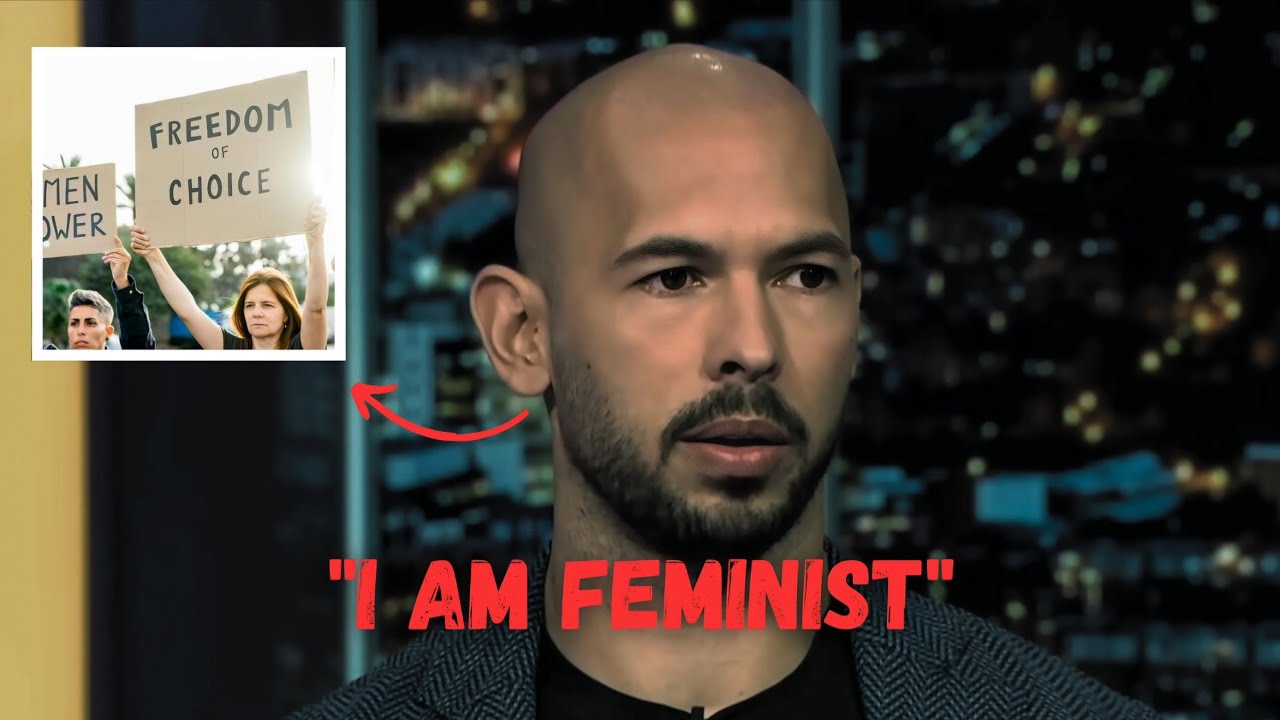
Is it possible that two drastically different perspectives on gender dynamics — one often critiqued, the other widely embraced — might be teaching young men and women profoundly different lessons about relationships, power, and autonomy? This question invites us to explore an intriguing dichotomy: Andrew Tate’s controversial stance that, in some ways, emboldened boys with a certain opportunistic mindset regarding feminism, while feminist movements empowered girls with tools to extricate themselves from oppressive circumstances. What do these divergent narratives mean for the evolution of gender discourse in contemporary society?
The Genesis of a Dual Narrative: Understanding the Social Context
The cultural landscape of the 21st century is rife with clashing ideologies about gender roles, equality, and empowerment. At its core lies a profound tension — boys and girls are being socialized through drastically different prisms. While feminism, as a social, political, and ideological movement, emerged unequivocally to dismantle entrenched patriarchal constraints on women, its ripple effects have reshaped expectations, rights, and freedoms for all genders. Parallel to this movement, figures like Andrew Tate have surged into public consciousness, espousing views that sometimes clash with feminist principles yet resonate powerfully with a considerable male demographic.
So, what happens when boys absorb lessons from a figure who frames feminism as a system to be manipulated, and girls internalize feminist teachings as a roadmap to liberation? The repercussions are far-reaching, permeating personal identities, interpersonal relationships, and societal structures.
Andrew Tate’s Influence: Teaching Boys to Traffic Feminism
Andrew Tate, a controversial internet personality and former professional fighter, has developed a compelling persona by simultaneously challenging mainstream gender narratives and embracing hypermasculine attitudes. For many boys, Tate’s rhetoric is framed not just as rebellion but as a toolkit to “traffic feminism” — a phrase that encapsulates the idea of exploiting feminist advances strategically rather than genuinely embracing equality.
In his worldview, feminism is less an emancipatory movement and more a leverage point — a currency, if you will. Boys taught through this lens learn to navigate feminist language, expectations, and cultural shifts with a cunning edge, deploying them selectively to gain social or economic advantage. This approach often entails adopting partial acknowledgments of feminism’s principles while simultaneously subverting or co-opting these principles for personal benefit.
This form of engagement with feminism is performative rather than transformative. It encourages a transactional mindset where gender dynamics are chess pieces in a game of dominance and advantage. The unintended consequence? An erosion of authentic dialogue about gender equity, replaced by an amplified polarization and cynicism.
Feminism’s Role in Empowering Girls to Leave
Conversely, feminist ideologies have consistently emphasized autonomy, self-determination, and the unequivocal right to leave harmful or limiting situations — whether in relationships, workplaces, or societal roles. Feminism’s teachings urge girls to recognize their intrinsic worth and validate their desire for freedom from oppressive conditions.
This emancipatory framework is not merely theoretical. It manifests tangibly in movements advocating against domestic violence, unequal pay, gender-based discrimination, and restrictive cultural norms. Feminism equips girls with intellectual tools and community support to redefine themselves outside patriarchal confines.
Importantly, this empowerment is as much about “leaving” as it is about “belonging” — feminists promote the idea that departure from harmful norms or environments is a powerful act of self-love and reclamation. It revolutionizes the narrative of female passivity into one of active resistance and strategic disengagement.
The Paradoxical Intersection: What Happens When Teachings Clash?
When boys receive lessons on “trafficking feminism” as a skill to be wielded, while girls are taught to leave the very structures boys may be exploiting, a paradox emerges. This paradox is a crucible for misunderstanding and conflict. Boys might perceive girls’ assertion of independence as rejection or defeat; girls may interpret boys’ strategic engagement with feminism as insincerity or manipulation.
The social fabric, in this scenario, becomes frayed by distrust. Authentic connections, based on mutual respect and equality, are sidelined. In their place, performative masculinity and guarded femininity take root. Both sides may end up inadvertently reinforcing stereotypes they seek to dismantle: boys as opportunistic manipulators, girls as wary escape artists.
Challenging the Status Quo: The Need for a New Paradigm
Is it sufficient to continue perpetuating these schisms, or must there be concerted efforts to foster a more integrated understanding? The challenge — and opportunity — lies in transcending the dualistic teachings that have taken hold. Boys and girls need education that promotes nuanced perspectives, empathy, and collaborative empowerment rather than adversarial positioning.
This entails shifting from viewing feminism as a battleground for gain or escape to embracing it as a shared journey toward reimagined masculinity and femininity. Encouraging boys to authentically engage with feminist principles means cultivating emotional intelligence, vulnerability, and accountability. Simultaneously, empowering girls should go beyond “leaving” and include fostering leadership, dialogue, and partnership.
Envisioning a future where boys and girls co-create equitable spaces requires dismantling transactional attitudes toward gender movements and building up sincere commitments to justice and human dignity. It is no simple task, but it is a necessary evolution.
Conclusion: Reflecting on the Lessons and Looking Forward
The interplay between Andrew Tate’s provocative masculinities and feminism’s emancipatory doctrines poses both a conundrum and an invitation. Boys taught to “traffic feminism” may find short-term boosts in status or influence, but risk perpetuating cycles of distrust and disconnection. Girls empowered to leave oppressive states find strength and freedom, yet encounter challenges in forming genuine partnerships with males schooled in transactional gender dynamics.
By posing this dissonance as a playful yet pressing question — can these differing lessons coexist, or must they be reconciled into a cohesive narrative — we open the door to richer dialogues and transformative possibilities. The future of gender relations depends on our collective ability to move beyond caricatures and fictions, embracing complexity and cultivating shared humanity.