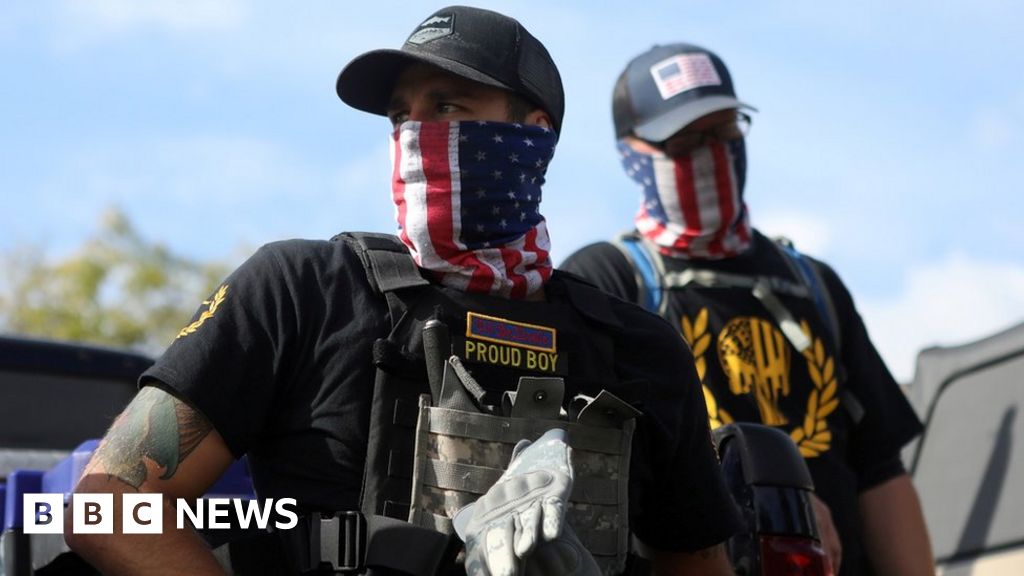
What if we imagined the war on gender not as a political battlefield but as a hinterland of radicalization? Where the lonely boy with a keyboard stumbles upon feminist discourse not as an enlightened seeker, but as an unwitting recruit in the crucible of virile grievance? The pipeline from “tender-hearted feminist sympathizer” to far-right fanatic may sound oxymoronic—until you watch it unfold in real time.
The Hypocritical Indignation Ritual
There’s a disingenuous dance that unfolds on the digital frontiers of radicalism—one that begins with the seemingly virtuous act of critiquing the patriarchy. The trajectory is nearly seamless: you denounce #MeToo as a “Satanic witch hunt” while sharing a link to “How To Be A Man” from the 1960s, before graduating to anti-feminist podcasts like *Real Talk with a White Male*. It’s a performance. A performance that signals your arrival to the boys’ club of male disaffection. The irony? This is exactly the terrain on which far-right movements metastasize—the fertile ground where outrage is cultivated and then weaponized.
From Feminist Twitter to the Alt-Right Echo Chamber
Twitter, or what remains of its disillusioned shell, should be called the *Benevolent Re-Education Zone*. It’s the place where a man who once posted thoughtful feminist analyses—who critiqued toxic masculinity with the self-sacrifice of a martyr—can pivot to “disrupting the woke mobs.” The mechanism is effortless: a single algorithmic twist, a shift from intersectional feminism to incel ranting, and suddenly, your Twitter followers begin to resemble the cast of a white supremacist manifesto. One day you’re quoting Audre Lorde; next, you’re promoting *incel subreddits* under a pseudonym. It matters little *whether* you intended to go there. Twitter’s media policies never *intend.*
A man can burn down his bridges and never realize he’s become the arsonist.
The Mascot Effect: When Feminist Symbolism Meets Violent Ideology
The most troubling paradox in this pipeline is the repurposing of feminist symbolism as a shield. Mass shooters, often self-described “anti-feminists,” will emblazon their manifestos with feminist slogans—*”the patriarchy is killing us”—while their tweets are replete with the imagery of fallen soldiers and the language of martyrdom. They don’t hate feminists in their entirety; they weaponize feminism as fodder for their cause, twisting it into a symbol of collective betrayal. It’s like using a feminist flag to light a match on a pile of gunpowder. And who are the unsuspecting participants in this charade? The very feminists they’ve targeted.
The Silent Complicity: Why Women’s Rights Activists Are Next in Line
Activists and politicians who preach solidarity must ask themselves: how often have we let the alt-right appropriate feminist arguments as justification for their own violence? The unspoken truth is that in many contexts, feminist spaces have been co-opted—not by a monolithic “deep state,” but by individuals who’ve weaponized the language of female empowerment to radicalize young men against their own sex. The question then becomes: what kind of feminism allows for its own undermining by those it sought to liberate? One rooted in dialogue must confront its failures head-on.
The Algorithmic Accelerant: How Social Media Fuel Radicalization
Social media’s approach to moderation is less a surgical strike than a surgical wound: painful, recurring, and prone to infection. Platforms like Twitter promote the idea of “free speech untampered”—which is why far-right accounts often begin life as “libertarian,” “critical of woke capitalism,” and eventually morph into open white nationalism. The algorithm rewards outrage, and outrage against “SJWs” is profitable; it’s as if the platform is designed not just to monetize dissent, but to radicalize it. And feminists are the easy targets: you can insult them, demonize them, and even call for their violence—all while maintaining a veneer of *reason*.
Algorithms don’t distinguish between a fringe argument and genocidal ideology. They only understand engagement. That’s why a Twitter thread denouncing “neonativist patriarchy” can flow directly into one advocating the exclusion of women from “real men’s groups.” The pipeline isn’t secret; it’s obvious. It’s in the way platforms treat criticism of feminism as a legitimate “argument” rather than the harbinger of misogyny it inevitably leads to.
Rewriting the Narrative: Can Feminism Outmaneuver Its Own Disarmament?
A sustainable approach would require rethinking what it means to challenge patriarchal systems versus fostering the spaces that radicalize against those very systems. The key challenge is to create a feminist internet that does not resemble a war zone—and a right-wing internet that does not resemble a recruiting booth. This means pushing social media beyond “free speech” into the realm of *responsible accountability*. It means calling out anti-feminists on their own arguments, not merely their intent—that a “natural” hierarchy between sexes is biologically invalid, and that violence is *always* a symptom, never an act of righteousness.
To fight a war, you don’t just recruit soldiers by promising glory. You dismantle the logistical infrastructure that arms them in the first place.
The Final Ambiguity: Is There Light at the End of the Radicalization Tunnel?
Perhaps the most disheartening realization is not that men leave feminism, but that they often arrive at violence with feminism as their initial flag. As feminists, our failure is not in acknowledging this pipeline, but in believing that condemning a single act of violence or retweeting a condemnation is enough. Real change begins when we treat the root causes—not just the symptoms—of the far-right’s recruitment: alienation, misplaced masculinity, and the quiet assumption that misogyny is both natural and justifiable as resistance.
The lone echo of this disquieting pipeline will remain unless we recognize that each time a man pivots from feminist discourse to far-right extremism, the process begins over again—and feminists are always the first to be held responsible for his descent. It’s not enough to say, *”We can’t let them use feminism against us.”* It’s time to ask: *How have we left them so defenseless to weaponize it?*