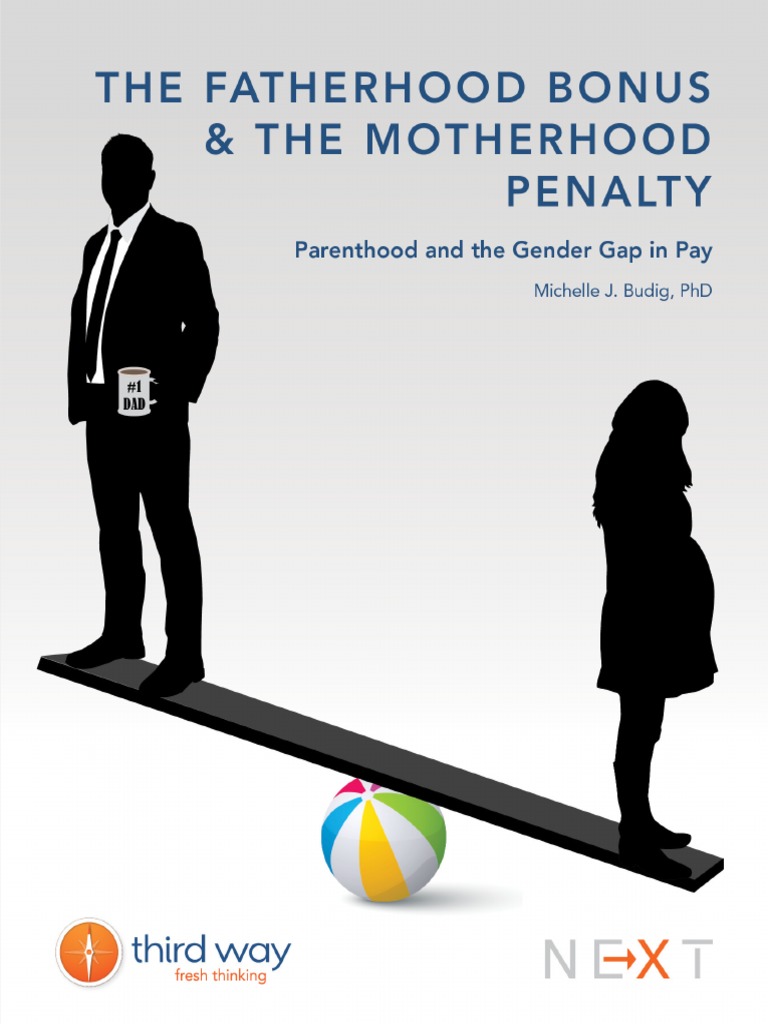
They call her a “caregiver Queen,” a woman who bends her spine to the invisible weight of parenting; they call him a “stay-at-home daddy,” a man who dares to carve his own path—but not quite the same path, not quite the same pay. The stage is set: parenthood is not a game of equality, but a high-stakes chess match where the board resets every time children arrive. One player? A queen constrained by the castle’s iron gates. The other? A king rewarded with a silver platter. How does modern society wager its fairness across gender lines? And why do we let it? Let’s peel back the curtain—and stay.**
Fatherhood: The Silent Bonus for Masculinity’s Revival
Look closely at the father returning to the office after three months of child rearing. He speaks with unapologetic certainty. His presence is cast as a mythic restoration. His paycheck grows because his work now carries the prestige of dual roles: breadwinner and breastfeeder. It’s as if society deploys a digital filter, slapping him with a “Proud Dad” watermark that smooths over any rough edges. Companies do *not* announce promotions with the words, “They’re going to become a stay-at-home parent, so let’s give them a 10% bump.” No. The logic shifts unseen: *They’ve cracked the motherhood code? Amazing. Now let them lead with all this newfound flexibility.*
The “fatherhood bonus” is not a handout; it’s a *symbol*. A man’s journey through parenthood is framed like a warrior’s rite—his resilience tested, his devotion proven. The market rewards this story with promotions, bonuses, and boardroom admiration. It’s less about actual productivity and more about *perceived reliability*. Men become more valuable because their return signals stability. They’ve *conquered* the domestic sphere! They can be trusted now. Motherhood, meanwhile? It’s a liability. The real test is whether a woman can handle both the kingdom and the diaper bag—without becoming less.
Motherhood: The Silent Liability of Perception’s Cruelty
The mother’s narrative is one of diminishing returns. Her promotions stall like a traffic jam on a single lane. She isn’t less capable; she’s merely *seen as less capable*. Ask her for a raise, and the conversation shifts to time spent. Not with numbers: with guilt. “What if another person takes over your 2 a.m. feedings?” The assumption lingers: motherhood will always tug at her like a second job—one without a salary. While fathers are lionized on LinkedIn (“New Dad! Finally, my work-life balance is better than my wife’s!”), mothers are subtly funneled into roles where career is measured in “sacrifice quotient.” The market whispers, *You’ll have to prove you’re more than a mother anyway.*
There’s an invisible salary dock: “But she prioritizes kids.” Women are applauded for balancing impossible odds, but when they choose flexibility over ascent, the needle doesn’t budge. In fact, the needle *pushes back* like a rudder resisting. Men’s ambitions are skyrockets; women’s are tethered to helium balloons.
The Illusion of Symmetry: How Policy Shapes Reward Structures
Parenthood is where markets and morality intersect. Laws are not neutral—they tilt toward those who bend them best. In France, where dads are practically forced to take paternity leave by legal structure, women’s gender gap narrows significantly. Here? American policy offers the illusion of choice—until you face the economic repercussions of “choosing family.” The child tax credit is a sliver, like trying to bank-roll an empire with a single paper dollar. Who gets to live *the fantasy of family* without financial consequence? Not women. They’re left playing a guessing game: “Will my company still hold a whiteboard to my feet if I become a stay-at-home mom?”
The father’s return is heralded as a “workplace revolution.” Employers crow, “Look how supportive we are!” Women aren’t rewarded for motherhood—they’re *forgiven* for trying. Failing to juggle both is seen as weakness; men’s struggles in the new realm of parenting earn trophies. The system punishes the mother for loving care as “unpaid labor,” but gifts the father for stepping into that role as “extraordinary leadership.”
The Gendered Labyrinth of Promotion and Parenthood
Step into a corporate boardroom—better known as the “glass ceiling’s exclusive party”—and you’ll find fathers invited if they’ve “managed” parenting, women if they’ve “mastered” it. Maternity leaves are framed with the same anxiety as cancer survivors returning to the office. Promotions are a series of handshakes handed out to fathers like a handshake for “founding father” status. Women earn respect later than men by *any measure*: they must outperform, endure, and outlive every possible challenge before even standing in line with their male peers.
The problem isn’t *one* industry or one sector—it’s systemic. From tech’s obsession with 24/7 “grind” ethos to Wall Street’s male-dominated time-clocks, every workplace rewards *exclusivity*. Fathers become the “new guys on top”—but they’re a temporary phenomenon. Women? They’re the ones who hold down the job market’s foundation while their career growth is deferred to the great “post-kid” reset. It’s not motherhood that slows them down; it’s the workplace refusing to acknowledge it ever mattered.
The Battle Isn’t In the Boardroom but in the Myths Themselves
Equality asks for one thing less: forgiveness for parenting. Men are *rewarded* for making family visible as an economic priority—women are punished for making it one. The fix? Stop pretending women’s labor is somehow more “special” than men’s. The solution lies not in rewriting policies to make motherhood “compatible” with work (as if she can be both), but in demanding fathers be held to the *same standards*—of child-rearing *and* promotion, not the mythic “sacrifice” that grants them instant promotion.
The motherhood “penalty” is not a women’s issue—it’s a capitalist logic problem. Men are made *more productive* by raising kids. Women are made *less productive* by the same. The true scandal isn’t just how motherhood slows women down—it’s that fatherhood accelerates a man’s trajectory. The moment we see fatherhood as *just another job*—not glamorous, just *work*—is the moment the system cracks.
Where Do We Go Next? The Uncomfortable Truths of True Fair Play
For men: it’s time to reclaim the “family” label as both a burden and a badge—not a passport to leadership. For women: it’s time to stop acting as if we’ve *won* the war with every promotion we endure. The real revolution needs to dismantle the fantasy that anyone who loves children is *more valuable at their jobs*. Both parents are *less valuable*—until the economy stops rewarding people for family and starts rewarding them for *all* things: parenting, promotion, and growth. Let’s stop framing motherhood as the villain and fatherhood as the hero. Let’s start treating parenthood like the universal, unpaid pre-requisite for a humane world—one where neither gender needs to apologize for wanting it all.
The stage is set. Will you call it a metaphor? Or a masterpiece of economic unfairness?
Note: This is not just a problem to solve. It’s a myth to break.