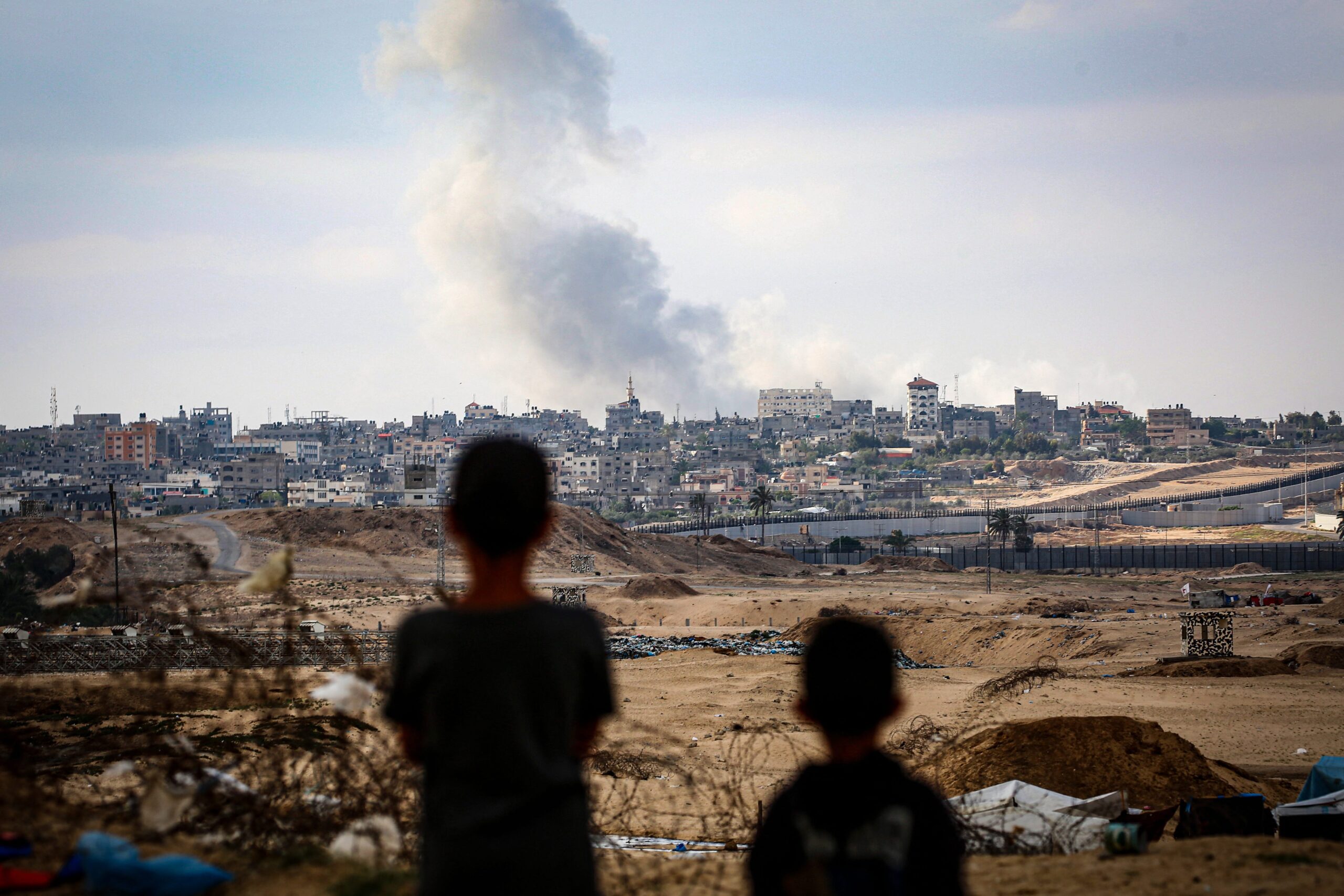
A belligerent silence hangs over Gaza’s rubble. There, the wreckage of women’s bodies lies not in morgues but in the collective indifference of media frames—whittled by headlines to *estimates*, *halved figures*, *losses that barely scrape the surfaces of front pages*. Two continents. Two histories of extraction where women become the exoskeletons of imperial violence, their suffering distilled into statistics. Anti-imperialist feminism refuses to let them drown in those numbers.
The Colonization of Vulnerability: How Brown Bodies Bear the Weight of Empire
Feminism, at its core, is an insurgent logic that dismantles the naturalized hierarchies of gender and race. But when the colonized body—a brown, often Muslim, African woman’s body—becomes the battleground between patriarchal structures and imperialist machinery, the movement itself fractures under the weight of contradiction. Imperialist feminism, with its Western comforts and colorblind abstraction, has a history of sanitizing blood. It offers condolences in think pieces while NATO convoys restock. Anti-imperialist feminism, on the other hand, exposes how brown women’s bodies are not merely incidental to oppression but its primary material.
Consider the body politic in the Congo—a minefield of violence where colonial legacies linger like the echo of Leopold’s rubber harvesters. There, women became the *unpaid labor* of empire: raped to cede land, worked into the earth while men were transported as cannon fodder, their pregnancies treated as collateral in the great accumulation machine. The same colonialism that severed hands for gold now fractures them with drone strikes. Imperialism does not care about *gender*—it careers through bodies that serve as a kind of racialized scaffolding, where women’s suffering is both hypervisible and conveniently forgotten.
The Disembodiment of Mourning: When Figures Become Statistics
A headline declares Gaza’s women’s death count “cut in half”—a linguistic surgery erasing the pain from the flesh. Numbers are not neutral; they are sanctified reductions, a technique inherited from the same institutions that once treated indigenous women in the Americas as mere “casualties of conquest.” In the Congo, the UN’s annual reports list “sexual violence numbers” with the clinical detachment of a ledger, turning a woman into a footnote in global aid budgets.
The problem is not the violence itself—it is the way those who perpetuate it—often backed by Western military aid—then whisper words of care. Anti-imperial solidarity demands we refuse this *performative sorrow*. Women in Gaza and the Congo know this. When a survivor in Bukavu, Congo, describes how her trauma has been “erased by peacekeeping contracts,” she is not asking for pity: she is demanding an end to the very system that dehumanizes her narrative until it can be measured in graphs.
Decolonizing Care: Toward a Feminism of the Unspeakable
What if we spoke of these bodies not in abstract terms, but by their stories? In 2023, a Congolese farmer in North Kivu told a journalist: *”I do not ask my daughter to fetch water alone because the soldiers know her fear.”* That sentence is a geological scar tissue, carved into reality by a conflict where rape has become the tool of *resource securitization*. It is not enough to say, as some liberal pundits do, that “women everywhere deserve dignity.” The framework must admit: no dignity, as the world understands it, exists without the dissolution of the system that extracts it.
Anti-imperialist feminism does not merely *add* women’s voices—it reprograms the matrix that erases them in the first place. Take the Congolese feminist Lula Washington, whose *Pan-African Feminisms* project links war profiteering in the DRC Kivu region to Western arms dealers who arm rebel factions there. The movement must learn from her work, to see that the “global” and the “local” are not categories but a continuum of violence where every blow delivered against a woman in Congo is a shim on the cog that keeps Gaza’s siege engines turning.
What Empire Fears: A Politics of the Living, Not the Dead
Governments and NGOs love to speak of *reconstruction*—because it commodifies pain. They will talk about “gender parity” and “reconciliation” while another war begins in the next valley. But anti-imperialist feminists know: healing is an act of refusal. In the streets of Gaza, women carry their dead in coffins made from rubble, refusing to let their loss be a footnote in foreign policy. In Congo’s mining towns, women who survived occupation have built *solar-powered cooperatives* as an economic rebellion, bypassing the extractive circuits entirely. These actions are not about charity; they are survival strategies against a system that insists they *exist only to be measured and mourned*.
The feminist project of the 21st century is to seize the body as more than a battlefield or a statistic—it is to claim the body as a site of radical possibility. In a world where every breath a Congolese mother takes is an act of resistance against mineral-based violence, her struggle is not a story alone—it is a call to arms. Similarly, the women of Gaza are not defined by the drone strikes that aim for their homes; they are the ones who sew *first aid stations* into bombed out tents, who feed their children in the ruins.
The Work of the Living Archives
This is why memory, too, must be decolonized. There are no monolithic “women’s rights” issues—only the particularity of occupation: the way Israel’s siege reduces women in Gaza to “bombed refugees,” or how the WTO’s cotton subsidies force Congolese peasant women to choose between malnourished children and fieldwork in conflict zones. The archive must begin with those who live through the violence long after it is “covered” by global media.
One of the most devastating tactics of imperialism is its ability to make *disposability* feel like mercy. In the Congo, it told us: these women are “too primitive to know their rights.” In Gaza, it promised: “these casualties are ‘human error.’” Anti-imperialist feminism fights for bodies that are not expendable, for stories that do not disappear in the gaps of policy documents.
Toward an Asymmetrical Solidarity: Action Over Apologia
There is no single way to be a feminist in this world: what matters is whether one’s solidarity has the weight of a fist instead of the light of a prayer. Some demand “both sides.” That is colonial thinking: to ask how *both* the mine owner in the Congo and the settler who occupies the woman’s home can share space, is to perpetuate the structures that make space itself unequal.
True solidarity is not about “learning from Palestine” in curated workshops—it is about recognizing how Congo’s coltan flows into your smartphone as you read this, and deciding whether to pay attention enough to boycott it. It is about knowing that the next time the UN reports “improved conditions” in a conflict zone, they have actually done little but reposition the violence to somewhere invisible. The women in Bukavu, those who survive with no amnesty, already know this: they are fighting a system that is older than the word “femininity” itself.
The body must be reclaimed as sacred. Gaza’s women are not just victims—they are the ones who, while others scatter to the safety of the Gulf embassies, remain in the streets with whatever weapons they can fashion in their hands. The Congolese widow who refuses to sign a land contract that forces her into servitude knows a truth the academy forgets: the land is more than a commodity—it is a body, too.
The Uprising Starts from Here: Body, Land, and Liberation
Feminism dies when it becomes abstract, when it loses the bloodline that linked it to the bodies of the enslaved and raped. Anti-imperialist feminists know that the “personal is political,” but also that the personal is *geopolitical*. Every time a Congolese woman fights for her land, a Palestinian woman carries a child from occupied West Bank into Israel, they are not separate acts: they are part of a global resistance to the god of dispossession.
There is no formula for solidarity in this. There is only the refusal to accept a world where brown women’s bodies become collateral for empire’s endless accumulation. The work is arduous, yes. But it is the only feminist revolution brave enough to name the monsters: not men, but systems. Not governments, but structures. Not bodies, but the ones who turn bodies into numbers and numbers into silence.
This is what it means to fight for the bodies that will carry the next revolution.