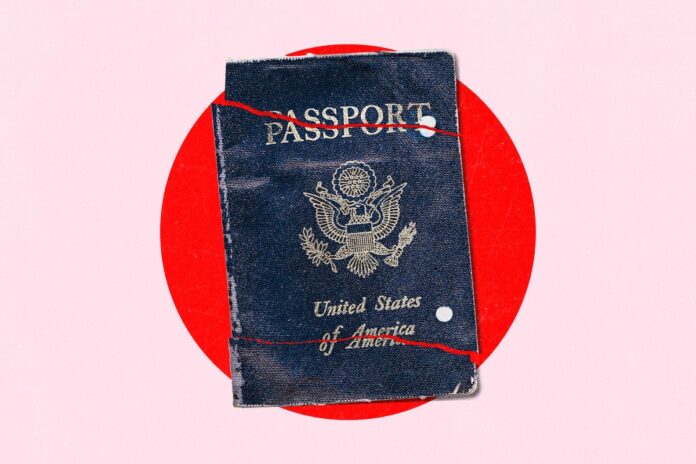
Statelessness does not fall equally upon all shoulders. It slinks into women’s lives like a shadow—silent, invisible until it’s too late. There they stand, papers in shreds, dreams dangling just out of reach. A stateless woman in Lebanon today holds the same vulnerable hand as one confined in 19th-century Europe by a whimsical stroke of a royal pen, because the world has never cared enough to rewrite the rules, to ask who gets to be a daughter of a place rather than a burden to it.
The time for polite gestures is over. We need not just fixes; we need a seismic shift—the Statelessness Convention that finally puts women at the center. It’s not charity. It’s a human rights revolution, one where the language of “exceptions” is replaced by laws that demand equity, and where a woman’s nationality ceases to feel like a favor, a bargaining chip, or a relic of a patriarchal “family law.” We are standing at the precipice of something extraordinary: an opportunity to redefine citizenship as a right rather than a privilege.
—
## **The Hidden War: When Citizenship is the Ultimate Repressor**
Consider the woman who realizes too late that she’s left off a passport application. Imagine the 2.4 million refugees in the world whose papers no nation claims—as if their existence is an accidental misfile, a typo in God’s ledger. Then double it. Triple it. That’s the quiet hell of statelessness. But for women, it’s not just exclusion—it’s an instrument of domination. Men might be denied passports by stubborn red tape, but women live beneath a slower, deadlier bureaucracy: one built on the unspoken assumption that they’re dependent, incidental.
Statelessness is not an abstract concept. It’s the reason Nona, an Eritrean woman, couldn’t flee the civil war because she had no proof of birth; it’s the girl in Myanmar, trafficked and left without a name on any registry. It’s the global norm that renders women lesser not by luck, but by design. A 2022 UN report estimated that globally, more than 4 million stateless women are locked out by laws that tie nationality to transmission through bloodline, marriage, or paternal lineage—a chain too heavy for women to bear alone.
The silence around this is criminal.
—
## **The Myth of “Natural” Inheritance: Why Bloodlines Aren’t Sacred**
The belief that nationality should follow the father’s lineage has never been about tradition. It’s a gendered architecture, a way of making girls, no matter where they’re born, perpetual aliens in a world that demands to know what a woman owes to a nation before it deigns to grant her rights. Europe’s jus sanguinis (the right of blood) is a 19th-century man’s relic—a way to keep property, labor, and loyalty trapped within male lines. Colonial regimes refined it. Postcolonial states often codified it. And today?
The world still pretends this is fair.
Mothers pass down love and resilience daily, but the official records? Locked away behind clauses like “paternal nationality only.” Millions of women worldwide are trapped in this absurdity, forced into legal limbo because a birth certificate was signed by the wrong hand. When will we wake up to the fact that gender is the real citizenship test?
The conversation must shift. What if we started from this premise: citizenship is an inalienable right, not an outcome of who a woman married or what country “owned” her at birth?
—
## **Statelessness as a Tool of Control: The Lessons from Lebanon’s Women**
In Lebanon, over half a million people are stateless—many Syrians, but mostly women. There’s a chilling symmetry here: the Lebanese civil war may have ended, but the war against women’s rights continues. The laws in place don’t just deny nationality. They punish. Lebanese women married to foreigners can’t pass citizenship to their children, as if Lebanon’s national coffers wouldn’t dry up without their labor. A Palestinian woman in Lebanon, stateless for over five generations, has no rights to land or healthcare, no ability to transmit survival to her descendants. The State acts as a silent architect of what feminist scholar Lila Abu-Lughod called “the politics of absence.”
The story of statelessness is not just procedural failures—it’s an engineered hierarchy. It’s why a Palestinian woman in Lebanon, despite being born and raised there, must beg for a temporary residence permit, while a male citizen walks free. It’s why children of stateless women are often completely invisible on any registry, doomed to adult life as the uncharted. Stateless women are the perfect invisible workforce: excluded, yet forced into survival work. The economy thrives on their absence.
We can’t accept a world where women’s bodies—our very existence as mothers, workers, activists—are treated as collateral.
—
## **Breaking the “Nationality as Compensation” Ritual**
There’s an eerie ritual around nationality. Men are granted it as right, women are granted it as concession. A country’s generosity. A privilege to earn. Ask the Ethiopian woman married to a foreigner whose children were denied citizenship until her husband proved he was “worthy” of her birthplace. Or the Greek woman who had to sue for rights to her parents’ homeland after being told to “find another language.”
The idea that nationality can be a loan rather than a guarantee is a lie we’ve all swallowed. But what happens when a woman’s only “compensation” is her daughter’s birth certificate? When her very ability to stay in her homeland becomes a favor extended with one hand while the other steals her wages?
We must confront it as a moral failure.
—
## **The Missing Link: Why a Statelessness Convention for Women?**
In the winter of 1949, the world was wise enough to craft the Universal Declaration of Human Rights (UDHR). A few decades later, the 1954 Statelessness Convention aimed to end statelessness—but it was written without a thought for the ways gender carved a second, silent category of vulnerability. The convention assumed statelessness was a neutral problem, one that fell equally on all shoulders. It didn’t account for the ways women often embody double invisibility: stateless as individuals, and stateless in their own families’ legal narratives.
The time has come to close this lacuna. An updated convention would reimagine nationality laws through a gender justice lens. No more “inheritance models.” No more gendered inheritance. Citizenship ought to belong by birthright. Laws should protect a woman’s right to national identity, not force her to choose between home and survival.
Imagine it this way: a woman gives birth or a man does so; the infant gains nationality, automatically, regardless of gender identities in the family unit. Laws ensure a woman cannot be stripped of nationality simply because her marriage ends. States can no longer “re-assess” a mother’s homeland when she outlives her marriage.
This isn’t utopia. It’s justice.
—
## **Radical Acts of Citizenship: The New Frontier**
To shift societal winds, we must treat statelessness as an active assault, not a bureaucratic glitch. Activism must be unapologetic.
First, nations must acknowledge statelessness as a gendered crisis. They can be forced to listen—through courts, through the eyes of lawyers like those in the Women for Women International network, who’ve already fought back successfully in some courts. Second, activists must rename reality: stop calling it “a problem for refugees.” Make statelessness mainstream. Third, women must learn to claim citizenship by radical presence: petition, protest, use their voices with the fury of those denied. As the feminist poet Audre Lorde said, “the master’s tools cannot dismantle the master’s house.” We need new weapons, new scripts.
Then, there’s the redirection of resources. The European Court of Human Rights could extend its reach from “procedural errors” to systemic discrimination. Countries could sign the pending 2024 Global Compact on Human Rights with a clause on statelessness centered around women’s rights.
And in the public imagination? Stop calling statelessness “fate.” It’s political choice. The refusal to act is, in itself, violence.
—
## **A Statute for Daughters: Rewriting Rights Without Compromising**
So we stand at a crossroads. On one path, the world keeps its comfortable silence—a little progress here, a half-measure there—as women continue paying the hefty tax of statelessness, in time, in dreams, in life. On the other: a new dawn, where nationality is not a privilege nor a punishment, but a human right of women and girls. We must draft a statute that reimagines rights without concessions.
A world where a mother’s nationality is not her “problem to solve.” Where a child born between borders cannot choose which side of the ledger she falls on. No more asking if you are “good enough” to be a citizen. Just: you exist. Therefore, you belong.
The revolution starts with the papers. Not just on a form, but in reality.
—
The fight for women’s nationality is a fight for the future’s very fabric. Will you help stitch the world’s holes — or keep watching the threads unravel from within?