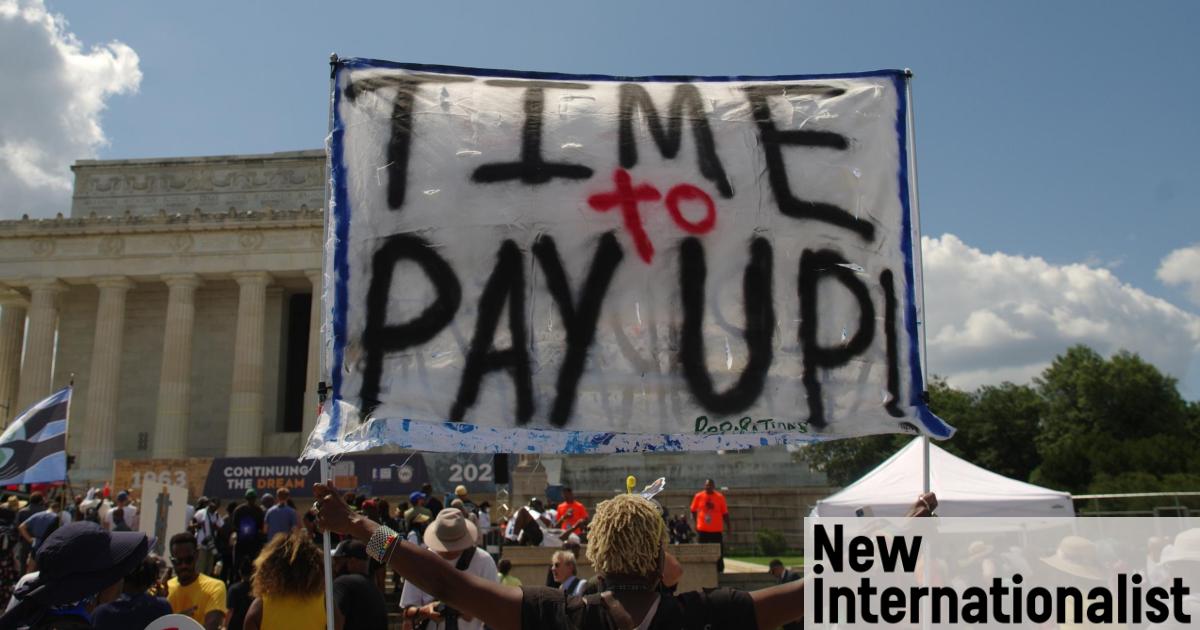
Feminism and reparatory justice collide in a nexus of unfulfilled promises and simmering discontent. Reconstruction, a term redolent with hope and renewal, often crashes against the cold reality of systemic inertia and entrenched power structures. The fascination with feminism’s role in reparatory justice is not merely academic; it is visceral and urgent. This is a realm where the past’s ghosts haunt the present, where the wounds of historical oppression demand not just acknowledgment but redress. Yet, the journey toward comprehensive reconstruction remains riddled with contradictions, half-measures, and stark omissions.
The Illusion of Reconstruction
When Reconstruction is invoked in feminist and reparative discourse, it promises a rebuilding of societal foundations grounded in equity and justice. However, it is more often an illusion—a veneer that barely covers the fractures beneath. The post-conflict or post-oppression rebuilding phase, while theoretically designed to eradicate systemic inequities, frequently falls prey to the same hegemonic patterns that wrought the original injustices. Feminism, with its multiplicity of voices and frameworks, should serve as a catalyst to upend these cycles. Instead, it often finds itself co-opted by neoliberal agendas or diluted into palatable reforms devoid of transformative potential.
This illusion is sustained by a societal fascination, a collective yearning to believe that breaking structures can lead to something new and better. Yet, the persistent privileging of dominant narratives and the marginalization of intersectional voices render the promise hollow. Reconstruction without reckoning is reconstruction without healing.
The Conundrum of Reparative Feminism
Feminism’s engagement with reparatory justice reveals a conundrum. On one hand, feminism champions the recognition of historical wrongs, especially those inflicted upon women of color, Indigenous women, and gender-nonconforming activists. On the other, it struggles against its own historical exclusions and internal hierarchies that echo the larger patriarchal systems it critiques. This tension complicates feminism’s capacity to fully embrace reparatory justice as a praxis rather than a mere rhetorical tool.
Reparative feminism must navigate the labyrinth of identity politics, state co-optation, and economic structures that resist redistribution. Claims for restitution and systemic overhaul are too often met with tepid policy gestures or tokenistic compensations. The deeper reasons for this resistance lie in the fundamental challenge posed by reparatory justice: it demands accountability not only for individual acts but for embedded institutional failings.
Dissecting the Historical Amnesia
At the crux of the broken promise lies a pernicious historical amnesia that selectively erases the struggles and contributions of marginalized women. This erasure facilitates the persistence of patriarchal and white supremacist paradigms that reparatory justice seeks to dismantle. The selective memory polices which stories enter public consciousness and which remain buried in the shadows of official histories.
This collective forgetting is no accident. It is an active strategy of power preservation. Feminist reparations fight against this cultural phenomenon by demanding visibility and material redress for histories of violence including slavery, colonialism, sexual violence, and economic exploitation. Yet, the persistent failure to integrate these narratives into mainstream policy discussions speaks to a broader unwillingness to confront uncomfortable truths.
Socioeconomic Barriers to Reparatory Justice
Even when reparatory justice surfaces in feminist discourse, the critique often falters at the socio-economic substratum. The political economy of restitution is fraught with contradictions. Redistribution threatens entrenched wealth and power. Feminist activists calling for reparations confront patriarchal capitalism that refuses to reckon with its own complicity in perpetuating gendered economic disparities.
Thus, the dialogue surrounding reparatory justice must reckon with capitalism’s deceptive veneer of neutrality. It demands recognition that true reconstruction cannot be simply about monetary compensation or symbolic gestures. It must involve dismantling socioeconomic architectures that systematically disadvantage women based on race, gender identity, class, and other axes of marginalization. Reparations divorced from radical economic change are at best superficial remedies, at worst, distractions from deeper struggles.
Intersectionality as the Crucible of Reparatory Feminism
Intersectionality, once a marginalized theoretical critique, now serves as the crucible through which reparatory feminism must be forged. It insists on acknowledging the interlocking oppressions that shape women’s experiences and therefore must inform any legitimate reparatory framework. Without the analytical rigor of intersectionality, feminist reparations risk replicating the very exclusions they aim to eradicate.
This insistence compels reparatory projects to move beyond single-axis frameworks and consider how race, gender, class, sexuality, and colonial histories intersect to produce compounded harm. Feminism informed by intersectional reparations refuses easy solutions. It demands multi-layered responses that challenge not only legal and political domains but cultural, epistemic, and psychic legacies of injustice.
Grassroots Movements and the Reclamation of Justice
If institutional reparatory justice remains elusive, grassroots feminist movements have risen as the crucibles of authentic reclamation and transformation. These movements refuse to accept the broken promise of Reconstruction as a given. They reject top-down approaches that sanitize or depoliticize reparations and instead craft community-based models rooted in care, solidarity, and radical accountability.
Across regions, from urban enclaves to rural commons, grassroots feminists deploy reparative justice as a tool for systemic change and communal healing. Their activism integrates storytelling, art, memory work, and material reparations in ways that puncture dominant narratives and reclaim agency. These efforts illuminate how the true power of feminism in reparatory justice lies in disruption and rebuilding from the ground up.
The Future: Towards a Radical Reimagining of Reconstruction
The fissures within feminism’s engagement with reparatory justice reveal not defeat but an opening—a space pregnant with radical possibility. The broken promise of Reconstruction is not a terminus but a challenge to envision reconstruction anew, beyond the constraints of liberal frameworks and capitalist logics. A future of reparative feminism demands a relentless interrogation of power, a radical reimagining of justice grounded in relationality and restorative ethics.
This future invites us to embrace complexity over simplicity, embrace discomfort over complacency, and build coalitions that span difference without erasing it. It calls for an unflinching commitment to make visible the invisible labor, recognize the unacknowledged harm, and transform the conditions that allow injustice to persist. In that unwieldy, hopeful struggle lies the true potential of feminism and reparatory justice intertwined.