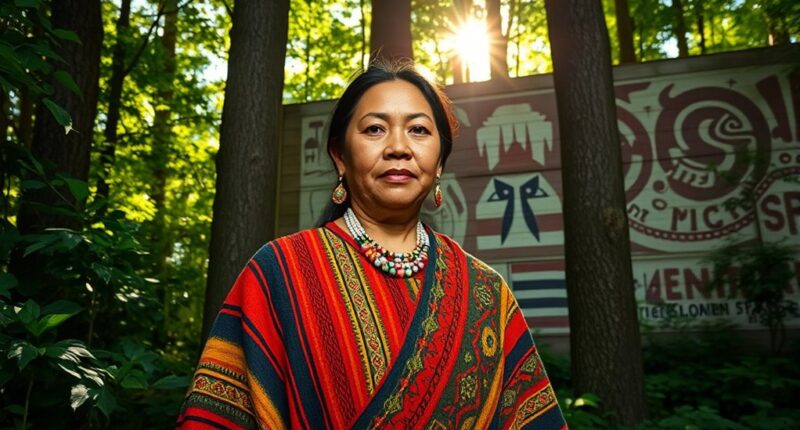
There is an undeniable fascination with the sacred feminine—a perennial reverence woven through the myths, ecosystems, and social fabrics of Indigenous cultures worldwide. Yet this fixation is not a mere nostalgic idyll or an aesthetic nod to ancient traditions. It is a fierce, relentless resistance against the erasure of identity, ecology, and gender in a world relentlessly bent on exploitation. Indigenous feminism emerges not just as a critique of patriarchal oppression but as a profound reclamation of the sacred feminine, reclaiming balance, respect, and kinship with nature itself.
The Sacred Feminine: More Than a Metaphor
When people speak of the “sacred feminine,” they often invoke nebulous images of goddess worship or spiritual femininity removed from practical, political context. For Indigenous feminisms, however, this concept is visceral and tangible. The sacred feminine is rooted in the reciprocal relationships between women, land, and life cycles. It manifests in women’s roles as stewards of the earth, custodians of oral traditions, and keepers of medicinal knowledge. This intertwining of womanhood and nature is not symbolic alone; it reflects an ontological framework where the earth is not “other” but an extension of family and community.
This intimate bond contrasts sharply with dominant Western paradigms that commodify nature—as a resource to be conquered, dissected, and profited from. Indigenous feminism fiercely contests this fragmentation, highlighting how the destruction of ecosystems mirrors the subjugation of women’s bodies and voices. The sacred feminine becomes a locus of power, a rallying standard against ecological devastation and cultural dispossession alike.
Colonialism and Patriarchy: Twin Forces of Erasure
It’s tempting to view Indigenous feminism simply as a subset within the broader feminist movement, but such a reduction misses its radical scope. Colonialism ingrained patriarchal structures into Indigenous societies where matrilineal or egalitarian values once prevailed. The imposition of Western legal systems, Christian doctrines, and capitalist exploitation transformed not only lands but gender relations. Women’s traditional authority was dismantled, spirituality was demonized, and their ecological knowledge was marginalized as superstition.
Indigenous feminism is, therefore, not just an opposition to gender inequality but a resistance to colonial logic that imposed dual oppressions simultaneously—on women and the earth. This dual struggle manifests in activism that fights for land rights, protection of sacred sites, and sovereignty alongside gender justice. Each facet reinforces the other, creating an inseparable fight for survival and dignity.
Guardians of Tradition and Innovation
Indigenous feminists do not simply hark back to ancestral ways as a static ideal. They deftly negotiate tradition and modernity, asserting that honoring the sacred feminine necessitates embracing innovation while grounding themselves in their histories. This dynamic approach rejects the binary of old versus new, offering instead a fluid, evolving framework that adapts to contemporary challenges.
For instance, young Indigenous women activists merge social media savvy with centuries-old communal practices, amplifying their voices and narratives globally. They situate ancestral ecological wisdom within scientific dialogues on climate change, bridging ancient knowledge and cutting-edge environmentalism. In doing so, they recenter the sacred feminine as a vibrant, living force imperative for planet-wide healing.
Intersectionality: More Than Buzzword Politics
Any serious engagement with Indigenous feminism necessitates unpacking its deeply intersectional nature. It acknowledges that Indigenous women navigate compounded oppressions based on race, gender, class, and citizenship status. Their activism confronts not only sexism but systemic racism, economic exploitation, and political invisibility. Being Indigenous and female inherently positions them at a nexus where multiple power structures collide.
This intersectionality is not merely descriptive; it shapes the methodologies and aims of the movement. Indigenous feminists critique mainstream feminist frameworks as often exclusionary or sanitized, insisting that liberation must be holistic—encompassing cultural revitalization, language preservation, legal sovereignty, and environmental justice. In this way, protecting the sacred feminine is also about upending hierarchies that invisibilize entire populations.
Reclaiming Identity Through Ceremony and Language
Ceremony and language are vital instruments in the reclamation of the sacred feminine. Indigenous feminisms emphasize restoring rituals historically suppressed by colonial powers, using them as both political and spiritual acts. These ceremonies renew bonds between women and the earth, reasserting roles that colonial narratives attempted to erase.
Language, too, carries the weight of worldview. Many Indigenous languages inherently encode gender, kinship, and ecological relationships, embedding the sacred feminine into the very structure of communication. Revitalizing these languages is a radical act that reconnects communities with their epistemologies and affirms female-centered cosmologies that survive, despite centuries of erasure.
The Earth as a Feminine Entity: Challenging Capitalist Conceptions
Western capitalist thought frequently divorces the earth from “feminine” attributes, positioning it as an inert, exploitable asset. Indigenous feminism refuses this. The earth is envisaged as a living, breathing female entity—mother, sister, grandmother—whose wellbeing is intertwined with human survival. This recognition demands a radical reorientation of how society interacts with the natural world.
By venerating the earth as feminine, Indigenous feminists disrupt extractive economic logics that commodify nature. They advocate for legal frameworks granting personhood to rivers, forests, and ecosystems, acknowledging rights that mirror human liberties. This conceptual shift confronts the roots of environmental crisis, insisting that harm to the earth is harm to the sacred feminine and, by extension, to all lifeforms.
Feminism as a Decolonial Project
Ultimately, Indigenous feminism is a decolonial project at its core. It dismantles not only gender hierarchies but the colonial apparatus that sustains them. Its goals extend beyond reform to revolutionize systems of power—resetting the relationship between people, planet, and identity.
In reclaiming and protecting the sacred feminine in nature, Indigenous feminists offer a blueprint for collective healing. Their work insists that feminism cannot afford to be abstract or universalized; it must be rooted, embodied, and fiercely attentive to place and history. This fusion of feminist struggle and ecological guardianship illuminates a path toward a future where respect, reciprocity, and resilience govern human interactions with the earth and with each other.