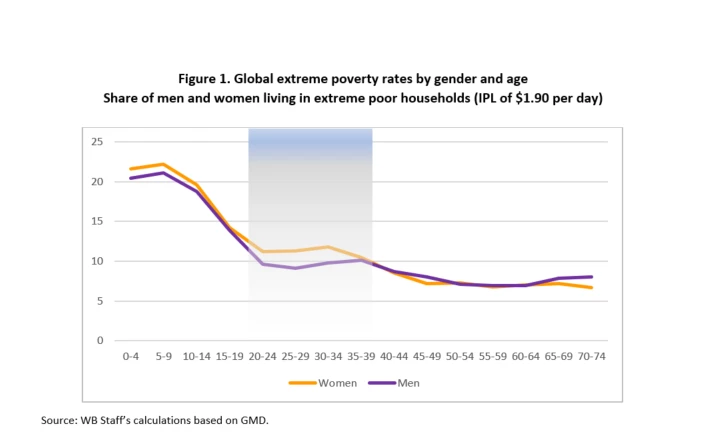
In the labyrinthine corridors of global poverty, a staggering truth looms large: women constitute approximately 70% of the world’s impoverished population. This alarming disparity is no accident, no mere statistical fluke. It is a stark reflection of systemic inequalities, entrenched patriarchies, and socio-economic architectures designed to sideline women consistently. Understanding this phenomenon demands delving beneath the surface, exposing uncomfortable realities, and articulating why poverty, gender, and power are inextricably intertwined.
The Structural Roots of Female Poverty
Poverty among women is deeply embedded in structural inequalities. Around the world, legal frameworks and customary practices often discriminate against women’s ownership rights, access to land, credit, and inheritance. This institutionalized exclusion effectively chains millions of women to perpetual economic precarity. The denial of property rights, for instance, strips women of collateral to leverage loans or start businesses, ensuring a persistent cycle of dependency and financial invisibility.
Furthermore, labor markets are riddled with gender biases. Women disproportionately occupy informal, low-paid, and insecure employment sectors without social protections or bargaining power. Their work, frequently unpaid or underpaid domestic labor and caregiving, is invisible in economic statistics yet pivotal to societal functioning. These systemic barriers obscure their economic contributions and entrench poverty along gendered lines with ruthless efficiency.
The Societal Fabric: Patriarchy and Gender Norms
At the heart of female poverty lies the oppressive framework of patriarchal social structures. Gender norms dictate strict roles that confine women to domestic spheres in many cultures, severely limiting their educational and employment opportunities. Education, often lauded as a universal emancipator, remains elusive for countless girls due to early marriage, child labor, or cultural devaluation of female schooling. Such deprivation effectively seals off pathways out of destitution.
Concurrently, the societal valuation of women’s labor and participation remains abysmally low. The expectation of silent sacrifice and subservience suppresses aspirations and curtails agency. This systemic devaluation perpetuates a vicious circle where women lack both the means and the societal endorsement to challenge their economic subordination. Consequently, poverty becomes not just an economic condition but a reflection of gendered powerlessness and invisibility.
The Intersectionality of Gender and Other Social Identities
Poverty does not exist in a vacuum but intersects with race, ethnicity, caste, disability, and other axes of marginalization. Women from historically disenfranchised groups often bear the double burden of discrimination, intensifying their impoverishment. Indigenous women, for instance, face dispossession and exclusion, while those with disabilities encounter compounded barriers in accessing services and employment.
This intersectional lens reveals that female poverty is not monolithic but multifaceted, demanding nuanced policy interventions. It underlines the folly of simplistic narratives and highlights the necessity of inclusive frameworks that recognize and address overlapping oppressions. Ignoring these intersections risks perpetuating inequalities under the guise of progress.
Globalization, Development, and the Feminization of Poverty
Global economic systems, often touted as engines of development, have paradoxically deepened the feminization of poverty. Structural adjustment programs, neoliberal policies, and trade liberalization have disproportionately disadvantaged women, especially in the Global South. Cuts in public spending typically translate into reduced social services upon which poor women depend, such as healthcare, childcare, and education.
Moreover, the commodification of female labor, while sometimes a pathway to economic participation, frequently exploits their vulnerabilities. Sweatshops, seasonal agriculture, and informal urban work offer scant protections and perpetuate cycles of exploitation rather than liberation. The global economy often morphs into a terrain where women’s subjugation becomes a cheap cost of doing business.
The Consequences of Female Poverty: Beyond Economics
The ramifications of women’s poverty are profound and multidimensional. Economically disenfranchised women disproportionately experience food insecurity, inadequate healthcare, and housing instability. This vulnerability extends to heightened risks of domestic violence, human trafficking, and exploitation, illustrating how economic deprivation fuels social marginalization.
Additionally, children raised in impoverished female-headed households often suffer setbacks in health and education, perpetuating generational cycles of deprivation. The societal cost is immense—not only in human terms but also in lost economic productivity and social cohesion. Addressing female poverty is not merely a question of equity but a prerequisite for sustainable development and societal resilience.
Strategies and Solutions: Toward Economic Emancipation
Reversing the disproportionate poverty of women requires concerted, multidimensional strategies. Legal reforms guaranteeing property and inheritance rights are foundational. Empowering women through education and vocational training can dramatically improve employment prospects and economic autonomy. Ensuring social protection schemes recognize and support women’s caregiving roles is also critical.
Microfinance and entrepreneurial initiatives have shown potential but remain limited if implemented in isolation. They must be accompanied by broader structural change, including dismantling patriarchy and addressing societal attitudes toward gender roles. Men, too, must be engaged as allies in transforming cultural norms and power relations.
International cooperation, combined with grassroots activism, can amplify voices demanding accountability and justice. Women’s representation in political and economic decision-making is paramount; it shapes policies that directly impact their lives. Only through systemic change—both legal and cultural—can the statistics shift and the cycle of female poverty be broken.
Conclusion: More Than Numbers—A Call to Recognize Gendered Injustice
The figure that women comprise 70% of the world’s poor is not random; it is a clarion call. This statistic encapsulates decades of exclusion, discrimination, and invisibility. Far from a mere economic condition, the feminization of poverty encapsulates an ongoing social injustice that demands radical redress.
Engaging with this challenge means confronting uncomfortable truths and committing to transformative change. Women are not just victims of poverty; they are also pivotal agents of resilience and change. Elevating their socio-economic status is not optional—it is essential for forging equitable and thriving societies.