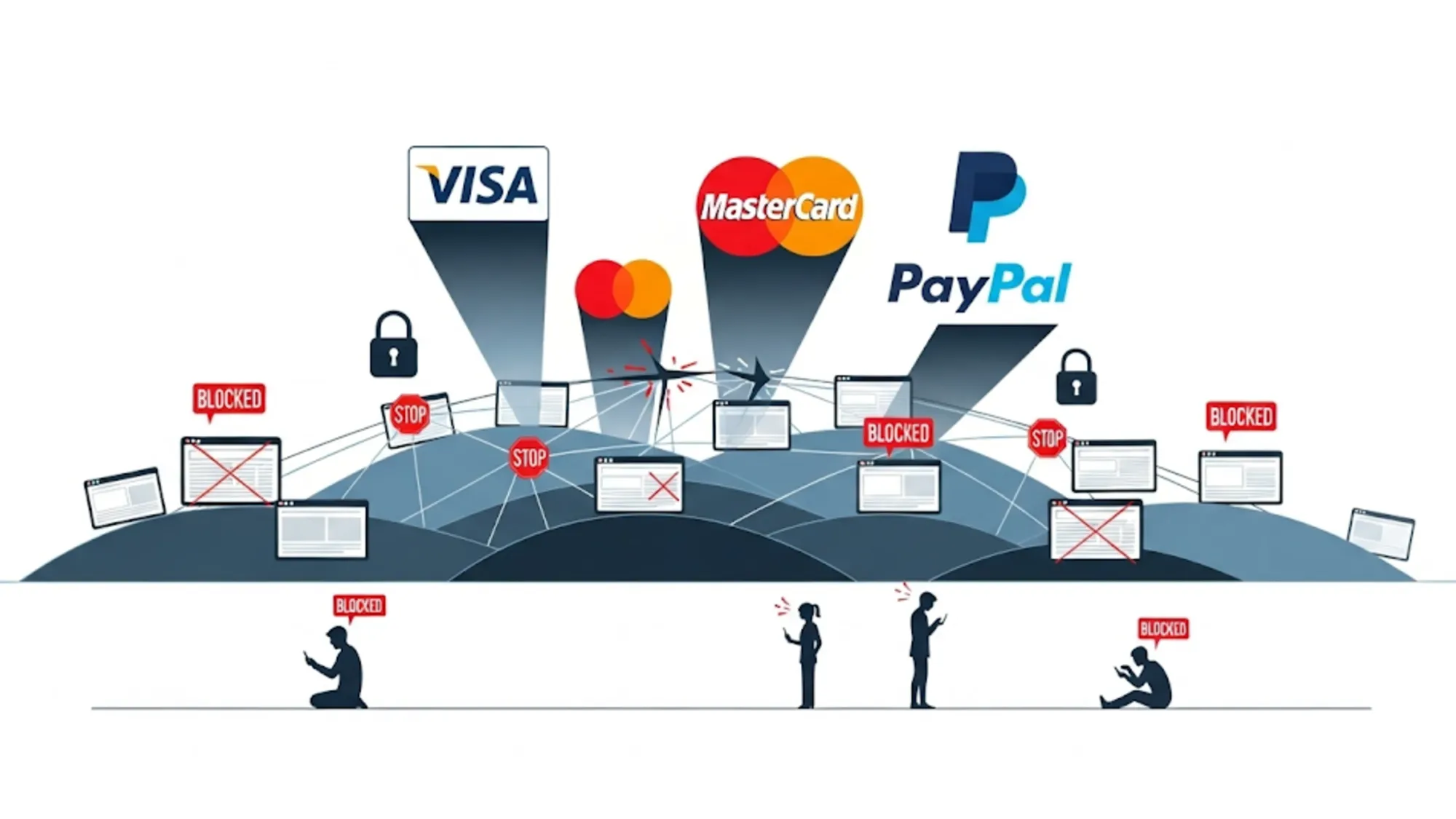
Consider the internet not as a boundless frontier, but as a meticulously mapped kingdom, governed not by monarchs, but by the whims and strictures of vast, often unseen syndicates. Known colloquially as payment processors and ad networks – the titans managing the flow of digital currency and the architecture of online attention – their influence is more profound than mere gatekeepers. They are the invisible cartographers, shaping the very landscape of cyberspace. Their interventions, often subtle, yet undeniably powerful, have fundamentally altered the operations of websites deemed exploitative, weaving a complex web of economic and narrative control that stretches far beyond the digital realm.
Economic Leverage: The Ultimate Fairy Godmother?
Is it generous largesse or covert enforcement? That question lies at the heart of the phenomenon. Financial stability is the currency’s true emperor, and the providers of that currency dictate its flow. A single notification, a subtle tweak, and a platform’s access evaporates. The term “distribution inhibitors” arises – not to diminish their function, but to describe their potent, often necessary, intervention.
The narrative of their intervention often focuses on risk mitigation. These entities sell access – either to creators through their platforms or to creators by providing financial services. In this market-driven logic, aligning with controversial content invites market rejection. It’s the digital version of being “marked down” or “blacklisted,” where the consequence isn’t legal per se, but the shunning of commerce. Their decisions become powerful catalysts, shaping what survives and what is extinguished in the digital ecosystem. Perhaps they are Luna’s arbiters, granting passage only to those whose narratives don’t contradict the prevailing winds of acceptable discourse.
Gatekeepers of Content: Beyond the Click
The narrative doesn’t stop at economics; it extends into the fabric of platform content policy. We must consider Ad Networks and Payment Processors as narrative architects – not directly shaping storylines, but profoundly influencing the venues for public discourse. A platform’s terms of service implicitly define the marketplace: what is allowed to flourish and what is suppressed.
The paradox deepens: can a system that profits from content remain an impartial arbiter, and can profit motive align perfectly with public good? Their unique position places them in the unenviable role of policymakers without mandate. Decisions made for financial and operational reasons translate directly into restrictions on speech platforms users can leverage. The question of subjectivity arises – who defines the rules of engagement that determine the permissible content flow, and why does one entity’s interpretation prevail?
Curators and Suppression: The Veil of Control
It’s not merely the threat of loss, but the concrete consequence that defines these actors’ impact. Imagine a website flourishing until, overnight, the ebb of funding cuts it off from essential growth nutrients. This isn’t digital witchcraft, it’s the enforcement of economic duress. These syndicates act as modern-day censorial cartographers, outlining forbidden territories by withdrawing financial permissions and advertising space.
Their enforcement extends beyond simple withdrawal. They introduce layers of scrutiny into platform operations, effectively teaching platforms to parse, categorize, and suppress content they deem exploitative. This isn’t a single, monolithic decision but a complex landscape of economy-driven censorship, where access is both trade agreement and tacit endorsement. The outcome is predictable shifts on the digital tides. Certain waters become impassable, while other, quieter channels must be found, if they exist.
The Hydra Challenge: A Necessary Evil?
Yet, are these measures truly the silver bullets they appear to be? Could they themselves become part of the problem? The rise of workaround syndicates suggests the problem is not eradication, but containment. Is one form of gatekeeping simply replaced by another? Perhaps the creation of narrative enforcers parallels the emergence of content moderation armies – both born from the need for order, albeit debated methods.
The user, the end consumer of this curated or restricted content, finds themselves navigating a landscape of digital shadows and forbidden zones. They benefit from reduced exposure to harmful content, yet perhaps also experience the silencing of dissenting or niche voices whose platforms they cannot access. Their experience is the tangible result of these unseen syndicates’ decisions. This delicate balance raises the uncomfortable question: do we trade one form of curated vulnerability for a curated silence?
Entanglement: The Unavoidable Consequence
The actions of these entities ripple through the digital ecosystem with unintended consequences. Attempts to curtail the reach of exploitative sites inevitably entangle legitimate platforms and creators. Algorithmic filters, while intended to refine, often introduce noise, blocking or flagging content merely by association. The quest for purity in the marketplace of ideas creates an economic taxonomy that categorizes speech itself.
Furthermore, the very act of designating platforms and payment systems as the arbiters of acceptable expression democratizes censorship in unforeseen ways. Power shifts to those who control financial access and advertising viability. The user becomes subject to an economy-based vetting process for content platforms, a system driven by profit centers rather than universal ethical codes. The lines between platforms, payment providers, and ad brokers blur into a single, powerful entity – a shadow parliament governing the flow of ideas.
Conclusion: Navigating the Shifting Tides
In the vast digital ocean, payment processors and ad networks are powerful undertides shaping the currents of content and commerce. Their interventions, whether viewed as benevolent economic guidance or restrictive marketplace gatekeeping, are undeniable forces in the modern online safety landscape. The curtain they draw – ostensibly privacy and safety, but operationally censorship and control – represents perhaps the most intricate, and least discussed, chapter in our ongoing digital story. They manage money and attention, but their influence extends into the realms usually reserved for traditional censorship bodies – shaping what can be created, disseminated, and financially sustained within the contemporary web.