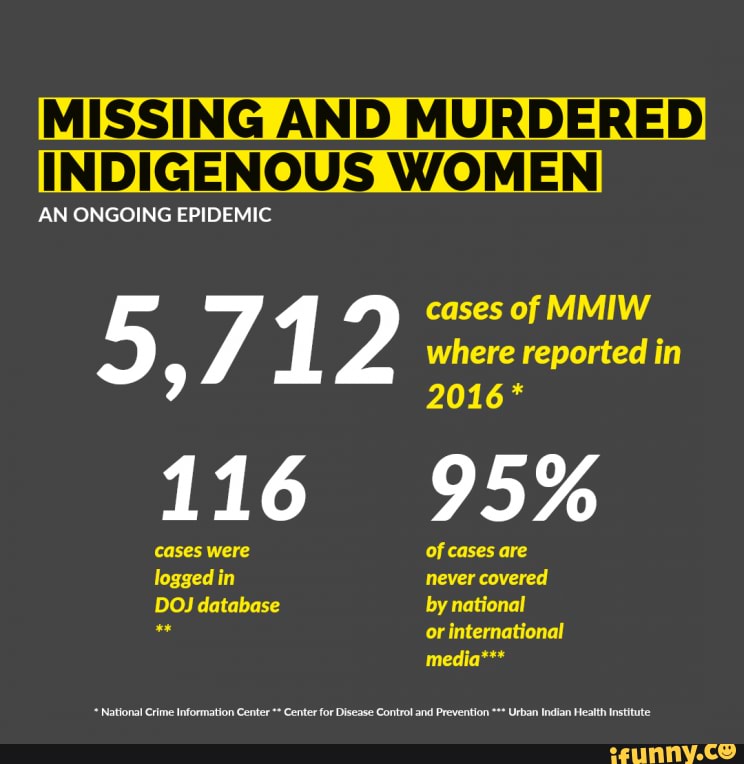
In the sprawling landscape of feminist discourse, there exists a glaring silence—one that smolders beneath surface-level conversations and resists easy acknowledgement. The crisis of Missing and Murdered Indigenous Women (MMIW) is not merely another issue to tack onto the checklist of feminist causes. It is a harrowing emblem of systemic neglect, entwined with layers of colonialism, racism, and patriarchal violence. Yet, for all its staggering gravity, it seldom receives the attention it demands. This cultural indifference, this selective empathy, warrants scrutiny. Why does mainstream feminism tolerate this omission? And what does this silence reveal about the broader mechanisms of societal fascination and oblivion?
Unveiling the Abyss: What is the MMIW Crisis?
The phrase “Missing and Murdered Indigenous Women” resonates far beyond statistical abstraction—it conjures a reality fraught with grief, fear, and entrenched injustice. Indigenous women in North America are disproportionately targeted by violence, often disappearing without trace, their stories evaporating into bureaucratic dysfunction and media neglect. Consider the climatized interface between jurisdictional ambiguity and systemic disregard; law enforcement agencies frequently fail to coordinate across tribal, federal, and local boundaries, creating a labyrinthine obstacle course for justice.
Decades of colonization have entrenched these vulnerabilities. The forced displacement of Indigenous peoples from ancestral lands engendered fractured communities and destabilized traditional protective structures. Add to this the pernicious legacy of cultural genocide—residential schools, forced assimilation, and violence—that undermined Indigenous identity and communal solidarity. Within this confluence of historical trauma and contemporary negligence, the MMIW crisis festers unchecked.
The Intersection of Feminism and Indigenous Realities
Feminism, often heralded as a bastion of social justice, nonetheless grapples with its own blind spots. Intersectionality, while a buzzword embraced in academic and activist circles, frequently remains elusive in practice. The marginalization of Indigenous women within feminist narratives exposes this fissure brutally. Their experiences are often subsumed under broader categories like “women’s issues” or “racial justice” without acknowledging the specificity of Indigenous sovereignty and colonial histories.
This detachment is no accident. It underscores the problematic underpinnings of many feminist movements that originated and evolved within predominantly white, middle-class milieus. These frameworks tend to universalize womanhood in a way that effaces cultural differences. Consequently, Indigenous women’s struggles with systemic violence, dispossession, and invisibility are frequently relegated to the periphery, if addressed at all. The feminist movement’s intermittent failure to champion MMIW is emblematic of a larger reluctance to confront colonial legacies embedded in gendered violence.
Why Society Turns a Blind Eye: The Anatomy of Selective Fascination
The gaze of society, and by extension the media, often fixates on narratives that align with familiar archetypes or evoke palatable emotions. The disappearance of Indigenous women, however, unsettles these constructs. It confronts audiences with unsettling truths about settler colonialism, entrenched racism, and complicity. There is a collective cognitive dissonance at play—a cultivated indifference that allows the crisis to recede into shadows.
Moreover, the fragmentation of Indigenous identities into “others” complicates empathetic engagement. When the victims belong to communities that have been historically demonized or exoticized, their suffering risks being viewed as marginal or inevitable. This stratification of empathy reflects a colonial legacy of dehumanization, where Indigenous lives are undervalued in the public imagination. The selective fascination with some forms of feminist stories—and the corresponding neglect of the MMIW crisis—reveals endemic biases about whose lives merit protection and whose pain commands attention.
The Role of Media Narratives and Erasure
Media, as a powerful arbiter of public consciousness, plays an undeniably pivotal role in shaping discourse around MMIW. Yet, Indigenous women’s disappearances are often underreported, misreported, or sensationalized in ways that perpetuate stereotypes rather than illuminate systemic issues. The phenomenon of “missing white woman syndrome” starkly contrasts the marginalization of Indigenous women’s stories. High-profile cases involving white women often saturate headlines for weeks, while Indigenous women may be mentioned briefly—or not at all.
This erasure is not incidental but structural. Media outlets rarely consult Indigenous voices or contextualize disappearances within broader colonial frameworks. The resulting narrative is fragmented, decontextualized, and ultimately insufficient to provoke mobilization. Thus, the media’s selective spotlight perpetuates a cycle of invisibility and desensitization, hindering meaningful dialogue and action.
Legal and Political Quagmires: Barriers to Justice
The MMIW crisis is enmeshed in legal labyrinths that stymie resolution and perpetuate impunity. Jurisdictional ambiguity between tribal, state, and federal law enforcement institutions creates a jurisdictional no-man’s-land. Many Indigenous reservations fall under federal authority, complicating investigations and fragmenting responsibility. This bureaucratic inertia leads to delayed response times, incomplete investigations, and a lack of accountability.
Politically, initiatives aimed at addressing MMIW often oscillate between performative gestures and inadequate resourcing. While some governments have made commitments to investigative reforms, systemic change remains elusive. The inertia reflects a broader political discomfort with confronting settler colonial legacies, systemic racism, and entrenched gender-based violence simultaneously. Until these intersecting forces are addressed holistically, justice for Indigenous women will remain an unattainable ideal rather than an enforceable right.
Reclaiming Visibility: Indigenous-Led Movements and Feminist Solidarity
In response to institutional neglect, Indigenous women activists and communities have tirelessly reclaimed their narratives and mandated visibility. Grassroots movements, such as the REDress Project and Sisters in Spirit, utilize creative and symbolic acts to disrupt societal amnesia and foreground Indigenous womanhood in public consciousness. These efforts defy tokenism and demand structural transformation.
True feminist solidarity must transcend performative allyship and embed Indigenous women’s voices at the core of activism. It requires dismantling colonial hierarchies within feminist spaces and embracing decolonial frameworks that respect Indigenous sovereignty and knowledge. This is not a peripheral conversation but a foundational reckoning; feminism’s legitimacy depends on its capacity to confront its own exclusions and embrace the radical breadth of women’s experiences.
The Path Forward: Beyond Awareness to Structural Change
A cursory spotlight on MMIW is insufficient. What is imperative is the pivot from awareness campaigns to transformative action. This involves comprehensive legal reform, including harmonizing jurisdictional responsibilities and enhancing investigative capacity. Equally crucial is investing in Indigenous-led support services that prioritize healing, advocacy, and prevention within communities.
Education must also play a vital role in disrupting colonial narratives embedded in curricula and popular culture. The public requires unflinching exposure to the historic and ongoing violences inflicted upon Indigenous peoples, with emphasis on gendered dimensions. Only when society truly understands the magnitude and complexity of this crisis can it begin to support meaningful redress.
The MMIW crisis is a profound indictment of societal failures—feminist movements included. Confronting it demands uncomfortable truths, radical empathy, and resolute action. It is a call to dismantle the silent structures that perpetuate invisibility and violence. The feminist project, in its truest and most transformative form, must rise to this challenge or risk betrayal of its own foundational promises.