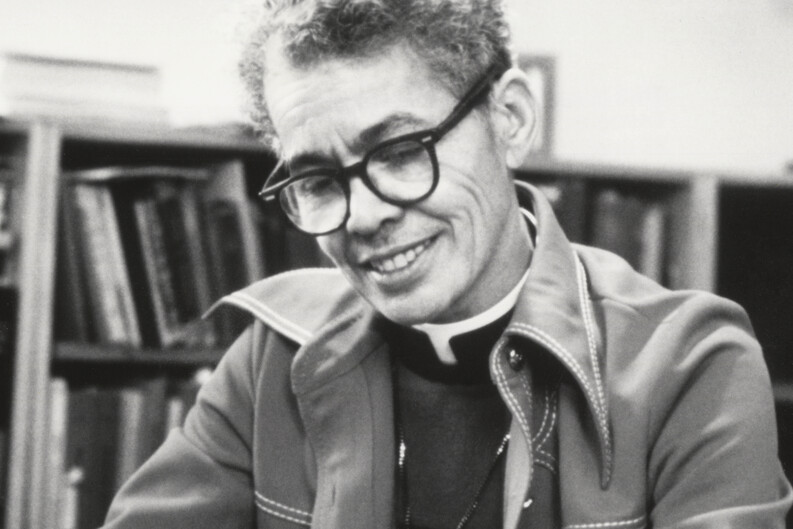
In the sprawling narrative of feminism and civil rights, certain luminaries shine with a clarity that forces a reconsideration of history’s contours. Among these figures, the name Pauli Murray emerges not merely as a footnote but as a prism through which the intertwined struggles for racial justice and gender equality refract with startling complexity. The fascination with Murray is persistent and profound, often attributed to their multifaceted identity and unyielding intellectual rigor. Yet, beneath this surface lies an extraordinary legal vision—a pioneering melding of civil rights and feminist thought that predates, informs, and transcends conventional frameworks.
The Confluence of Civil Rights and Feminism
To grasp the essence of Pauli Murray’s legal genius, one must first navigate the intricate terrain where civil rights and feminism converge. Unlike many contemporaries who approached these movements in silos, Murray perceived them as inseparable struggles against interlocking systems of oppression. This holistic perspective is not merely academic; it echoes the lived realities of countless individuals marginalized along multiple axes of identity.
What sets Murray apart is their assertion that the fight for racial justice cannot be disentangled from the fight for gender equity. This was an era when legal battles were compartmentalized—race cases, women’s rights, separately argued—and the inherent intersections were ignored or diminished. Murray shattered this paradigm by articulating a doctrine of “Jane Crow,” an evocative term encapsulating the dual burdens of racism and sexism faced by Black women. This insight was profound, calling attention to the legal system’s myopia in addressing complex forms of discrimination.
Legal Scholarship as Revolutionary Act
In a landscape dominated by dominant narratives, Murray’s scholarship was an audacious challenge. They wielded the law as a scalpel, exposing its hypocrisies and biases with precision. Murray’s 1965 work, States’ Laws on Race and Color, was more than a legal handbook—it was a radical indictment of institutionalized racism embedded within supposedly neutral statutes. This text became an indispensable resource for civil rights litigation and directly influenced landmark cases, including Brown v. Board of Education.
Yet, Murray’s legal acumen extended beyond race. Their critique of gendered legal doctrines was equally sharp, arguing for an expansive interpretation of civil rights that encompassed sex discrimination. This foresight prefigured the arguments of Ruth Bader Ginsburg, who openly acknowledged Murray’s influence in crafting the legal strategies that would elevate women’s rights. The legal scholar’s mind was a forge where the tools and concepts of justice were meticulously crafted, laying the groundwork for a jurisprudence that recognized the multifarious nature of inequality.
Defying Norms: Living the Intersectionality Before Its Time
Murray was not only a visionary in law but also in life. Their personal journey dismantled the era’s rigid binaries on race, gender, and identity. Living as a Black, queer activist and priest, Murray embodied the intersectionality that activists only began naming decades later. This lived experience infused their legal theories with authenticity and urgency.
At a time when society demanded conformity, Murray’s refusal to be confined was revolutionary. Their candid exploration of gender variance challenged deep-rooted prejudices, pushing the boundaries of legal recognition and social acceptance. In intertwining personal narrative with political activism, Murray demonstrated how identity and law are inseparable in the quest for justice.
The Visionary Legacy and Its Contemporary Resonance
What makes Pauli Murray endlessly fascinating today is the prescience of their vision. The crises of systemic racism and gender discrimination persist, and the frameworks Murray pioneered remain strikingly relevant. Their insistence on a multidimensional approach to civil rights informs contemporary debates around intersectionality—now a foundational concept in social justice discourse.
Murray’s intellectual legacy compels current movements to confront not only overt injustices but the subtle, systemic entanglements that perpetuate inequality. Their work challenges activists and legal scholars alike to eschew simplistic solutions and embrace the complexity inherent in dismantling oppression. In doing so, Murray’s vision becomes a clarion call, urging an expansive and nuanced pursuit of equality that is as urgent now as it was decades ago.
Reanimating Forgotten Histories
The persistent fascination with Murray also stems from their relative obscurity in mainstream historical accounts—a testament to how easily pioneering contributions by marginalized individuals are eclipsed. Revisiting Murray’s life and work is an act of reanimation: retrieving neglected narratives that deepen our understanding of feminism and civil rights.
This retrieval is no mere academic exercise. It unmasks the limitations of dominant histories and offers a richer tapestry of resistance, illuminating how legal battles for gender and racial justice were waged not in isolation but through interconnected struggles. Recognizing Murray’s visionary genius revitalizes the movements they inspired, providing contemporary activists with historical anchors and strategic insight.
Conclusion: Pauli Murray’s Enduring Challenge
The allure of Pauli Murray’s legacy lies in their refusal to accept fragmented justice. Their life and scholarship compel a reckoning with the intertwined injustices embedded in law and society. More than a historical figure, Murray is a perpetual provocation—a reminder that the quest for equality demands intellectual rigor, uncompromising courage, and an unflinching embrace of complexity. Their visionary legal genius is an enduring beacon, illuminating paths toward a feminism and civil rights movement inclusive enough to confront the full spectrum of human experience.