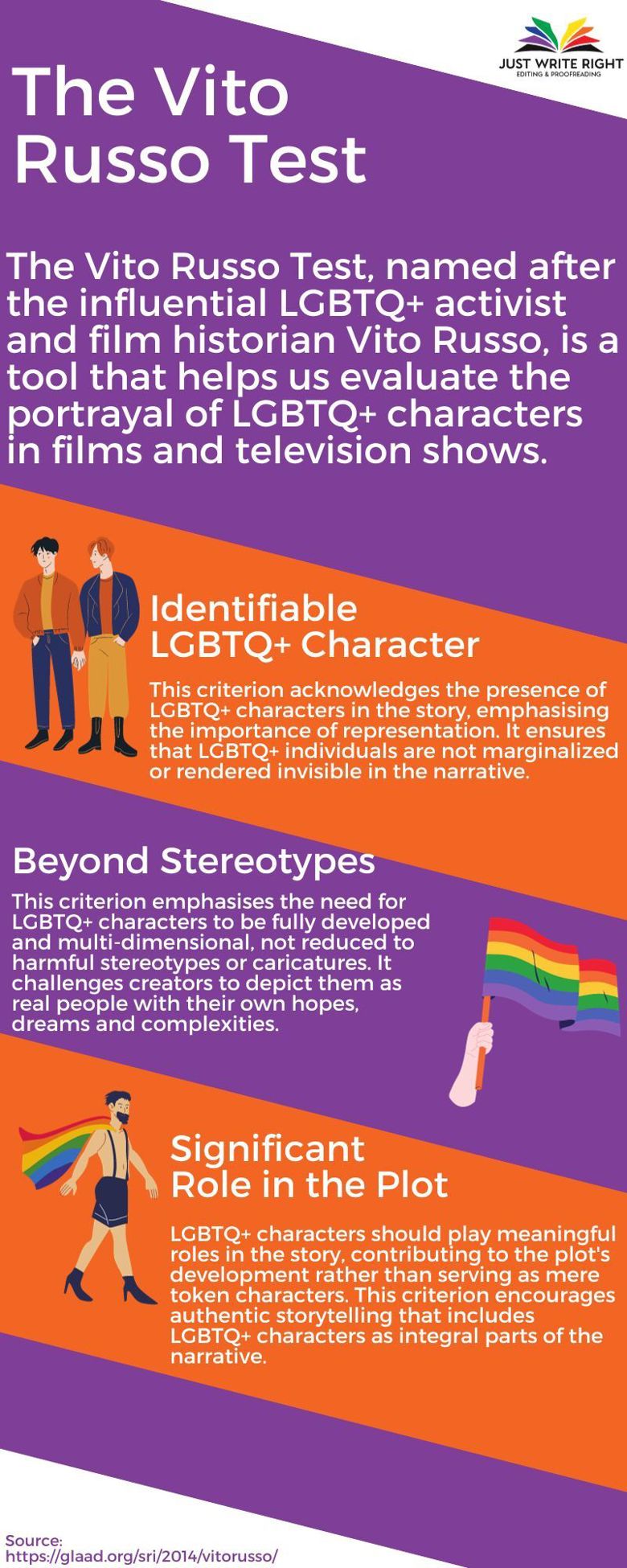
In the ever-evolving discourse of representation, feminism has continually challenged us to ponder not just the presence of marginalized identities in media, but the intricacies of their portrayal. When it comes to LGBTQ+ characters, one provocative tool that has emerged to dissect these portrayals is The Vito Russo Test. More than a mere checklist, this test serves as a searing critique and a clarion call for genuine, nuanced representation. It grapples with how LGBTQ+ characters are woven into narratives, probing whether they transcend stereotypes or serve as hollow tokens within their stories. This article unveils the multifaceted nature of The Vito Russo Test, revealing how it intersects with feminist ideals and what readers can expect in exploring its implications.
The Genesis of The Vito Russo Test: Context and Purpose
The Vito Russo Test arises from a necessity to challenge a pervasive cinematic and televisual shorthand—LGBTQ+ characters as mere side notes or, worse, tragic footnotes. Named after the indefatigable LGBTQ+ activist and film historian, Vito Russo, the test reflects a feminist valorization of multidimensionality. It asks a deceptively simple question: Are LGBTQ+ characters present in substantial numbers, and if so, do they possess narrative depth unattached to their sexual orientation? The test pushes against the tokenism and stereotyping that have long plagued representation, demanding characters who live, breathe, and evolve beyond their queerness.
It is critical here to understand that feminism demands more than visibility; it demands complexity and autonomy. Therefore, this test stands not merely as a vehicle of representation but as a tool to interrogate power dynamics, agency, and the nuanced intersectionality of queer existence. The genesis of this framework is as much about feminist theory as it is about queer visibility—an entwined struggle for authentic storytelling.
Criteria That Challenge the Superficial: The Anatomy of the Test
At its core, The Vito Russo Test sets out meticulous criteria that fracture simplistic portrayals. It requires, first and foremost, the presence of LGBTQ+ characters who are not tertiary, ornamental, or disposable. This insistence on meaningful inclusion stems from feminist critiques of how marginalized bodies are often rendered invisible or hyper-visible in problematic ways. Next, the test demands that these characters’ storylines are substantial and significant to the overall narrative. They must move beyond perfunctory representation to become integral, driving forces within the story.
Equally important, the test interrogates whether a character’s identity is solely defined by their queerness. It castigates portrayals where LGBTQ+ status remains their singular defining characteristic—an echo of what feminist thought critiques as reductive identity politics. Instead, the character should have a full spectrum of human emotions, ambitions, and struggles, just like any other. The narrative arcs must be accorded the same gravitas, complexity, and development afforded to their heterosexual or cisgender counterparts.
Narrative Agency and Character Autonomy: The Feminist Imperative
Within feminist literary and media criticism, agency is paramount. The Vito Russo Test underscores this by spotlighting LGBTQ+ characters who possess autonomy—the capacity to make consequential decisions and effect change within their narrative worlds. Feminist thinkers decry the passive, victimized queer archetypes that haunt many films and shows, often reduced to tragic tales designed to elicit pity or to catalyze heterosexual protagonists’ growth. This test resolutely demands characters who are subjects, not objects, who chart their own paths rather than merely existing in reaction to the mainstream characters surrounding them.
Such agency resonates deeply with feminist tenets that contest patriarchal (and heteronormative) frameworks which have traditionally marginalized and silenced queer voices. When LGBTQ+ characters exert control over their destinies within media texts, it disrupts entrenched power hierarchies and produces narratives brimming with resistance and possibility. The Vito Russo Test thus functions as a feminist instrument of empowerment, compelling storytellers to rethink and reimagine.
Intersectionality and the Spectrum of Queer Feminisms
The Vito Russo Test also steers conversations toward the crucial terrain of intersectionality—the recognition that identity operates at multiple, overlapping axes such as race, class, gender, and sexuality. Feminist scholarship has long advocated for an intersectional approach, understanding that oppression and privilege do not exist in isolation. The test invites an examination of queer characters not only through their sexual orientation but also through these intertwined identities.
A truly feminist application of The Vito Russo Test scrutinizes whether LGBTQ+ characters embody such complexity. Are queer characters often whitewashed in narratives that erase ethnic and cultural specificity? Does the representation reflect the multifarious realities of queer people from diverse backgrounds? In doing so, it challenges media to shatter monolithic, sanitized queer representations and embrace radical, authentic multiplicities. This profound comprehension elevates the discussion from tokenistic inclusion to transformative visibility.
The Political Economy of Representation: Media as a Site of Feminist Contention
Representation is never neutral; it intersects with commercial imperatives, ideological forces, and hegemonic narratives. The Vito Russo Test brings to light the political economy underpinning queer visibility in media. Some productions exploit LGBTQ+ characters for “diversity” aesthetics without risking narrative depth or audience discomfort. Feminism contests such commodification, demanding substance and sincerity, not merely surface-level gestures toward inclusivity.
Moreover, the test insists that LGBTQ+ characters avoid the stereotypical tropes of tragedy and victimhood routinely leveraged to titillate or moralize. This insistence disrupts a voyeuristic gaze that feeds on suffering rather than celebration or complexity. It presses creators to resist lazy storytelling, which undermines social justice aims by entrenching stereotypes cloaked in apparent empathy.
Transformative Potential: Beyond the Test to New Horizons
While The Vito Russo Test is a potent evaluative tool, its ultimate promise lies in what it inspires: a reconfiguration of queer narratives that embody feminist values of equity, depth, and justice. It invites creators and audiences alike to imagine media landscapes where LGBTQ+ characters not only exist but thrive as complex, autonomous protagonists.
In embracing this challenge, the feminist ethos embedded within the test opens pathways to stories that reflect the real spectrum of queer experiences—the joyous, the painful, the ordinary, and the extraordinary. It envisions a future where representation serves as a radical act of acknowledgment and empowerment, refusing to settle for superficiality or marginalization. The Vito Russo Test is, therefore, not just about passing or failing a checklist—it is an articulation of an aspirational storytelling revolution.
What Readers Can Expect When Engaging with The Vito Russo Test
Delving into The Vito Russo Test equips readers and viewers with a sharpened critical lens. Expect to confront familiar narratives that falter under scrutiny and to discover media that courageously transcend reductive portrayals. The test encourages reflection on how and why certain LGBTQ+ characters resonate or fracture under the weight of their narrative treatment. Readers will find themselves navigating a spectrum—where representation oscillates between hollow tokenism and vibrant authenticity.
Moreover, engaging with the test prompts deeper awareness of how feminist ideals enhance queer representation, fostering empathy and encouraging activism beyond passive consumption. Readers can anticipate informed critiques, lively debates, and an ongoing quest for narratives that celebrate queer identity in its full humanity. It invigorates the conversation on media justice, compelling an ethical reckoning that reverberates far beyond entertainment.