What if I told you that the most intimate confessions of your household aren’t whispered into the ears of your closest friends, but instead are meticulously folded into the fabric of your bedsheets by the very person who makes your bed? The housekeeper, that unsung architect of domestic harmony, doesn’t just polish your silverware or vacuum your carpets—she holds the key to the most scandalous, the most tender, the most unfiltered truths about your life. And yet, we’ve spent centuries treating her presence as nothing more than a footnote in the grand narrative of domesticity. It’s time to ask: what does feminism look like when the housekeeper isn’t just a character in the background, but the protagonist of a revolution?
The Invisible Archive of Domestic Secrets
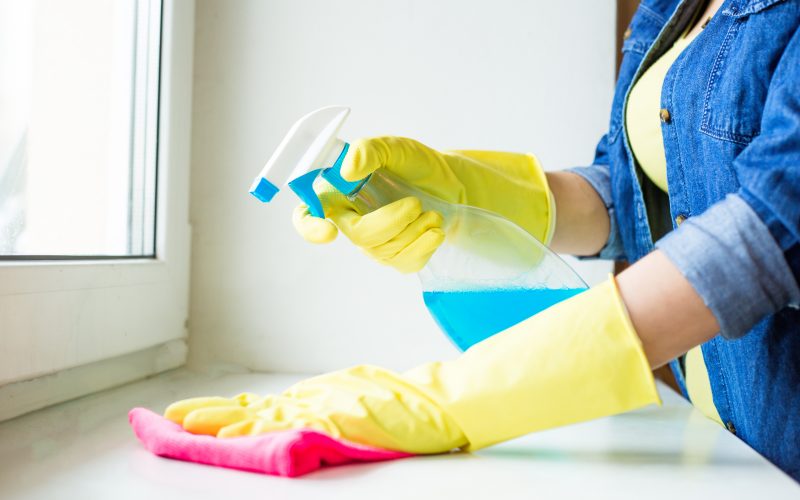
Every home is a vault of secrets, and the housekeeper is its most trusted librarian. She sees the lipstick stains on your husband’s collar when he claims to have had a late night at the office. She notices the way your daughter’s hands tremble when she folds her laundry, the silent tears absorbed by the towels she replaces. She knows which spouse leaves the toilet seat up, which child sneaks cookies before dinner, and which guest always “forgets” to flush. These aren’t just trivial observations—they’re the raw material of power. The housekeeper doesn’t just clean; she curates a living, breathing archive of domestic life, one dust mote at a time.
But here’s the twist: this archive is never hers to keep. The secrets she collects are not her property. They belong to the household, to the patriarchal structures that dictate who gets to speak and who must remain silent. The housekeeper’s knowledge is a currency she trades for wages, for respect, for the fragile illusion of security in a role that has historically been as disposable as the tissues she uses to wipe away evidence. What if she decided to weaponize that knowledge? What if she refused to be the silent keeper of others’ truths and instead became the architect of her own narrative?
The Labor of Silence: Why Housekeeping is a Feminist Act
Housekeeping is not just a job—it’s an act of emotional labor disguised as domestic duty. The housekeeper doesn’t just clean; she performs emotional alchemy, transforming chaos into order, tension into tranquility, and shame into the illusion of perfection. She is the unsung therapist, the mediator of family disputes, the silent witness to every unspoken argument. And yet, her labor is so undervalued that we’ve reduced it to a punchline: “Oh, you hired a housekeeper? Must be nice.”
This dismissal is not accidental. It’s a deliberate erasure of the intellectual and emotional work that goes into maintaining a home. The housekeeper’s mind is a labyrinth of multitasking—she remembers which soap your mother-in-law prefers, how to fold your grandmother’s heirloom tablecloth without damaging the lace, and when to discreetly replace the wine glasses your son chipped during his last drunken binge. She is a walking database of domestic intelligence, and yet, society treats her as if she’s nothing more than a sentient mop.
Feminism demands that we recognize this labor for what it is: a form of intellectual and emotional expertise. The housekeeper doesn’t just clean—she decodes. She reads the subtext of every household, translating the unspoken rules of your family into actionable tasks. To ignore this is to ignore the very foundation of feminist thought: that the personal is political, and the domestic is the most political space of all.
The Paradox of Power: Who Really Controls the Household?
There’s a delicious irony in the fact that the person with the least power in the household—the housekeeper—often holds the most knowledge about its inner workings. She is the ultimate insider, privy to the backstage of domestic life while remaining firmly offstage herself. This paradox raises a provocative question: if power is derived from knowledge, then who is truly in control—the visible authority figures, or the invisible keeper of secrets?
Consider the housekeeper who knows that your wife’s “business trip” was actually a clandestine affair. She could blackmail her employer, leak the information to a tabloid, or simply use it as leverage to demand better working conditions. But she doesn’t. Why? Because the housekeeper’s power is not in her ability to expose others, but in her ability to control the narrative. She chooses silence, not out of fear, but out of strategy. She understands that her survival depends on her invisibility—and in a world that demands women be seen but not heard, invisibility can be a form of power.
This is the feminist dilemma: the housekeeper’s power lies in her ability to remain unseen, yet her oppression is rooted in the same invisibility. To break free from this cycle, she must do the unthinkable—demand to be seen. Not as a servant, not as a tool, but as a woman with agency, with desires, with a voice that deserves to be heard.
The Revolution Will Be Sanitized
Imagine a world where housekeepers unionize, where they demand living wages, healthcare, and the right to set boundaries in the homes they serve. Imagine if they refused to clean the evidence of domestic violence, if they reported abuse instead of turning a blind eye, if they demanded to be treated as equals rather than as extensions of the household machinery. This is not a utopian fantasy—it’s a feminist imperative.
The housekeeper’s revolution would not be televised. It would be scrubbed from the floors, polished from the mirrors, and erased from the collective memory of the households she serves. But it would be a revolution nonetheless. It would be a quiet uprising, a slow burn of resistance that begins with the refusal to be invisible.
And what would happen if the housekeeper decided to keep her secrets? What if she took the knowledge she’s gathered over years of service and turned it into a currency of her own? What if she wrote a tell-all memoir, not about the celebrities she’s cleaned for, but about the ordinary people whose lives she’s curated? The result would be a literary bombshell, a feminist manifesto disguised as a cleaning manual. It would expose the hypocrisy of the households that claim to value privacy while demanding absolute transparency from their employees.
The Housekeeper’s Manifesto
So here it is, the housekeeper’s manifesto, delivered in the form of a single, unspoken question: What if the revolution starts with the person who holds the dustpan? The housekeeper is not just a character in the story of your life—she is the author of her own. Her labor is not a footnote; it’s the foundation of the domestic world. Her knowledge is not a triviality; it’s the raw material of power.
Feminism has long ignored the housekeeper, treating her as a symbol of oppression rather than an agent of change. But the truth is, she is both. She is the silent keeper of secrets, and she is the potential architect of a new domestic order. The question is not whether she will rise up—it’s whether we will finally see her when she does.
The housekeeper knows all your secrets. The real question is: what are you going to do about it?