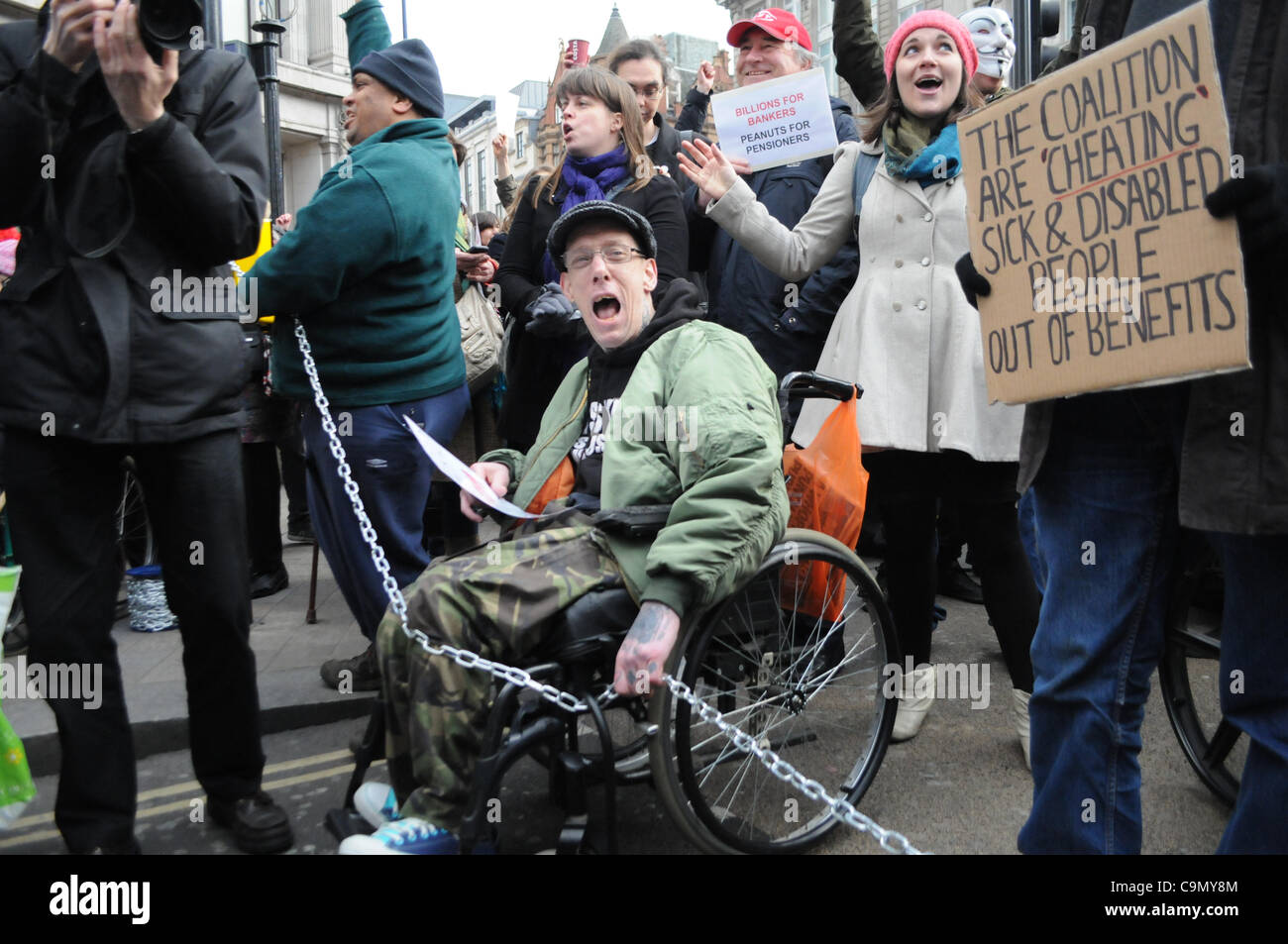
The image of a protester in a wheelchair, chained to traffic lights, is more than a fleeting moment of defiance—it is a visceral manifesto of resistance, a body politic refusing erasure. In that frozen frame, the wheelchair becomes not just a mobility device but a barricade, a pulpit, a throne of unyielding presence. The chains are not mere restraints; they are the visible seams of a society that has long preferred the illusion of accessibility over its material reality. This is not just a protest. It is a mirror held up to the world, reflecting the grotesque dissonance between the rhetoric of inclusion and the lived experience of those deemed inconvenient.
The Spectacle of Defiance: Why We Can’t Look Away
There is something hypnotic about witnessing a body in a wheelchair immovable in the middle of a street. It disrupts the rhythm of urban life, forcing a collision between the mundane and the monumental. The passerby, accustomed to the passive consumption of spectacle, is suddenly confronted with a living, breathing disruption—a body that refuses to be sidelined, even if it means becoming an obstacle. This is the power of the unignorable: it shatters the illusion that marginalization can be neatly contained behind closed doors or polite euphemisms.
The fascination isn’t just morbid curiosity. It’s the unsettling recognition that this protester’s body is a site of both vulnerability and invincibility. The wheelchair, often perceived as a symbol of limitation, is repurposed here as an instrument of obstruction. The chains, a crude yet undeniable metaphor for systemic entrapment, transform the protester into a living allegory of resistance. We stare because we are forced to confront what we’d rather ignore: the fact that accessibility is not a gift but a demand, and that some bodies are treated as disposable until they refuse to move.
The Illusion of Inclusion: How Accessibility is Weaponized
Modern society drapes itself in the language of progress, touting ramps, elevators, and “inclusive design” as proof of its enlightenment. Yet, these concessions are often performative, designed to placate rather than empower. The protester in the wheelchair exposes this charade. The chains are not just physical; they are the invisible shackles of a world that builds infrastructure for the able-bodied and retrofits accessibility as an afterthought—if at all.
Consider the irony: a city that prides itself on its progressive policies may still render a disabled person’s existence precarious. The protester’s act is a rebuke to the myth that accessibility is a matter of goodwill rather than justice. It is a reminder that inclusion is not achieved through tokenistic gestures but through the radical reimagining of space, power, and participation. The chains are a demand: dismantle the barriers, or be prepared to confront the bodies that refuse to be erased.
The Body as Battleground: Disability, Feminism, and Intersectional Erasure
Feminism has long grappled with the question of whose bodies are deemed worthy of protection, whose pain is legible, whose struggle is centered. The protester in the wheelchair forces an uncomfortable reckoning: disability is not a tangential concern but a core feminist issue. The erasure of disabled women, non-binary, and queer bodies from feminist discourse is not an oversight—it is a deliberate excision, a refusal to acknowledge that oppression is not monolithic but a lattice of interlocking violences.
This protest is a feminist act because it refuses the sanitized, palatable narratives of resistance. The disabled body, often infantilized or exoticized, is here recast as a force of unapologetic disruption. It challenges the feminist movement to expand its horizons beyond the cisgender, neurotypical, and able-bodied frameworks that have historically dominated its discourse. The chains are a feminist statement: liberation is not a privilege but a universal right, and those who are most marginalized must lead the charge.
The Aesthetic of Resistance: Why Pain is Beautiful
There is a raw, almost brutal poetry in the image of the protester’s body—chained, unyielding, a testament to the refusal to be made small. This is not the sanitized resistance of polished slogans or curated social media posts. This is the rawness of a body pushing against the limits of what is deemed acceptable, what is deemed possible. The aesthetic of this protest is not about prettiness; it is about presence, about the unapologetic assertion of a life that refuses to be hidden away.
The chains, the wheelchair, the traffic lights—these are not just props but symbols of a society that would prefer disabled people to be invisible, to be grateful for scraps of accommodation rather than demanding equity. The protester’s defiance is a reclamation of the gaze, forcing the world to see what it has been trained to ignore. This is the beauty of resistance: it is not about being liked or understood but about being seen, in all its unvarnished, uncompromising reality.
The Cost of Visibility: Why Some Bodies Are Policed More Than Others
There is a price to be paid for occupying space in a world that was not designed for you. The protester in the wheelchair knows this intimately. Every moment spent chained to those traffic lights is a confrontation with the hostility of a system that would rather silence than accommodate. The police, the passersby, the indifferent city—all are complicit in the violence of a world that treats certain bodies as nuisances.
This is not hyperbole. The policing of disabled bodies is a daily reality, from the refusal of care to the outright denial of basic rights. The protester’s act is a refusal to accept this violence as inevitable. The chains are a challenge: what will it take for a society to recognize that the right to exist without obstruction is not a privilege but a fundamental demand? The answer, it seems, is that some bodies must fight twice as hard to be seen at all.
The Future We Demand: Beyond Accessibility to Liberation
The protester in the wheelchair is not just demanding ramps or elevators. They are demanding a revolution—a reimagining of space, power, and possibility. This is not a plea for pity or charity but a declaration of autonomy. The chains are a metaphor for the systemic barriers that keep disabled people confined, but they are also a symbol of the power to break those chains, to refuse the terms of a world that would rather exclude than include.
The future we must demand is one where accessibility is not an afterthought but a foundation, where disability is not a tragedy but a facet of human diversity. It is a future where the protester in the wheelchair is not an anomaly but a norm—a world where bodies of all kinds are not just tolerated but celebrated, where the right to occupy space is not a privilege but a birthright. This protest is a reminder that liberation is not a destination but an ongoing struggle, and that the most radical acts of defiance often begin with a single body refusing to move.