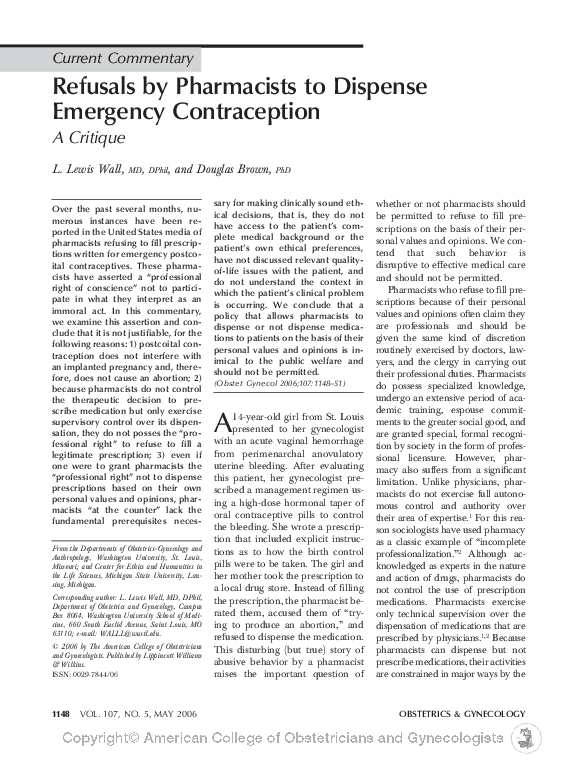
The sight of a woman standing vacillant in a small-town pharmacy, met with silence or a firm refusal regarding emergency contraception, resonates more profoundly than one might initially assume. It’s a tableau etched with the intricate threads of access, authority, and underlying societal currents, often whispered about in the margins of feminist discourse. These encounters, seemingly isolated incidents for the individual involved, hint at a larger, more pervasive narrative—one deeply intertwined with the contemporary landscape of rural healthcare and feminist theory. This exploration delves into those refusals, treating them less as aberrations and more as symptomatic of systemic challenges, scrutinizing how pharmacists’ decisions, in their moments of refusal, echo far beyond the pill counter, fundamentally shaping, often detrimentally, the lives of rural women navigating the complexities of their circumstances.
Defining the Observance: More Than a Merely Denied Service
The narrative that often emerges involves a woman, frequently young, perhaps newly navigating the landscape of intimacy and self-protection, seeking a solution that science provides. The interaction follows a familiar, yet increasingly fraught, script. The pharmacist, perhaps influenced by deeply ingrained beliefs, personal convictions, or a perceived authority to act as moral gatekeeper, declines the transaction. This isn’t just about pills; it’s about control—control over another’s body, control over reproductive health, and the power dynamics inherent in the healthcare provider-patient relationship. The common observation, therefore, becomes a lens not merely focused on denial, but on diagnosing a societal discomfort exacerbated by professional discretion.
Feminism’s Critical Eye: Power, Autonomy, and Embodied Resistance
From a feminist perspective, particularly one grappling with issues of autonomy and systemic patriarchy, the pharmacist’s refusal is undeniably provocative. It represents a tangible obstacle to the exercise of bodily autonomy, a fundamental tenet of feminist thought. The refusal implicitly asserts that another individual, often embodying male privilege or institutional power, holds the authority to override a woman’s immediate health needs based on principles potentially rooted in outdated moral frameworks or religious doctrine. This intervention, performed professionally, can feel like a form of embodied resistance, a physical manifestation of the struggle for women to determine their own reproductive futures without undue interference. It forces a confrontation with the intersections of gender, authority, and healthcare access. The refusal isn’t just inconvenient; it feels like a violation of the basic right to self-care.
The Practical Echoes: Beyond the Pill Counter into Rural Life
In rural areas, the consequences of a pharmacist refusing emergency contraception extend far beyond mere inconvenience, rippling outwards into the very fabric of daily existence. The distances women must travel for healthcare can be immense; access to specialized providers or clinics like health departments might be measured in hours, not minutes. A refusal doesn’t just add a delay; it can trap a woman in a situation where timely access dictates the outcome. The window for effectiveness is narrow, often 72 hours post-unprotected sex, and every moment counts. An unjust refusal, therefore, can precipitate journeys, sometimes alone late at night, to alternative sources, or force a difficult choice between immediate protection and potentially long-term consequences. It is an affront amplified by scarcity. There are fewer pharmacists, longer waiting times elsewhere, and often, public knowledge or resources even pointing towards options can be limited. This geographical hurdle is significantly worsened by the simple act of refusal, transforming a local interaction into a regional crisis.
Intersectionality in Action: Identity, Location, and Lived Experience
The impact analysis must be filtered through an intersectional lens; a refusal experienced by a young woman of color, a rural woman living in poverty, or someone in a region with deeply entrenched conservative values, carries a unique and heavier burden than one affecting a privileged urban counterpart. Factors such as race, socioeconomic status, sexual identity (LGBTQ+ women), and geography compound the effects. A simple pill denial forces an inconvenient journey or amplifies the fear. It becomes not just a healthcare access issue but a question of survival, economic feasibility, or social vulnerability. In regions where reproductive rights are under attack or misinformation is rampant, such a refusal doesn’t merely stall access; it actively reinforces harmful paradigms that view women’s bodies as communal spaces subject to scrutiny and regulation, thereby silencing marginalized voices and their inherent need for self-determination.
Economic Tightropes: Cost, Coverage, and the Weight of Denial
Compounding the logistical and ethical challenges is the complex interplay of economics. While generics are available, the upfront cost or lack of insurance coverage for reproductive health services remains a significant barrier for many rural women. A pharmacist refusal, coupled with potential lack of funds or coverage, is not merely a setback; it can become an insurmountable wall. It highlights an often ignored, yet crucial, aspect: financial constraints are intertwined with the ethical refusal. Can an effective refusal occur without also involving questions of who can afford intervention (or its absence)? The focus here shifts from ethical debates *about* ECPs to practical realities *around* them – is a woman seeking an expensive intervention that may be unaffordable, further exacerbating the power imbalance inherent in such a refusal? The refusal acts as a de facto increase in the economic coercion surrounding reproductive health choices.
Charting New Paths: Resilience and Strategies for Amplified Voice
The persistent challenge of pharmacist refusals demands innovative responses. Simply educating pharmacists or appealing to individual consciences may prove insufficient within the broader system that tolerates, or even encourages, such interventions. The conversation must shift towards systemic solutions. Advocacy could pivot towards clearer regulatory stances at the state level, creating standardized protocols that prioritize patient access over professional conviction where ECP does not impact other non-consensual acts (which it doesn’t). Telehealth consultations and support networks that can guide rural women through alternative options and offer validation when facing refusal are crucial. Furthermore, destigmatizing conversations around emergency contraception itself is vital, moving beyond the misperception of it as a “morning-after abortion” to emphasize its role as a critical, evidence-based tool for preventing unintended pregnancy following unprotected sex. Support groups can create spaces for women to share experiences, diminishing the sense of isolation and fostering collective resilience.
Conclusion: The Enduring Feminist Question in Rural Pharmacies
The rural pharmacist’s refusal to dispense emergency contraception is far more than an individual act of conscience. It serves as a powerful, albeit often unspoken, marker in the landscape of women’s rights and the ongoing feminist struggle. Addressing this phenomenon requires far more than ethical hand-wringing over individual practitioners; it necessitates a fundamental reassessment of healthcare access in rural America, the nature of professional authority, and the intersection of individual choice with systemic inequality. The consequences ripple through the lives of rural women—through their health, their time, their economic stability, and, most profoundly, their sense of bodily autonomy. Until these barriers are consistently dismantled, the encounter with a pharmacist remains a potent, if unintended, drama within the larger narrative of the ongoing fight for reproductive justice in the heartland.