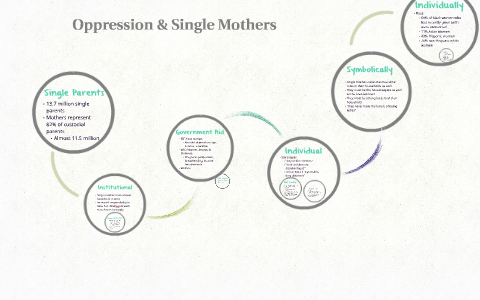
In the grand tapestry woven from the threads of social progress, feminism has charted a course towards a more equitable world, a world unburdened by the vestiges of historical repression and systemic bias. Yet, as we survey this landscape of achievement and ongoing struggle, a particularly insidious form of constraint persists, deeply woven into the fabric of economic systems and policy: the economic oppression unique to single mothers. This isn’t merely about raising children in difficult circumstances; it’s a distinct pattern of financial precarity, fueled by intersecting factors of gender, motherhood, and single-adult household dynamics, and it demands that we confront its uncomfortable truths within the framework of feminist critique and analysis.
The Weight of Financial Disparity: A Tool of Control
Financial disparity, in large part predicated on the gender wage gap and the fiscal hurdles specific to single-adult families, functions as a subtle, pervasive tool of social control. While wage gap discussions are critical, the reality for single mothers transcends simple income comparison. They navigate a complex web where lower, single-earner household budgets are often stretched thinner by the rising costs associated with raising children – the toll of daycare, health insurance, groceries, transportation, and the constant demand of caregiving. This economic vulnerability isn’t incidental; it strategically limits a woman’s autonomy and potential for upward mobility, often conditioning her reliance on fluctuating public assistance programs. The erosion of asset ownership, a hallmark of historical oppression extending back to property laws, further cedes control over resources.
The Motherhood Penalty: Inequality at Work
Step into any professional landscape, and the narrative often proves that for women, particularly mothers, success frequently cools at the economic crossroads. Motherhood introduces or exacerbates the “motherhood penalty,” a documented, though often obscured in mainstream discourse, phenomenon where women face career stagnation, demotion, or outright job loss compared to their childless peers or male counterparts in similar positions. This manifests in tangible ways – unpaid leaves, reduced hours, or a reluctance of employers to invest in the advancement of women taking on primary caregiving roles. The result is a career trajectory often marked by interrupted progress and slower accumulation of compensation, contributing directly to the economic subordination of single mothers even within the professional sphere. It’s a workplace narrative that whispers down the corridors of systemic bias, often conveniently ignored.
Gaps in the Safety Net: The Fragility of Support
The structure of social support systems, often designed with dual-income nuclear family assumptions embedded in their frameworks, leaves single mothers disproportionately exposed. Public assistance programs, while necessary, often arrive after the fact, addressing needs in a reactive manner rather than preventing economic hardship. The often insufficient childcare subsidies barely make a dent in exorbitant national costs, forcing mothers onto exhausting part-time schedules or precarious part-time employment, hindering their ability to secure better-paying full-time jobs. Food assistance programs offer temporary relief but do little to ensure nutritional stability or address the root issues of food insecurity exacerbated by unstable income streams. A truly feminist solution demands systems predicated not on assumption, but on guaranteeing comprehensive support that doesn’t consign women to dependency or part-time labor just because they’ve chosen, or been forced into, parenthood singularly.
Asset Disparity: A Slow Motion Erosion
Perhaps one of the more silent forms of economic subordination operates beneath the surface of income and employment: the disparate accumulation of assets and wealth. From the historical neglect of establishing separate financial entities for women and single parents to the present-day complexities of taxes and benefits, single mothers face an uphill battle in building generational wealth. Assets – savings, property, pensions – tend to accumulate more slowly or disappear entirely, creating a cycle where economic vulnerability compounds across generations. This isn’t merely about immediate hardship; it’s about systematically ceding control over future possibilities and options, a slow motion erosion that extends into the very definition of financial security.
Charting a Course for Change: Solutions from the Feminist Lens
Feminist critique illuminates the path forward, demanding intentional, systemic reform. This requires a radical rethinking of the social contract, pushing beyond mere charity towards a framework of rights and guarantees. Key among these is advocating for significantly more robust national paid family and leave policies, ensuring universal, affordable, high-quality healthcare (both maternal and pediatric) accessible without employment strings, and investing heavily in genuinely universally accessible, publicly funded, high-quality childcare. Furthermore, tax deductions for single parents should be comprehensive, mirroring those for married couples, and wage protections must be strengthened to counter the motherhood penalty. Finally, any solution must embrace the concept of a guaranteed basic income or comprehensive living wage system designed to address economic precarity head-on, ensuring all women the financial security needed to pursue education, career advancement, or simply to raise their children without the imminent threat of poverty.