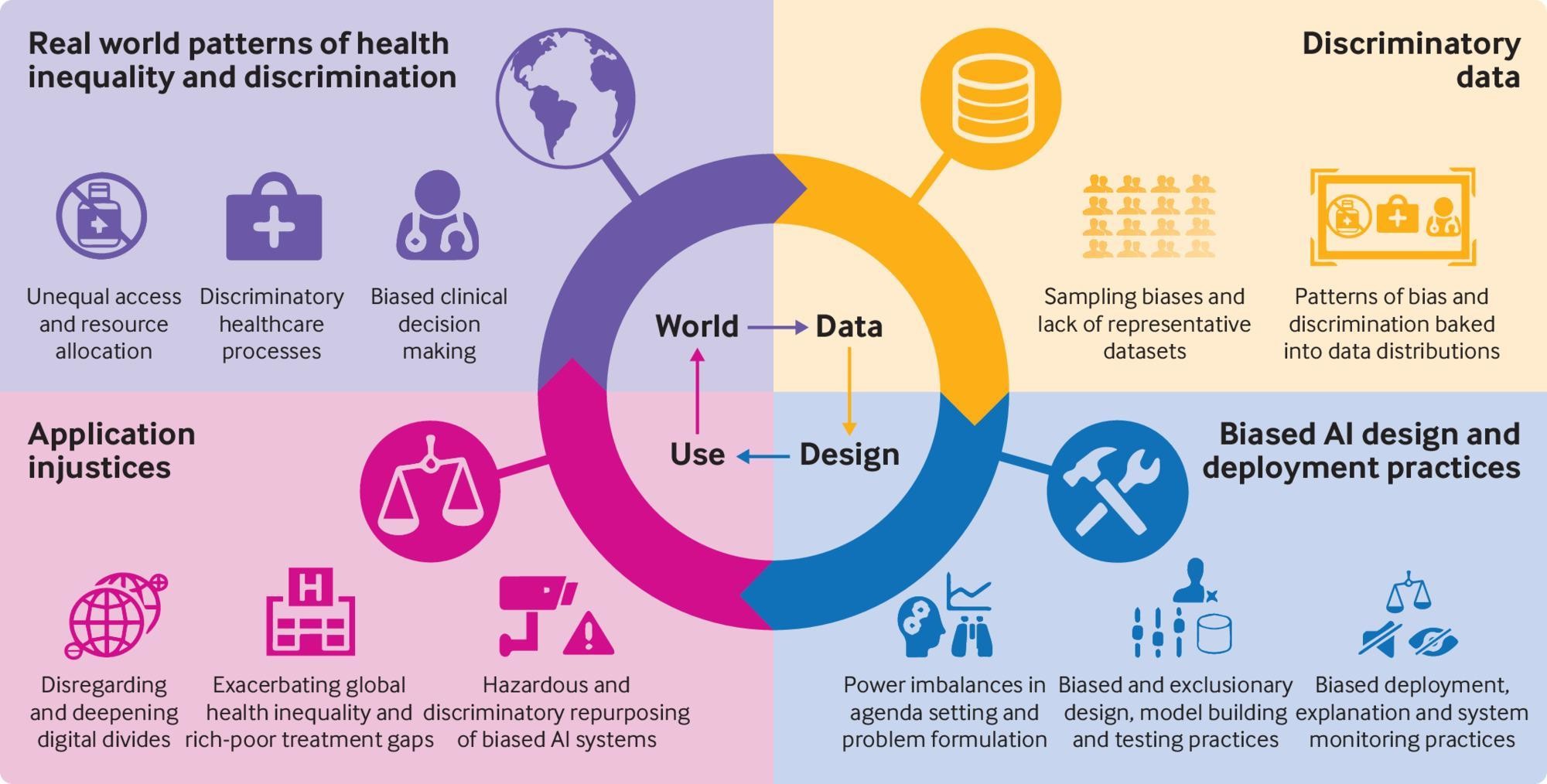
In the opulent dance of technological progress, where algorithms dictate new forms of perception and interaction, profound questions of fairness and justice simmer beneath the surface. It’s easy to imagine Artificial Intelligence evolving into an unbiased oracle, a detached arbiter of knowledge and efficiency. Yet, every line of code is written in the shadow of human experience, every data point tinged with the colours of our imperfect world. Nowhere is this truer, or more critical, than in the relentless quest to imbue machines with the capacity to understand and interact, or even judge. This brings us to a fascinating, albeit unsettling, convergence: Feminism, that relentless engine of social critique, coupled directly with the technical discipline of AI Auditing. We stand at the precipice of a methodology designed not just to spot bias, but to actively detect gender bias within the cold, rational heart of algorithms. It’s a concept that promises less neutrality and more determination, a systematic approach to unmasking the ways intelligent systems might perpetuate or even amplify gender inequality.
The Deep Dives: Methodologies in Feminist AI Audits
When we talk about Feminist AI Audits, we move beyond surface-level analysis. This is not merely checking for overtly discriminatory language, a superficiality that algorithmic bias often buries under layers of technical obfuscation. The methodology delves into the intricate architecture of fairness, probing for systemic imbalances woven into the very fabric of the algorithm. This involves far more than running simple parity checks. It demands rigorous, multi-dimensional analysis. Consider testing across various demographic axes: not just gender, but also race, ethnicity, age, socioeconomic status, disability, and sexual orientation where applicable. Think beyond binary classification tasks – what happens when the algorithm processes more complex, open-ended requests or needs to interpret nuanced human intent? The core involves examining the eigenvalues of fairness itself, quantifying and qualifying how differently outcomes might play out for different groups, especially women.
Feminist Audits also scrutinize the data‘s own narrative. How was it curated? Who populated the training datasets? Was there representative diversity, or was the data skewed towards male perspectives, experiences, or needs? The audit examines the temporal calibration, too. An old dataset might capture outdated societal norms; a new dataset might reflect current, yet still biased, representations. The methodology involves sophisticated techniques like adversarial testing – deliberately feeding the algorithm prompts designed to expose hidden biases – alongside counterfactual analysis, examining how the algorithm’s outputs change when we swap one attribute, like gender, while holding everything else constant. These rigorous methods aim to strip away the mathematical veil and reveal the underlying patterns and assumptions. The goal isn’t just detection; it’s to isolate the specific vectors of bias, understanding their origin and propagation path within the system.
Gender-Bias in AI: The Hidden Layers
The subtle, insidious nature of gender bias in AI is where feminist audits are most crucial. It’s easy to dismiss blatant sexism – like an AI job recommender persistently suggesting feminine stereotypes – as an easily identifiable error. But, far more pernicious are the biases that escape direct detection. These operate through hermeneutic feedback loops where the system reinforces its own preconceptions through its outputs, subtly shaping user expectations without even registering as consciously offensive. Imagine an AI customer service agent that subtly addresses female users as if they were junior colleagues by default, a micro-bias reflected in the phrasing it generates. Or consider a facial recognition system demonstrably less accurate at identifying women, particularly women of colour. These are less errors and more systemic deficiencies planted deep within the model’s training and structure.
Bias can arise from the mimetic function of AI – its tendency to copy patterns from the vast ocean of data it consumes, inadvertently borrowing the subtle prejudices embedded even in seemingly neutral sources like news archives, scientific papers, or online reviews. The algorithm doesn’t discriminate; it reflects, amplifying the loudest and most frequent voices in the data, which historically have often belonged to, and favoured, male perspectives. This isn’t about assigning blame; it’s about understanding the complex interplay between data, model, and function that leads to specific, often harmful, outcomes. Feminist audits systematically reveal these hidden layers, distinguishing between unintentional bias (from flawed data or models) and systemic bias embedded within specific design choices.
The Necessary Skills: The Tipping Point
Executing a feminist AI audit requires a rare marriage of distinct intellectual disciplines. This is not a task for the pure mathematician, content merely with data flows, nor for the social scientist divorced from technical systems. We need auditors who are deep-versed in algorithmic systems – machine learning models, data processing pipelines, statistical verification techniques – yet simultaneously possess a nuanced, critical understanding of feminism, social justice frameworks, and the specific ways power dynamics manifest in technologically mediated spaces.
This demands a unique skillset: computational empathy, the ability to understand the potential social impact of a piece of code; strong qualitative analysis skills, to interpret output variations through a socio-technical lens; and, crucially, an awareness of intersectionality. Gender doesn’t exist in a vacuum; it intersects with race, class, age, disability, and many other identities. A feminist audit must avoid simplistic, single-axis thinking; it demands examining bias through multiple intersecting frameworks simultaneously. This specialization represents a new profession, born from an urgent need, and it signals a fundamental shift: technical skills alone are insufficient. Understanding the profoundly human, often painful, stories coded into the machine is the other half of the crucial equation.
Unveiling Power Dynamics
Feminist AI Audits do far more than identify bias; they become tools for dissecting power structures embedded within digital systems. Algorithms aren’t neutral forces of nature; they are designed by people for specific purposes, institutionalizing certain values and marginalizing others. An audit reveals when women – or specific women, defined by race or class – become mere data points in a profit-driven system, their nuanced needs ignored in favour of efficiency or revenue. It flags technical debt built on non-representative data, essentially rendering parts of the population unserviceable, forcing them to deal with inherently flawed outcomes.
Through meticulously cataloguing these biases, auditors illuminate the governance gap – the absence of systematic ethical oversight in AI development and deployment. Audits can pinpoint instances where AI decision-making contradicts established societal norms or protective regulations. They turn technical findings into potent arguments for change. When bias is detected, the audit traces its lineage – back through architecture, training data, feature engineering – providing the evidence needed to challenge design assumptions, forcing developers to confront their own, often unexamined, biases. In doing so, auditors function as crucial intermediaries, translating technical complexity into terms accessible and actionable for policy, legal frameworks, and corporate governance.
Counter-Intuitive Hurdles
Despite the noble goal, feminist AI Audits face significant challenges. Defining what constitutes ‘gender bias’ is inherently subjective, blurring into ethical debates even within the audit process itself. Where does the line between legitimate performance metrics and unacceptable bias draw? Moreover, creating universally agreed-upon benchmarks is difficult due to varying cultural norms and definitions of equity across different contexts. Audits can be computationally expensive, involving laborious testing campaigns and complex data analysis.
There’s also the paradox of measurement vs. meaning. An algorithm can pass every fairness test yet resonate powerlessly within a specific cultural context, or fail to capture deeply felt but hard-to-define social nuances. The metrics we employ might quantify certain biases while obscuring others, creating a falsifiability gap – an inherent limitation in testing systems whose harm lies not in verifiable errors but in subtle, insidious impacts. Furthermore, audits often occur retrospectively, after biased systems have already caused harm or marginalized usage. Shifting culture towards proactive auditing requires overcoming inertia in development cycles and fostering a climate where questioning algorithmic fairness is encouraged, not suppressed as obstructionist.
Implementation Without Excuses: The Path Forward
Moving from theoretical methodology to practical implementation necessitates embedding feminist principles within development pipelines and corporate cultures. This means integrating bias testing early and often – during the data curation phase, model training, and before deployment. It requires cultivating diverse development teams capable not only of building but of critically auditing their own creations. Beyond technical fixes, fostering public awareness and demand for ethical AI is crucial. Citizens, equipped with understanding, demand more transparency and accountability.
Regulatory frameworks will, eventually, play a vital role. Cities and nations pioneering AI ethics should actively champion audit requirements as an integral part of granting access or licenses for sophisticated AI systems. Standardization, while fraught with difficulties, could encourage a baseline commitment to fairness. Perhaps most importantly, these audits should move from a purely forensic function to an active participatory one. Involving women – particularly those from diverse, marginalized backgrounds – in the audit design and execution isn’t an add-on; it is the sine qua non. Their lived experience provides the essential grounding, the real-world context that resonates with the algorithm’s potential impact.
The Future Trajectories
The work of feminist AI Audits is far from finished; it evolves perpetually. As AI blurs the lines between perception, decision-making, and creative generation, the nature of bias and the tools to detect it must expand accordingly. We are likely to see the creation of more sophisticated ‘bias simulation’ environments, where auditors can actively test potential negative impacts. Audits may incorporate dynamic monitoring, allowing continuous detection of bias creep after deployment. The ethical compass of AI must be recalibrated constantly, keeping pace with the ever-shifting topography of human values.
Ultimately, the emergence of feminist AI Audits represents more than just a technical or ethical initiative; it is a profound cultural statement. We recognize that intelligence, by its very nature, cannot remain detached from the social fabric that nurtures and shapes it. Auditing algorithms with a feminist lens is a radical act of applied ethics, one that holds technology accountable not just to efficiency, but to humanness. It insists, loudly and clearly, that the future of AI must be gender-conscious, intrinsically fair, and actively work against the very biases that have historically held women back. It’s a necessary, indeed urgent, step towards technology truly serving all of humanity.